When planning a commercial development, real estate investors, developers, and business owners quickly realize that location is the single largest variable in project budgeting. Calculating your commercial construction cost per square foot by zip code is the most effective way to establish an accurate preliminary budget before breaking ground. A building that costs $150 per square foot in a rural Midwest town could easily cost $400 or more per square foot in a dense coastal metropolitan area—even if the architectural plans are virtually identical.
 Buy Structural Steel Works BOQ Template at $49 Only
Navigating location-based construction pricing requires understanding the underlying drivers behind these geographic shifts. Local labor markets, municipal permit fees, delivery logistics, climate-driven building codes, and regional subcontractor availability all dictate the final price tag. This guide provides a detailed breakdown of how commercial construction costs change by ZIP code, how to evaluate pricing across different commercial building types, and how to transition from broad location averages to a bank-ready, itemized estimate.
What Does Cost Per Square Foot by ZIP Code Mean?
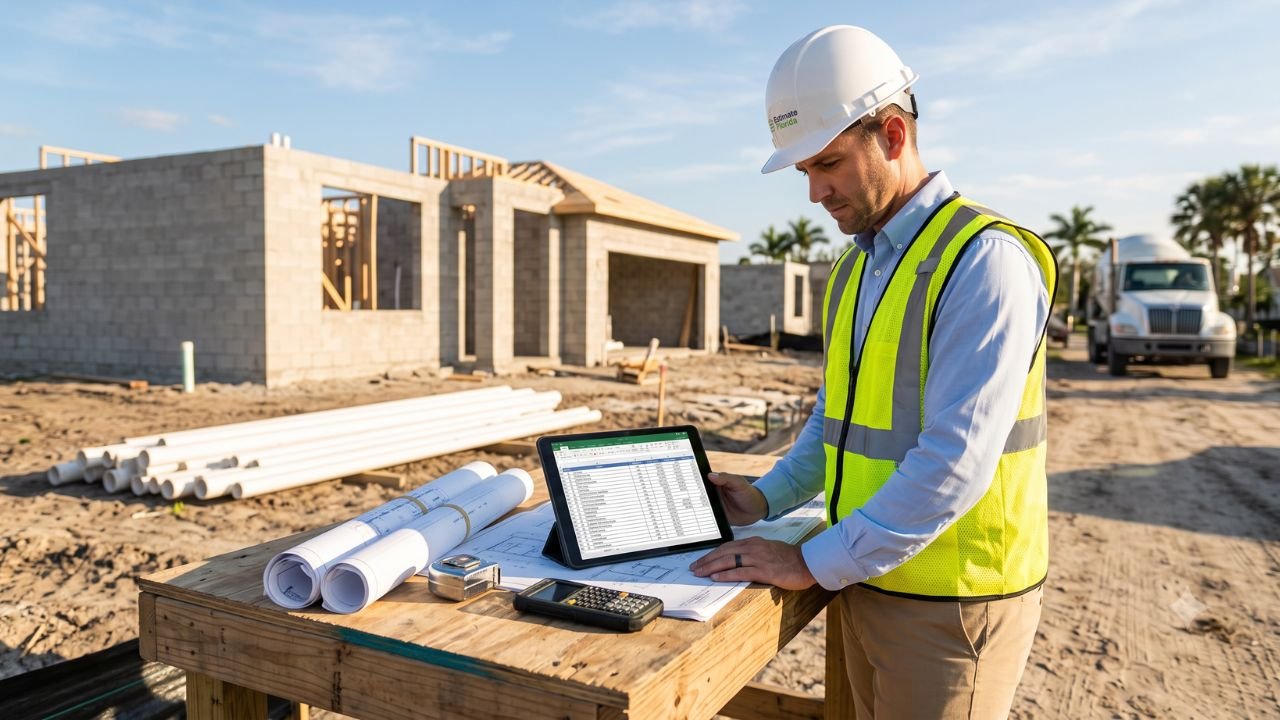
In commercial real estate, estimating by location utilizes a hyper-local pricing methodology. The term construction cost per square foot by zip code refers to adjusting broad regional or national building cost averages to reflect the specific labor, material, permitting, and logistical realities of a single 5-digit postal code.
A national average provides a general baseline, but it lacks the precision required for realistic commercial budgeting. By adjusting cost estimates down to the ZIP code level, developers can:
-
Evaluate site feasibility before purchasing commercial land.
-
Compare potential build sites across neighboring municipalities.
-
Establish early budget caps for financing and investor presentations.
-
Identify local cost spikes driven by union mandates or trade shortages.
While a ZIP code cost factor serves as an essential preliminary tool, it reflects broad market conditions within a defined boundary rather than the unique site specifics of an individual parcel.
Buy Structural Steel Works BOQ Template at $49 Only
Why ZIP Code Matters in Commercial Construction
Two build sites located just five miles apart can carry completely different construction budgets if they cross municipal boundaries or sit in different ZIP codes. Regional construction cost variances stem from several localized economic and regulatory factors:
-
Labor Market Dynamics: Highly urbanized ZIP codes often rely heavily on union labor or face severe shortages of skilled trades, driving up hourly rates. Suburban and rural ZIP codes may offer lower open-shop labor rates but suffer from a smaller local workforce.
-
Permitting and Municipal Impact Fees: Local building departments operate independently. One city ZIP code may charge minimal permit fees, while an adjacent municipality imposes expensive school impact fees, utility connection charges, and lengthy plan review timelines.
-
Building Code Enforcement: ZIP codes in coastal regions enforce strict hurricane or flood zone standards. Mountainous or northern ZIP codes demand higher snow-load capacities and thermal insulation, while seismic zones require heavy structural steel reinforcement.
-
Logistics and Site Access: Dense, downtown ZIP codes present severe staging limitations. Contractors must account for street closure permits, crane placement fees, meter bag rentals, and off-site material storage. Suburban ZIP codes with open acreage eliminate these logistical penalties.
-
Subcontractor Competition: In booming ZIP codes where construction demand outpaces capacity, local subcontractors can charge premium margins. In quieter markets, competitive bidding keeps trade costs down.
Buy Structural Steel Works BOQ Template at $49 Only
Average Commercial Construction Cost Per Square Foot
While pricing shifts across geographic boundaries, understanding national baseline ranges across building types helps contextualize local adjustments. Below is a breakdown of average commercial construction costs per square foot across common building classes:
| Commercial Building Type | Base Shell Cost / Sq. Ft. | Turnkey Finished Cost / Sq. Ft. | Primary Cost Drivers |
| Warehouse / Light Industrial | $75 – $130 | $110 – $180 | Clear-height clearance, slab thickness, loading docks, minimal interior partitioning. |
| Retail (Vanilla Shell) | $120 – $220 | $180 – $350 | Exterior glazing, facade aesthetics, parking ratios, basic HVAC/lighting. |
| Standard Commercial Office | $160 – $280 | $240 – $450 | Interior wall partitioning, acoustic treatments, MEP density, elevator cores. |
| Restaurant / Food Service | $220 – $380 | $350 – $700+ | Grease traps, commercial kitchen exhaust, makeup air units, heavy gas/plumbing loads. |
| Medical / Specialty Healthcare | $280 – $450 | $400 – $800+ | Medical gas piping, radiation shielding, infection control, backup power generators. |
| Tenant Improvements (TI Only) | N/A | $50 – $175 | Demolition level, interior finishes, electrical modifications, plumbing relocations. |
Note: These ranges reflect national baseline averages. Dense urban ZIP codes can exceed these ranges by 30% to 70%, while lower-cost rural markets may sit 10% to 20% below.
Buy Structural Steel Works BOQ Template at $49 Only
Commercial Construction Cost by Building Type
To understand how commercial building cost by zip code applies to your project, you must evaluate how local location factors interact with specific building types.
1. Office Buildings
Office space costs fluctuate based on structural materials and interior fit-out levels. In high-density ZIP codes, multi-story office buildings require structural steel framing, concrete floor decks, commercial elevator banks, and complex fire suppression systems. Interior costs depend heavily on the open-to-private office ratio; dense layouts requiring multiple private offices, conference rooms, and soundproof partitions increase millwork and electrical framing expenses.
2. Retail Spaces
Retail construction is heavily exterior-driven. Storefront glass, architectural masonry, high-visibility signage facades, and extensive parking infrastructure dictate shell pricing. In affluent urban ZIP codes, local zoning boards often mandate high-end exterior materials (such as natural stone veneer or custom architectural metal panels), sharply raising the base shell cost per square foot.
3. Warehouses and Industrial
Industrial buildings represent the most economical commercial build type per square foot due to open floor plans and minimal interior finishing. However, location-specific site prep can offset these savings. In coastal or wet-soil ZIP codes, deep soil stabilization, driven concrete piles, and heavy-duty 6-to-8-inch reinforced concrete slabs for truck traffic will push industrial budgets higher.
4. Restaurants and Food Service
Restaurants are the most expensive standard commercial builds per square foot. Their mechanical, electrical, and plumbing (MEP) requirements are immense. Commercial kitchen hood systems require dedicated makeup air units, specialized fire suppression, heavy electrical service panels, and complex underground drainage with large grease traps. In strict metropolitan ZIP codes, environmental health standards and grease-intercept requirements add significant soft and hard costs.
5. Medical and Specialty Facilities
Healthcare environments demand specialized mechanical systems, lead-lined X-ray rooms, medical gas delivery lines, and strict infection-control finishes. Because these projects require highly certified specialty subcontractors, localized labor shortages in specific ZIP codes impact medical builds more severely than standard commercial projects.
6. Shell Buildings vs. Tenant Improvements (TI)
When estimating, it is vital to distinguish between shell construction and interior build-outs:
-
Base Shell (Cold Dark Shell): Covers foundation, structural framing, roof membrane, exterior walls, and slab. Utilities are brought to the building perimeter, but no interior finishes or HVAC distribution exist.
-
Warm Shell: Includes exterior structure plus completed common areas, core restrooms, utility panels, and main HVAC units.
-
Tenant Improvements (TI): The interior fit-out that converts a warm shell into a functional business space (drywall, flooring, drop ceilings, interior doors, and trade trim).
What Affects Cost Differences Between ZIP Codes?
Understanding why a ZIP code construction cost estimator reflects wide pricing swings requires analyzing the localized line items that compose a contractor’s bid.
                          +---------------------------------------+
                          |   ZIP CODE COST VARIATION DRIVERS     |
                          +---------------------------------------+
                                              |
      +-------------------+-------------------+-------------------+-------------------+
      |                   |                   |                   |                   |
[Labor Markets]    [Logistics & Access]  [Codes & Permits]  [Material Freight]  [Subcontractors]
- Union vs Open    - Downtown Staging    - Impact Fees      - Distance to Mill  - Local Bidding
- Trade Shortage   - Parking Constraints - Local Inspections - Delivery Fees     - Market Competition
Labor Rates and Union Prevalance
Labor accounts for 40% to 60% of total commercial construction costs. Metropolitan ZIP codes dominated by trade unions carry significantly higher hourly prevailing wages and benefit packages. Conversely, open-shop markets in southern or rural ZIP codes benefit from lower labor overhead, though productivity can vary based on worker experience.
Local Subcontractor Availability
If a specific ZIP code is experiencing an unprecedented construction boom, local mechanical, electrical, and plumbing contractors will operate at full capacity. With limited availability, subcontractors submit higher bids to protect their margins. In quieter regional markets, contractors bid aggressively, suppressing total cost per square foot.
Material Supply Chains and Freight
Building materials like structural steel, cement, rebar, and drywall carry heavy freight expenses. A project located in a remote ZIP code far from distribution hubs or concrete batch plants will incur substantial fuel surcharges and long-haul transport fees.
Buy Structural Steel Works BOQ Template at $49 Only
Permitting, Impact Fees, and Zoning
Local government requirements vary drastically across postal codes. Municipalities charge varying fees for:
-
Building, electrical, plumbing, and mechanical permits.
-
Traffic and utility impact fees (funding local road and sewer expansions).
-
Environmental impact reviews and stormwater management mandates.
-
Design review board delays that extend carrying costs on land loans.
How to Estimate Cost for a Specific ZIP Code
To create an accurate preliminary budget using location factors, follow a structured mathematical approach rather than applying unadjusted national averages.
The Basic Formula
Step-by-Step Calculation Process
-
Establish Base Square Footage: Determine the gross interior floor area of the proposed building.
-
Select Building Class Base Cost: Choose a realistic national average cost per square foot for your specific building type (e.g., $250/sq. ft. for a standard office).
-
Apply the Location Factor: Multiply the baseline figure by the local index multiplier for your target ZIP code (e.g., 1.25 for a high-cost metro area, or 0.88 for a rural county).
-
Factor in Finish Quality: Adjust upwards or downwards based on whether the interior finishes are budget-grade, mid-tier, or luxury/custom.
-
Add Soft Costs and Site Contingency: Add 15% to 25% to cover architectural design fees, engineering, testing, permitting, and unforeseen ground conditions.
By applying these steps, you convert a generic cost matrix into a tailored, location-adjusted budget framework. Developers seeking professional precision often leverage specialized commercial estimating services to calculate these localized line items before submitting bank financing applications.
Example ZIP Code Budget Scenarios
To illustrate how geographic location impacts real-world commercial budgets, consider four practical scenarios for different building types across varying ZIP code markets.
Scenario A: Suburban Office Building (15,000 Sq. Ft.)
-
Location: Suburban Midwest ZIP Code (Cost Index: 0.92)
-
Building Type: Single-story wood/steel frame office building, mid-tier finishes.
-
Baseline Turnkey Cost: $250 / sq. ft.
-
Adjusted Location Cost: $230 / sq. ft.
-
Estimated Construction Total: $3,450,000 (excluding land and soft costs)
Scenario B: Urban High-Cost Restaurant (4,000 Sq. Ft.)
-
Location: Dense Northeast Metro ZIP Code (Cost Index: 1.45)
-
Building Type: High-end full-service restaurant interior fit-out within an existing warm shell.
-
Baseline Interior Cost: $400 / sq. ft.
-
Adjusted Location Cost: $580 / sq. ft.
-
Estimated Construction Total: $2,320,000
Scenario C: Regional Distribution Warehouse (50,000 Sq. Ft.)
-
Location: Rural Southeast Transit Corridor ZIP Code (Cost Index: 0.85)
-
Building Type: Pre-engineered metal building (PEMB), 32 ft. clear height, 5% office space core.
-
Baseline Turnkey Cost: $120 / sq. ft.
-
Adjusted Location Cost: $102 / sq. ft.
-
Estimated Construction Total: $5,100,000
Scenario D: Suburban Retail Strip Shell (10,000 Sq. Ft.)
-
Location: Sunbelt Growth Suburb ZIP Code (Cost Index: 1.05)
-
Building Type: CMU block and stucco retail vanilla shell, 4-tenant layout capacity.
-
Baseline Shell Cost: $180 / sq. ft.
-
Adjusted Location Cost: $189 / sq. ft.
-
Estimated Construction Total: $1,890,000
Buy Structural Steel Works BOQ Template at $49 Only
Hidden Costs That Vary by ZIP Code
When budgeting commercial building cost by location, developers frequently overlook soft costs and site-specific fees that do not appear in basic square-foot building charts.
-
Utility Connection and Tap Fees: Municipal water and sewer connection fees range from a few thousand dollars in rural areas to over $100,000 in infrastructure-constrained urban ZIP codes.
-
Stormwater and Environmental Compliance: Regions prone to heavy rainfall or protected wetlands require expensive underground retention vaults, oil-water separators, and silt containment measures.
-
Special Inspections and Testing: Structural concrete compression testing, steel weld X-rays, and soil compaction testing requirements vary by city jurisdiction.
-
Winter Weather Conditions: Northern ZIP codes require winterization budgets—including ground-thawing equipment, temporary tenting, and heating fuel for cold-weather concrete pours.
-
Traffic Control and Staging: Urban builds often require dedicated traffic detail officers, lane closure permits, and off-site parking shuttles for construction crews.
Why a Detailed Estimate Is Better Than a ZIP Code Average
While evaluating commercial building cost by zip code provides an excellent baseline for early property acquisition and conceptual feasibility, relying solely on square-foot averages for final budgeting carries major risks.
Square-foot averages treat an entire building as a uniform block. They cannot account for:
-
Unique Soil Conditions: Unstable clay or shallow bedrock on a specific parcel can add $200,000 in foundation engineering that a ZIP code average will never reflect.
-
Specific Mechanical Loads: A bakery requiring massive electrical service panels will cost vastly more than a retail clothing store of the exact same square footage in the same ZIP code.
-
Architectural Complexity: Irregular building footprints, cantilevers, and curtain wall glass facades break standard cost-per-square-foot models.
To eliminate financial risk, developers must transition from broad square-foot metrics to itemized, trade-by-trade estimates. Utilizing advanced cost estimator tools or partnering with professional quantity surveyors allows you to price real-world quantities of concrete, steel, wiring, and labor hours based on actual architectural plans.
Buy Structural Steel Works BOQ Template at $49 Only
Tips for More Accurate ZIP Code-Based Estimating
To maximize budget accuracy during the early planning stages, implement these practical estimating techniques:
-
Benchmark Against Local Recent Builds: Look at actual completed projects of similar size and scope within a 5-mile radius built in the last 12 months.
-
Engage Local Subcontractors Early: Reach out to local mechanical, electrical, and plumbing contractors to gauge current labor availability and backlog levels.
-
Separate Shell from Interior Build-Out: Calculate structural shell costs separately from tenant improvement costs to avoid overpaying on unconditioned storage areas.
-
Build in a Location-Specific Contingency: Maintain a 10% design contingency for standard suburban builds, but increase it to 15%–20% when building in tight urban cores or strict coastal zones.
-
Account for Material Inflation and Timing: If your project will break ground 12 months from today, adjust current ZIP code metrics for regional material escalation rates.
-
Consult Regional Estimating Specialists: If expanding into an unfamiliar geographic market, work with regional consultants—such as regional Florida estimating services for Southeast coastal builds—who understand hyper-local building codes and trade pricing.
Final Thoughts
Accurately calculating commercial construction cost per square foot by zip code is an essential skill for developers, investors, and project managers aiming to protect their bottom line. Geographic location impacts every line item of a construction budget, from basic raw material freight to specialized union labor rates and municipal permit fees.
While location-adjusted square-foot averages serve as an invaluable tool for preliminary site feasibility and high-level budgeting, they are only the first step in the project lifecycle. As your architectural plans progress from concepts to working drawings, transitioning to a detailed, line-item construction estimate ensures that your project remains financially viable, bank-ready, and positioned for long-term profitability.
Buy Structural Steel Works BOQ Template at $49 Only
Ready to establish a precise, location-specific budget for your next project? Explore our comprehensive estimating resources or reach out through our contact page to get an itemized, location-adjusted construction estimate tailored to your exact target location.