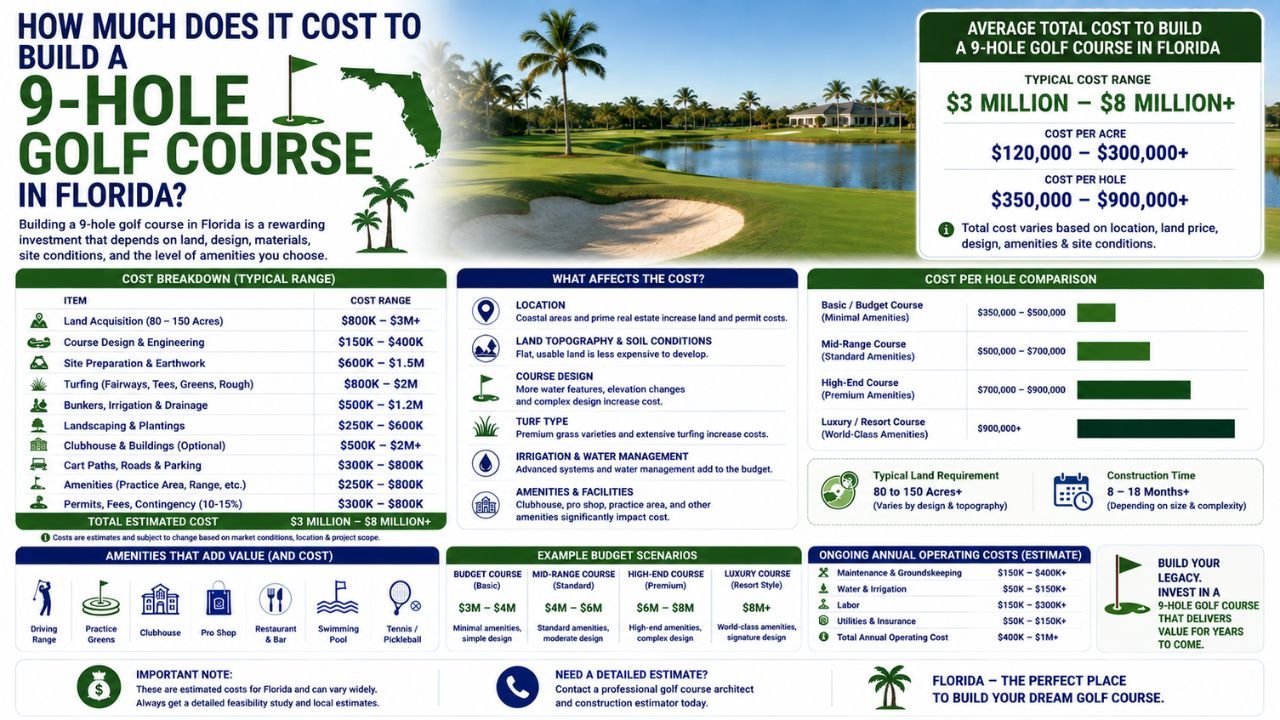
How much does it cost to build a 9-hole golf course in Florida? Project budgets typically range from roughly $5 million to more than $20 million, depending on land value, site conditions, design quality, irrigation needs, amenities, and environmental requirements. Florida’s climate and regulations make drainage, stormwater management, wetlands permitting, and hurricane resilience especially important. This article breaks down the major cost drivers and budgeting considerations for anyone planning a 9-hole golf course development project in the state.

What Affects the Cost Most?
The total project budget for a 9-hole golf course is shaped by several major drivers:
- Land acquisition or long-term control
- Site clearing, grading, and detailed shaping
- Drainage and stormwater systems
- Irrigation infrastructure
- Greens, tees, fairways, bunkers, and turf
- Cart paths and supporting infrastructure
- Clubhouse, practice areas, and maintenance facilities
- Permitting, environmental studies, and soft costs
Location and course ambition strongly influence the final number. A functional public or community 9-hole course on relatively straightforward land costs less than a private or resort-style layout with refined shaping, premium greens, and more extensive amenities. Because fixed costs such as irrigation pumps, maintenance buildings, and environmental studies do not scale perfectly with hole count, a high-quality 9-hole project can still represent a significant investment.
Land and Site Preparation
Land is often one of the largest single expenses. Prices vary by market (coastal, inland, rural, or near major metro areas), zoning, access, and existing site features. Suitable parcels that allow for workable 9-hole routing while meeting environmental rules can still command a premium, though smaller acreage requirements sometimes improve feasibility compared with full 18-hole layouts.
Site preparation follows land in importance and cost. Typical activities include:
- Vegetation clearing and debris removal
- Mass grading and feature shaping
- Soil testing, amendment, and handling of unsuitable material
- Addressing high water tables common in many Florida locations
Florida’s relatively flat terrain can limit some earthmoving compared with hilly regions, but sandy soils, organic layers, and frequent high groundwater levels often require specialized drainage solutions. Wetlands and surface waters can significantly increase complexity through delineation, avoidance, or mitigation requirements. Early environmental assessment helps quantify these impacts before major spending begins.
Course Construction Costs
The 9-hole playing surfaces form the core of construction spending. Key components include:
- Greens – Rootzone materials, drainage layers, and construction method drive both cost and long-term performance
- Tees – Multiple sets of tees add area and complexity
- Fairways and rough – Maintained acreage, turf type, and shaping affect installation and future maintenance
- Bunkers and hazards – Sand quality, internal drainage, and design detail influence pricing
- Cart paths – Length, material (asphalt, concrete, or alternatives), and routing
- Drainage systems – Surface and subsurface drainage are essential given Florida’s rainfall patterns
Course design quality and intended level of play strongly affect these line items. Higher-specification greens, more intricate bunkering, and refined shaping increase both capital cost and long-term conditioning standards. Even on a 9-hole layout, the cost per hole can remain substantial when quality standards are high.
Irrigation and Turf
Irrigation ranks among the most critical long-term investments on a Florida 9-hole golf course. Reliable water delivery supports turf through extended heat and dry periods. Major elements typically include:
- Water source (wells, reclaimed water, surface water, or a combination)
- Pump stations and storage capacity
- Main lines, laterals, and sprinkler heads
- Control systems and monitoring technology
- Filtration or treatment where required
Turf establishment and grow-in add further expense. Decisions between sod, sprigs, or seed, along with the length of the grow-in period, affect both capital outlay and the timeline before revenue begins. Selecting turf varieties suited to Florida’s climate, traffic, and maintenance goals helps control lifetime costs. Because irrigation infrastructure has significant fixed components, the system cost does not drop by half simply because the course has nine holes instead of eighteen.
Clubhouse and Support Facilities
Clubhouses, pro shops, restrooms, practice ranges, and maintenance buildings can expand the total budget substantially. A modest maintenance facility and basic restrooms keep costs lower. More extensive clubhouses with dining, locker rooms, or event space raise the overall investment significantly.
Maintenance equipment, storage, and support systems are necessary for daily operations and should be sized to the expected volume of play and conditioning standards. On many 9-hole projects, especially community or executive-style courses, the support facilities remain a meaningful share of the total budget.
Florida-Specific Cost Factors
Florida 9-hole projects frequently require additional budgeting for:
- Stormwater management and water-quality treatment
- Wetland delineation, permitting, and potential mitigation
- Hurricane-resistant design for structures and critical systems
- Coastal or near-coastal site constraints
- Coordination with multiple regulatory agencies
The Florida Department of Environmental Protection handles many water and environmental permits. Projects involving waters of the United States may also require review by the U.S. Army Corps of Engineers. For putting green construction standards, many teams reference USGA Course Construction Guidance. Buildings must comply with the Florida Building Code.
These requirements can increase soft costs and extend schedules, yet proper compliance supports operational stability and reduces the risk of later corrective work.
Soft Costs and Grow-In
Hard construction costs are only part of the picture. Soft costs commonly include:
- Golf course architecture and civil engineering
- Surveys, geotechnical investigations, and environmental studies
- Permitting fees and agency coordination
- Legal, financing, and insurance expenses
- Project management and oversight
Grow-in covers the period after planting until the course is ready for regular play. This phase includes additional water, fertilizer, labor, and the opportunity cost of delayed revenue. Contingency allowances—often 10–15% or higher depending on site risk—protect against unforeseen conditions such as unsuitable soils, weather delays, or design adjustments. Soft costs and grow-in can represent a meaningful percentage of the total project budget even on a smaller 9-hole layout.

Cost Ranges by Course Type
Actual costs vary by site conditions, design intent, market factors, and amenity level. The following ranges provide practical order-of-magnitude guidance for 9-hole projects in Florida (excluding extreme land values or highly specialized features):
| Course Type | Approximate Total Cost Range | Notes |
|---|---|---|
| Public / daily-fee 9-hole | $5 million – $12 million | Functional design, modest amenities |
| Private 9-hole | $8 million – $18 million+ | Higher finishes and more extensive facilities |
| Resort / championship-style 9-hole | $12 million – $25 million+ | Premium design and refined features |
| Community golf development | $7 million – $16 million | Often integrated with residential components |
| Major renovation (9-hole) | $3 million – $12 million+ | Depends on scope of greens, irrigation, and infrastructure |
These figures are illustrative. Extensive earthwork, complex environmental mitigation, larger clubhouses, or premium water features can push totals higher. More constrained or simpler projects can land lower. Fixed costs mean that a high-quality 9-hole course does not always cost exactly half of a comparable 18-hole project.
How to Plan a Realistic Budget
More accurate budgeting begins with clear early definition of scope:
- Target acreage and preferred routing concept
- Intended level of play (public, private, community, or resort-style)
- Irrigation strategy and reliability of the water source
- Scope of clubhouse and practice facilities
- Known environmental constraints
- Contingency for site risks and soft costs
Engaging a golf course architect, a civil engineer experienced with Florida conditions, and an environmental consultant early reduces later surprises. Detailed estimating and stage-based planning improve control. Related planning resources such as how much does it cost to build a warehouse in Florida, construction BOQ template for a building in Florida, residential construction estimating, and what are the 7 stages of construction can support broader project discipline even though golf courses have specialized requirements.
Final Thoughts
The cost to build a 9-hole golf course in Florida depends primarily on land, site development, drainage, irrigation, turf quality, amenities, and environmental compliance. Florida’s climate and regulatory environment make water management, wetlands permitting, and resilience planning especially important compared with many other regions.
A realistic project budget requires early scope definition, thorough site investigation, and professional input from architects, engineers, and environmental specialists. Working with experienced golf course estimators and consultants at the planning stage remains the most practical way to control risk and develop a workable 9-hole golf course construction budget.