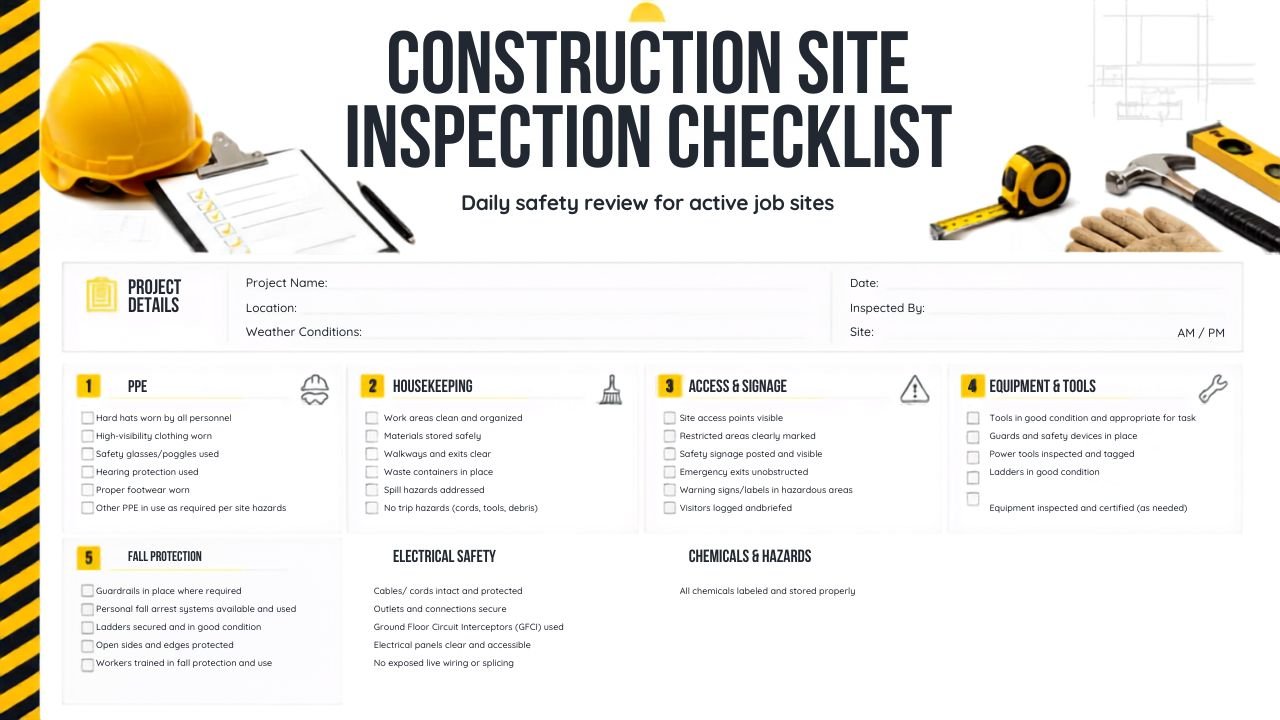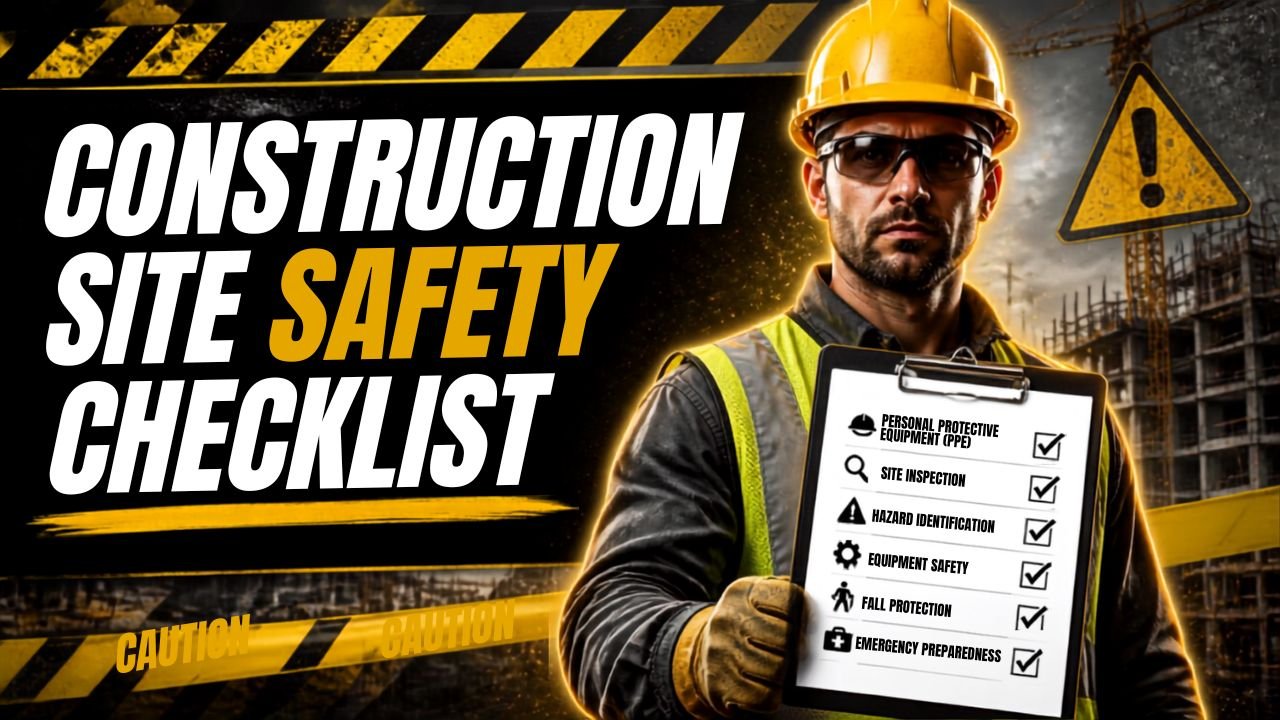
A practical construction site safety checklist template for Florida helps supervisors and crews prevent injuries, avoid delays, and stay compliant on every shift. Florida jobsites face extra pressure from extreme heat, high humidity, sudden thunderstorms, lightning, heavy rain, and hurricane season. A clear, repeatable template turns safety into a daily routine instead of a reaction after something goes wrong. This guide explains the essential controls every Florida construction site should check and provides a ready-to-use daily, weekly, and monthly format you can adapt for residential, commercial, renovation, pool, and new-home projects.
Why Florida Jobsites Need Extra Safety Controls
Florida construction sites deal with conditions that demand more than a generic safety list. High temperatures and humidity increase the risk of heat exhaustion and heat stroke. Afternoon storms bring lightning that can strike with little warning. Heavy rain creates muddy, slippery surfaces and can rapidly fill excavations. Hurricane season requires plans for securing materials, shutting down elevated work, and protecting the public. Coastal projects also face salt air that speeds corrosion on scaffolds, tools, and temporary structures.
Safety procedures must be adjusted for these local realities. Daily weather checks, earlier start times during peak heat, lightning stop-work rules, and storm-secure storage become part of normal operations. Good planning also connects to the broader project process, including understanding how to get a building permit in Florida, because permits, inspections, and site access rules all affect how safely work can proceed.
Personal Protective Equipment
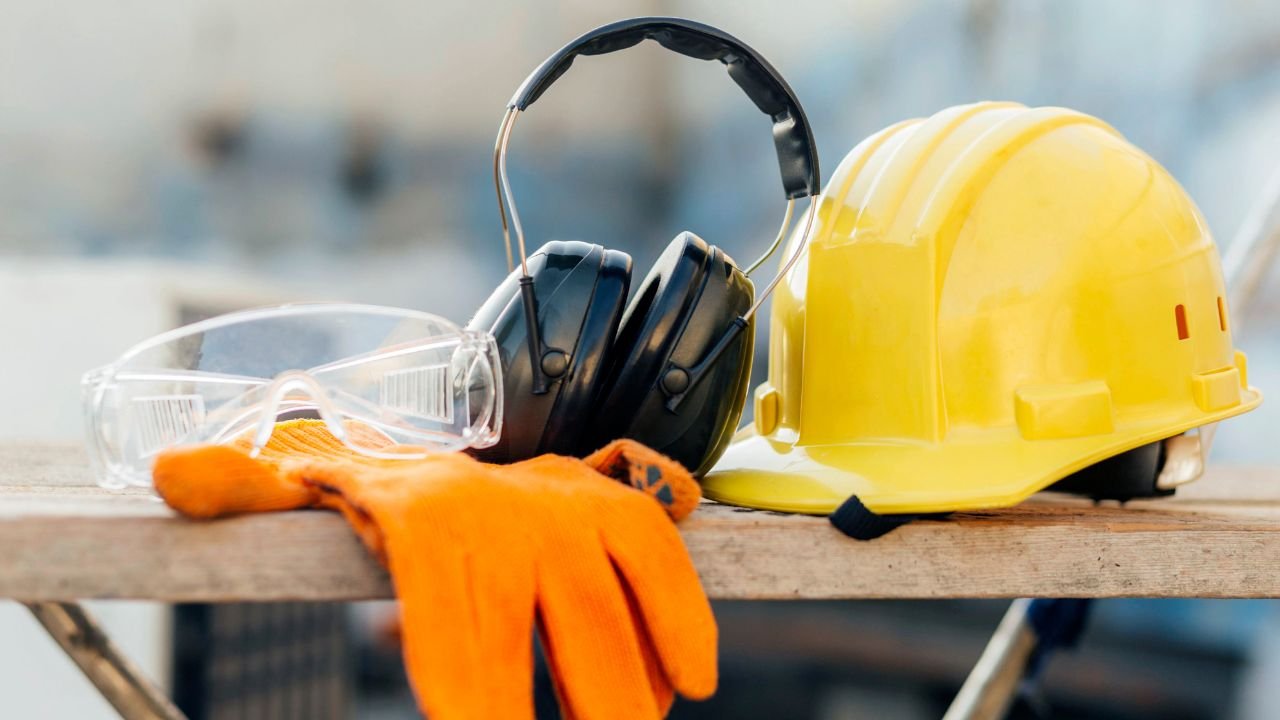
Personal protective equipment is the first line of defense on any jobsite. Every worker should have the correct gear for the tasks and conditions of the day.
Core PPE items typically include:
- Hard hats for protection from falling objects and overhead hazards
- Safety glasses or goggles for eye protection
- Task-appropriate gloves (cut-resistant, chemical-resistant, or general work gloves)
- High-visibility vests or shirts, especially near vehicle traffic or public areas
- Steel-toe or composite-toe boots with reliable traction
- Hearing protection when noise levels are high
- Respiratory protection when dust, silica, or chemical exposures are present
PPE must be inspected at the start of each shift. Cracked hard hats, scratched lenses, torn gloves, and worn boots lose effectiveness and should be replaced immediately. Supervisors should confirm that workers are actually wearing the required equipment. In Florida heat, breathable options and proper fit matter because uncomfortable gear is more likely to be left in the truck.
Fall Protection and Working at Heights
Falls remain one of the leading causes of serious injury on construction sites. Any work at height—roofs, open floors, scaffolds, ladders, or elevated platforms—requires effective fall protection.
Key controls include:
- Guardrails on open sides and edges
- Personal fall arrest systems (harness, lanyard, and secure anchor point) when guardrails are not feasible
- Safety nets where appropriate
- Secure, clearly marked covers for floor openings, roof openings, and holes
- Proper ladder selection, placement, and use
All fall protection equipment must be inspected before use. Damaged harnesses, frayed lanyards, or questionable anchors should be taken out of service at once. Workers need training on correct harness use, safe anchor selection, and rescue procedures. Roof work, second-story framing, and exterior finishing are common high-risk activities on Florida residential and commercial projects and deserve consistent attention.
Scaffolding, Ladders, and Access
Scaffolds and ladders provide necessary access but create serious hazards when misused.
Scaffolding should be:
- Erected on stable, level footings
- Fully planked and properly braced
- Equipped with guardrails and toe boards where required
- Rated for the intended load
- Inspected before each shift and after any event that could affect stability, such as heavy rain or high winds
Ladders must be in good condition, placed on firm ground, extended the correct distance above the landing, and secured when necessary. Workers should maintain three points of contact and avoid carrying loads that prevent safe climbing. Stairways and temporary access points must stay clear of debris, tools, and materials. In Florida, wet conditions after rain increase slip hazards, so non-slip surfaces and prompt cleanup are essential.
Electrical and Tool Safety
Electrical hazards and damaged tools cause many preventable injuries. Temporary power should use ground-fault circuit interrupter (GFCI) protection. Extension cords must be rated for the environment, free of cuts or exposed wiring, and kept out of walkways and standing water whenever possible.
Other important practices include:
- Keeping electrical panels accessible and properly labeled
- Using lockout/tagout procedures when servicing equipment
- Removing damaged tools from service immediately
- Ensuring only qualified workers perform electrical work
- Maintaining clear access around temporary power sources
Power tools should have intact guards, functioning switches, and appropriate cords or batteries. Wet conditions common in Florida raise the risk of shock, so extra care with outdoor cords and tools is required after rain or during humid periods.
Excavation, Materials, and Housekeeping
Excavations and trenches create collapse and fall hazards. Before digging, utilities must be located. Spoil piles should be kept far enough from the edge, and protective systems (sloping, shoring, or shielding) must be used when required by depth and soil conditions. Edges should be protected so workers and equipment cannot fall in.
Housekeeping is one of the simplest and most effective safety controls. Clear walkways, organized material storage, and prompt removal of scrap reduce slips, trips, falls, and fire hazards. Materials should be stacked securely and must not block exits, electrical panels, or emergency equipment. In Florida’s frequent rain, standing water and mud increase slip risks, so drainage and cleanup after storms matter.
Heat Stress and Weather Planning
Heat is a daily concern for much of the year in Florida. Supervisors and workers should watch for signs of heat exhaustion and heat stroke: heavy sweating, dizziness, nausea, confusion, rapid pulse, or cessation of sweating. Effective controls include:
- Ready access to cool drinking water
- Scheduled rest breaks in shade or cooled areas
- Earlier start times or adjusted schedules during extreme heat
- Acclimatization for new or returning workers
- Extra monitoring of workers performing heavy physical tasks
Weather monitoring should be part of the daily routine. Lightning protocols typically require stopping elevated and outdoor work when thunder is heard or lightning is nearby and waiting a set period after the last strike before resuming. Heavy rain may require pausing excavation, roof work, or concrete placement. During hurricane season, sites need a clear plan for securing loose materials, removing or bracing scaffolds, protecting openings, and shutting down the job in an orderly way. Guidance from the Florida Division of Emergency Management supports larger storm preparedness.
Fire Safety and Emergency Preparedness
Fire risks exist on both small residential jobs and large commercial sites. Hot work (welding, cutting, grinding) requires controls such as fire watches, removal of combustibles, and readily available extinguishers. Flammable liquids and gas cylinders must be stored properly. Temporary electrical systems should not be overloaded.
Every site should have:
- Charged and accessible fire extinguishers
- Clearly marked emergency exits and evacuation routes
- First aid kits and trained personnel
- A written emergency response plan covering medical emergencies, fires, severe weather, and site evacuation
- Posted emergency contact numbers
Workers should know the assembly point after an evacuation and how to report emergencies. Regular toolbox talks on emergency procedures improve response when something goes wrong.
Site Security and Public Protection
Construction sites attract curious neighbors, children, and sometimes thieves. Unsecured sites create both safety and liability problems. Effective controls include:
- Perimeter fencing or barriers where appropriate
- Locked gates after hours
- Warning signs and “No Trespassing” notices
- Controlled visitor access during work hours
- Securing tools, equipment, and materials at the end of each day
- Protecting open excavations and incomplete structures from public access
Public protection also includes keeping sidewalks and streets reasonably clear of debris and managing truck traffic so neighbors and passing motorists are not put at risk.
Daily, Weekly, and Monthly Checklist Format
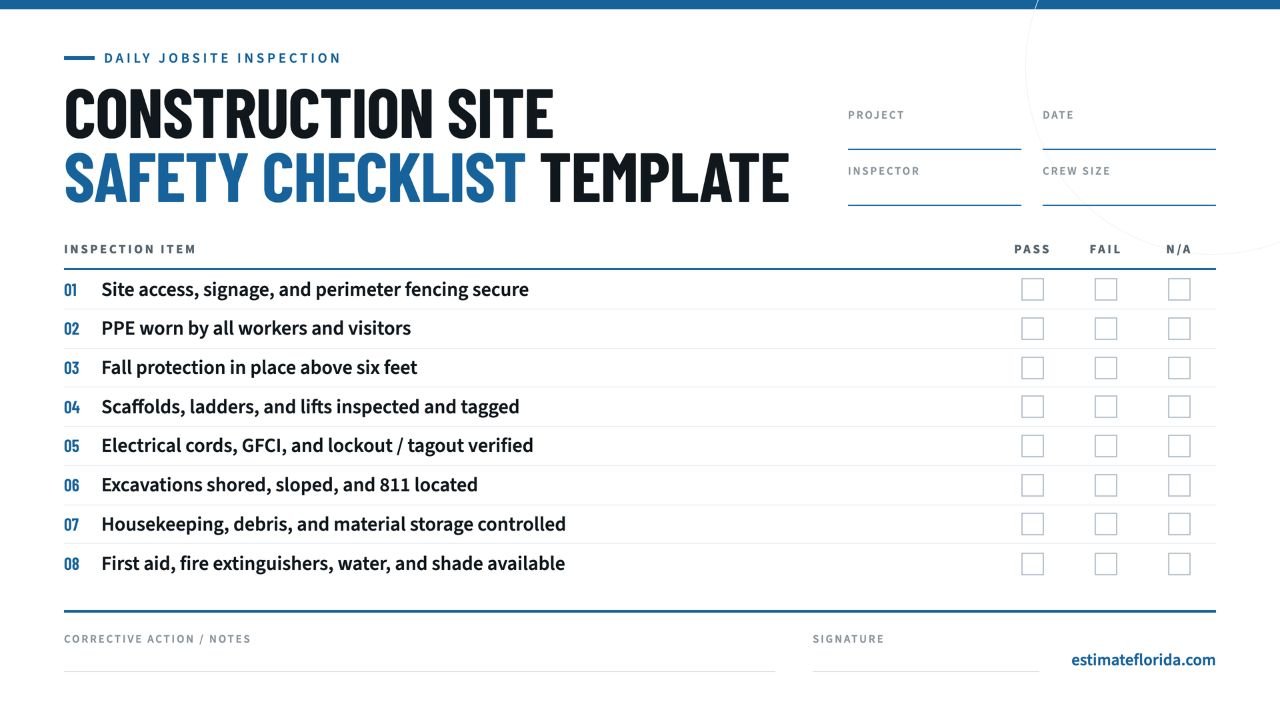
A simple, repeatable construction site safety checklist template for Florida keeps safety visible and consistent. The table below provides a practical starting point that supervisors can adapt to residential, commercial, renovation, or pool projects.
| Frequency | Key Items to Check |
|---|---|
| Daily | PPE condition and use; fall protection equipment; housekeeping and walkways; ladder and scaffold condition; GFCI and cord status; water and shade availability; weather forecast and lightning plan; fire extinguisher access; emergency exits clear |
| Weekly | Full scaffold inspection; tool and equipment condition; first aid kit restock; fire extinguisher pressure check; trench and excavation protection review; temporary power layout; material storage stability; visitor and access control effectiveness |
| Monthly | Training attendance records; emergency plan review; PPE inventory and replacement needs; incident and near-miss review; corrective action follow-up; storm readiness (especially during hurricane season); overall site security audit |
Supervisors should walk the site with the checklist in hand rather than completing it from memory. Corrective actions should be noted and followed up until completed. This template works for new home builds, renovations, commercial sites, and outdoor living or pool projects with only minor adjustments for the specific hazards present.
How to Document Safety Compliance
Documentation turns good intentions into proof of consistent practice. Useful records include:
- Daily and weekly inspection logs
- Corrective action notes and completion dates
- Toolbox talk attendance sheets
- Training records for fall protection, hazard communication, and equipment use
- Incident and near-miss reports
- Photographs of corrected hazards when helpful
Good records support accountability, help identify recurring problems, and provide protection if questions arise later. They also reinforce a culture in which safety is treated as part of professional work. Contractors who take safety seriously often develop stronger overall project management habits. Readers interested in the broader professional standards that licensed contractors must meet can explore how to become a contractor in Florida, how to become a general contractor in Florida, how to become a builder in Florida, and how to become a pool builder in Florida.
Official resources such as OSHA Construction Safety and Health and the Florida Building Code provide the regulatory foundation that site checklists should support. The Florida Department of Business and Professional Regulation oversees contractor licensing, which includes expectations of competent and responsible practice.
Final Thoughts
A construction site safety checklist template for Florida works best when it is simple, repeatable, and tailored to the actual hazards on the site. Heat, storms, lightning, moisture, and high-wind conditions require extra attention beyond generic safety lists. Daily inspection of PPE, fall protection, housekeeping, electrical conditions, and weather readiness prevents many of the most common incidents.
Safety should be built into the normal rhythm of the job rather than treated as an afterthought or a paperwork exercise. When supervisors walk the site with a clear checklist, correct problems immediately, and keep basic records, the entire project benefits through fewer injuries, fewer stoppages, and better overall control. Make the checklist part of every shift, adjust it for Florida weather, and treat safety as a core professional responsibility on every jobsite.