Managing a construction site involves juggling tight deadlines, complex logistics, and large crews, but nothing is more critical than jobsite safety. Using a robust construction safety checklist for Florida helps prevent severe injuries, costly project delays, and stiff regulatory compliance issues. A strong safety program is the backbone of any successful build, ensuring workers return home safely every single day while keeping your project on track and within budget.
However, standard safety protocols are rarely enough in the Sunshine State. Florida jobsites need extra attention because of extreme heat, sudden lightning storms, heavy rain, and coastal moisture. High winds, hurricanes, and slippery surfaces create a unique set of challenges that require climate-specific planning.
In this comprehensive guide, we will break down the essential items every Florida construction site should check regularly. Whether you are managing residential construction, a major commercial development, or an outdoor renovation, this checklist will help you maintain OSHA compliance, boost productivity, and build a culture of safety.
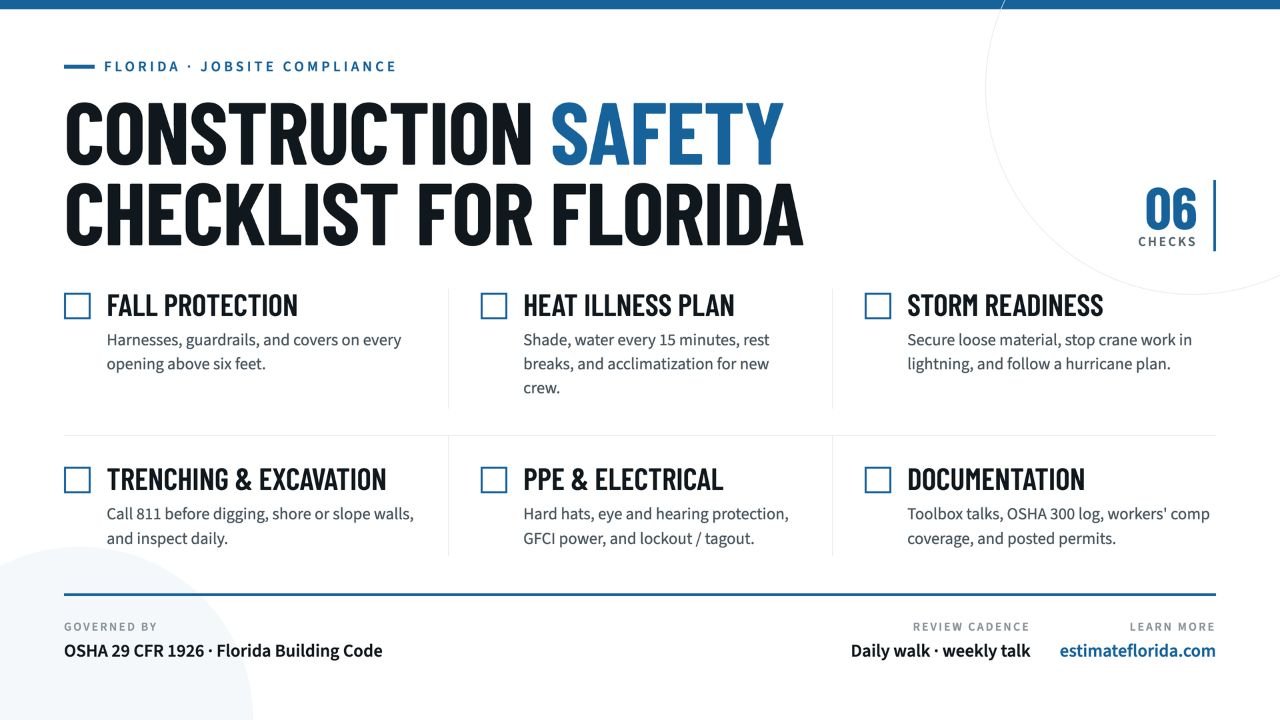
Why Florida Jobsites Need Extra Safety Controls
Florida’s unique geography and climate present distinct hazards that do not exist in many other parts of the country. A one-size-fits-all approach to safety simply does not work here. Safety procedures must be proactively adjusted for local weather and site conditions.
-
Heat Stress: Florida’s oppressive heat and humidity can cause rapid dehydration, heat exhaustion, and fatal heatstroke.
-
Lightning: Florida is the lightning capital of the United States. Afternoon thunderstorms pop up instantly, making outdoor work incredibly dangerous.
-
Heavy Rain and Slippery Surfaces: Sudden downpours turn dry dirt into slick mud, creating major slip and fall hazards and destabilizing excavation trenches.
-
Hurricanes and High Winds: From June through November, sites must be prepared to secure loose materials and stop work at a moment’s notice.
-
Coastal Corrosion: Salt air degrades metal scaffolding, ladders, and tools much faster than in inland areas, meaning equipment must be inspected more frequently.
Accounting for these risks begins long before the first shovel hits the dirt. Planning for heavy rain runoff, wind-load bracing, and proper staging should be part of the initial logistics phase. This is why knowing how to get a building permit in Florida involves strict adherence to the Florida Building Code—the state requires safety to be engineered directly into the project from day one.
Personal Protective Equipment
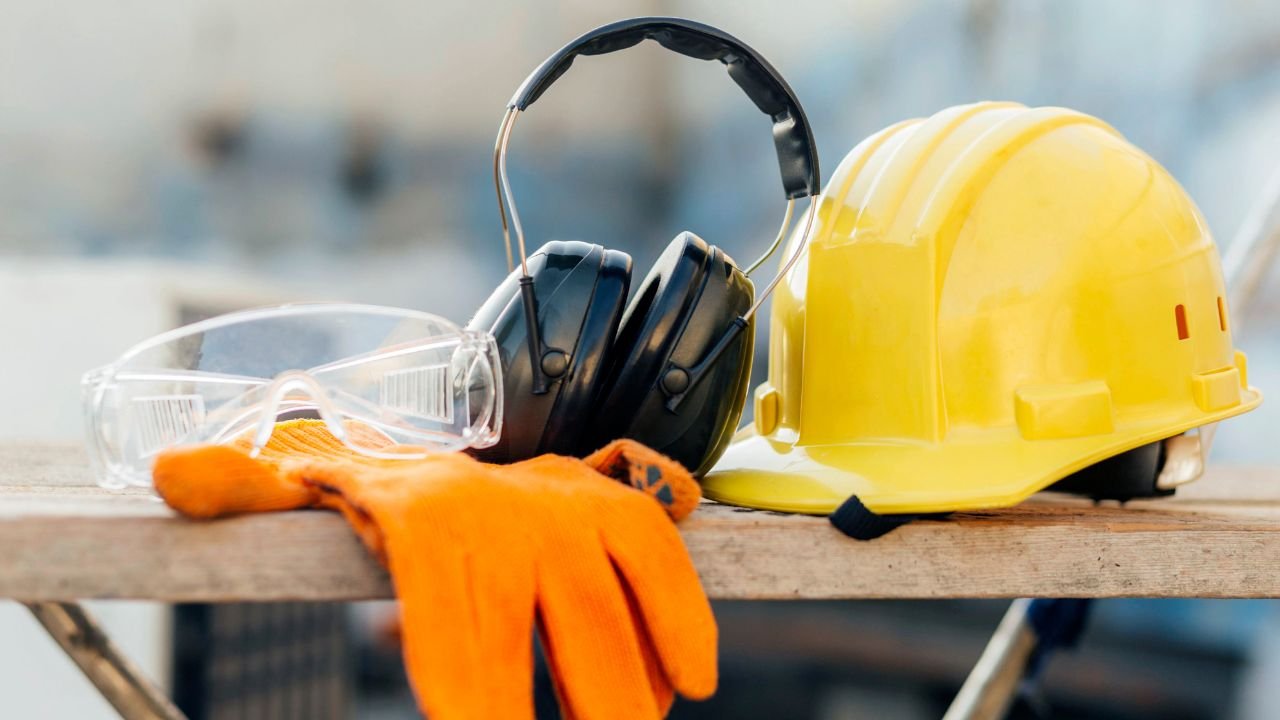
Personal Protective Equipment (PPE) is the final line of defense against jobsite injuries. Supervisors must ensure that every worker, subcontractor, and visitor is wearing the correct gear for their specific task. A proper PPE checklist includes:
-
Hard Hats: Mandatory on all sites to protect against falling objects, particularly during framing, roofing, and crane operations.
-
Safety Glasses: Essential to protect eyes from flying debris, sawdust, and chemical splashes.
-
Gloves: Task-specific gloves (cut-resistant, heavy-duty leather, or chemical-resistant) must be worn to prevent lacerations and burns.
-
High-Visibility Vests: Required for anyone working near heavy equipment, roadwork, or delivery zones to ensure operators can see them clearly.
-
Steel-Toe Boots: Sturdy footwear protects against puncture wounds from stray nails and impact injuries from dropped materials.
-
Hearing Protection: Earplugs or earmuffs must be worn when operating loud machinery like jackhammers, concrete saws, or heavy earthmovers.
PPE is useless if it is compromised. Site supervisors should ensure that PPE is checked daily and replaced immediately when damaged or heavily worn.
Fall Protection and Working at Heights
Falls are the leading cause of death in the construction industry, and the risks are magnified on wet Florida roofs or slick coastal balconies. Following OSHA Construction Safety and Health guidelines for fall protection is non-negotiable.
Any time a worker is exposed to a fall of six feet or more, safety measures must be deployed.
-
Guardrails: Must be installed around the perimeter of elevated work areas, balconies, and stairwells.
-
Harnesses and Anchor Points: Personal Fall Arrest Systems (PFAS) must be worn by roofers and high-elevation workers, securely attached to rated anchor points.
-
Safety Nets: Used on massive commercial sites to catch debris and workers.
-
Covered Openings: Floor holes, elevator shafts, and skylight cutouts must be securely covered, clearly marked, and able to support twice the expected weight.
Regular equipment inspections are mandatory. A frayed harness or a rusted anchor point is a fatal accident waiting to happen. Fall protection also requires continuous worker training so that crews know exactly how to adjust and wear their gear.
Scaffolding, Ladders, and Access
Improperly erected scaffolds and misused ladders lead to devastating injuries. A Florida jobsite inspection checklist must heavily scrutinize all access points.
-
Scaffolding Setup: Scaffolds must be erected on stable footing. In Florida’s sandy soil, this often requires heavy mudsills to prevent sinking. Scaffolds must have proper guardrails, mid-rails, and toe-boards.
-
Load Limits: Never overload a scaffold with excessive brick, block, or heavy tools.
-
Ladder Condition: Inspect fiberglass and aluminum ladders for cracks, bent rungs, or missing slip-resistant feet. Never use a damaged ladder.
-
Proper Use: Ladders must extend three feet above the landing surface and be tied off. Workers must maintain three points of contact at all times.
Finally, access points, ramps, and stairways must stay clear of trip hazards, power cords, and debris to ensure safe movement throughout the site.
Electrical and Tool Safety
Construction sites are filled with temporary power setups, exposed wiring, and heavy-duty power tools. Electrical safety is especially critical in Florida, where puddles and damp conditions increase the risk of electrocution.
-
GFCI Protection: Ground Fault Circuit Interrupters (GFCIs) must be used on all temporary power outlets and extension cords to cut power instantly if a fault is detected.
-
Cord Condition: Inspect extension cords daily. Cords with missing ground prongs, exposed wires, or sliced insulation should be cut and thrown away immediately.
-
Temporary Power Safety: Electrical panels must have clear access (at least three feet of clearance) and be protected from the weather.
-
Lockout/Tagout: When servicing equipment, proper lockout/tagout procedures must be followed so machinery cannot be accidentally energized.
-
Qualified Trade Work: Only licensed electricians should handle wiring. If you are learning how to become a contractor in Florida, you know that unlicensed electrical work is highly illegal and incredibly dangerous.
Damaged tools and exposed wiring should be removed from service immediately to prevent tragedy.
Excavation, Materials, and Housekeeping
Site preparation and earthwork present significant hazards, particularly because Florida’s sandy soils are prone to rapid cave-ins.
-
Trench Safety: Any trench deeper than five feet requires a protective system, such as trench boxes, shoring, or sloping.
-
Utility Locating: Always call 811 to locate underground utilities before digging.
-
Spoil Placement: Keep excavated dirt (spoils) and heavy equipment at least two feet away from the trench edge to prevent collapse.
Beyond the dirt work, general housekeeping is the easiest way to prevent accidents. A clean site is a safe site. Good housekeeping prevents slips, trips, falls, and fire hazards. Wood scraps, nails, and packaging should be thrown in dumpsters daily. Materials should be stacked securely and stored safely away from high-traffic access areas.
Heat Stress and Weather Planning
Florida’s climate is arguably the most persistent hazard on any site. Managing extreme weather requires vigilant daily planning.
-
Heat Stress: Supervisors must watch for signs of heat exhaustion, dehydration, and fatigue (e.g., dizziness, heavy sweating, confusion). Ensure workers have constant access to cool water, shaded rest areas, and mandatory rest breaks. Acclimatization is critical—new workers need time to get used to the Florida heat.
-
Lightning: Monitor local radar constantly. When lightning is within 10 miles, sound the alarm and enforce a mandatory lightning stop. Workers must retreat to enclosed structures or vehicles until the storm passes.
-
Hurricane Preparedness: Storm shutdown procedures must be part of your safety plan. When a tropical system approaches, contractors must consult the Florida Division of Emergency Management and secure the site by tying down materials, emptying dumpsters, and bracing vulnerable structures.
Fire Safety and Emergency Preparedness
Fires on construction sites spread incredibly fast due to exposed wood framing, chemicals, and open airflow. Fire prevention matters on both small residential remodels and massive high-rise jobs.
-
Fire Extinguishers: Must be fully charged, inspected monthly, and placed in highly visible, easily accessible areas.
-
Hot Work Controls: Grinding, welding, and soldering require a dedicated fire watch and careful clearing of combustible materials nearby.
-
Combustible Storage: Fuel, paint, and chemicals must be stored in approved, ventilated safety cabinets.
-
Emergency Exits and Evacuation: Evacuation routes must be clearly marked, and all workers must know the assembly point.
-
First Aid Kits: Must be fully stocked and easily accessible to all crews.
Every site must have a written emergency response plan, and supervisors should ensure there are personnel trained in basic first aid and CPR on-site at all times.
Site Security and Public Protection
Safety extends beyond your workers; contractors are legally responsible for protecting the public from construction hazards. Material theft and unauthorized access can also create hidden safety problems, such as tampered scaffolding or stolen safety gear.
-
Fencing and Barricades: The site perimeter must be secured with chain-link fencing or sturdy barricades to prevent trespassing.
-
Warning Signs: Post high-visibility signage denoting “Hard Hat Area,” “No Trespassing,” and “Danger: Construction Site.”
-
Protection for Children and Neighbors: Secure attractive nuisances like deep trenches, ladders, and heavy equipment at the end of every shift.
-
Visitor Control: Require all vendors, inspectors, and owners to sign in at the site trailer and wear appropriate PPE before walking the job.
If you are managing a specialized outdoor project, such as those governed by rules on how to become a pool builder in Florida, securing deep, open pool excavations with temporary fencing is an absolute safety requirement to protect neighborhood children.
Daily, Weekly, and Monthly Checklist Format
A construction site safety checklist Florida contractors use must be organized and repeatable. Use the following practical table to establish a routine for daily inspections, weekly safety audits, and monthly reviews.
| Inspection Frequency | Items to Check and Verify | Action Required if Deficient |
| Daily | Worker PPE (Hard hats, boots, glasses, vests) | Replace missing/damaged gear immediately. |
| Daily | Housekeeping (Trip hazards, debris, trash) | Stop work and clean the area. |
| Daily | Weather conditions (Heat index, lightning risks) | Schedule extra water breaks; halt work for storms. |
| Daily | Scaffolds & Ladders (Footing, damage, tie-offs) | Tag ladder as “Do Not Use” and remove it. |
| Weekly | Fall Protection Gear (Harnesses, lanyards, anchors) | Destroy and discard frayed or damaged gear. |
| Weekly | Electrical Cords & GFCIs (Fraying, ground prongs) | Cut and discard damaged cords. |
| Weekly | Trenching & Excavation (Shoring, spoil distance) | Clear spoils; install shoring before re-entry. |
| Monthly | Fire Extinguishers (Pressure gauge, inspection tag) | Recharge or replace units immediately. |
| Monthly | Emergency Kits (First aid supplies, eye wash stations) | Restock depleted supplies. |
| Monthly | Site Security (Fencing intact, signs visible) | Repair fence breaches and replace signage. |
Make it easy for your site supervisors to use this checklist immediately via a mobile app or a laminated clipboard.
How to Document Safety Compliance
Walking the site and spotting hazards is only half the job; you must document your efforts. If an OSHA inspector arrives or an accident occurs, documentation provides accountability and crucial legal protection.
-
Inspection Logs: Keep daily and weekly checklists signed and dated by the site superintendent.
-
Corrective Action Records: Document when a hazard was found and exactly how and when it was fixed.
-
Training Attendance: Keep sign-in sheets for every toolbox talk, safety orientation, and harness training session.
-
Incident Reports: Log all near-misses and minor injuries to identify trends before a major accident happens.
-
Photo Records: Take daily photos of the site to prove that fall protection was in place, trenches were shored, and the site was clean.
Contractors carry immense liability. For those researching how to become a general contractor in Florida or how to become a builder in Florida, understanding how to properly document safety compliance is just as important as knowing how to pour concrete or frame a wall. Your license via the Florida Department of Business and Professional Regulation requires strict adherence to safety standards and ethical jobsite management.
Final Thoughts
Implementing a rigorous construction safety checklist for Florida is not just about avoiding fines; it is about protecting the lives of the men and women who build our communities. From new home builds and commercial renovations to high-wind coastal projects, a safety checklist should be simple, repeatable, and site-specific.
Daily inspections, weekly audits, and early hazard corrections prevent minor issues from turning into major tragedies. Weather tracking for heat and storms, stringent fall protection, and aggressive housekeeping are the hallmarks of a professional jobsite.
Ultimately, the goal is to make safety part of the job, not an afterthought. By utilizing this Florida jobsite safety checklist and documenting your compliance every step of the way, you can create a safer, more productive, and highly successful construction environment.