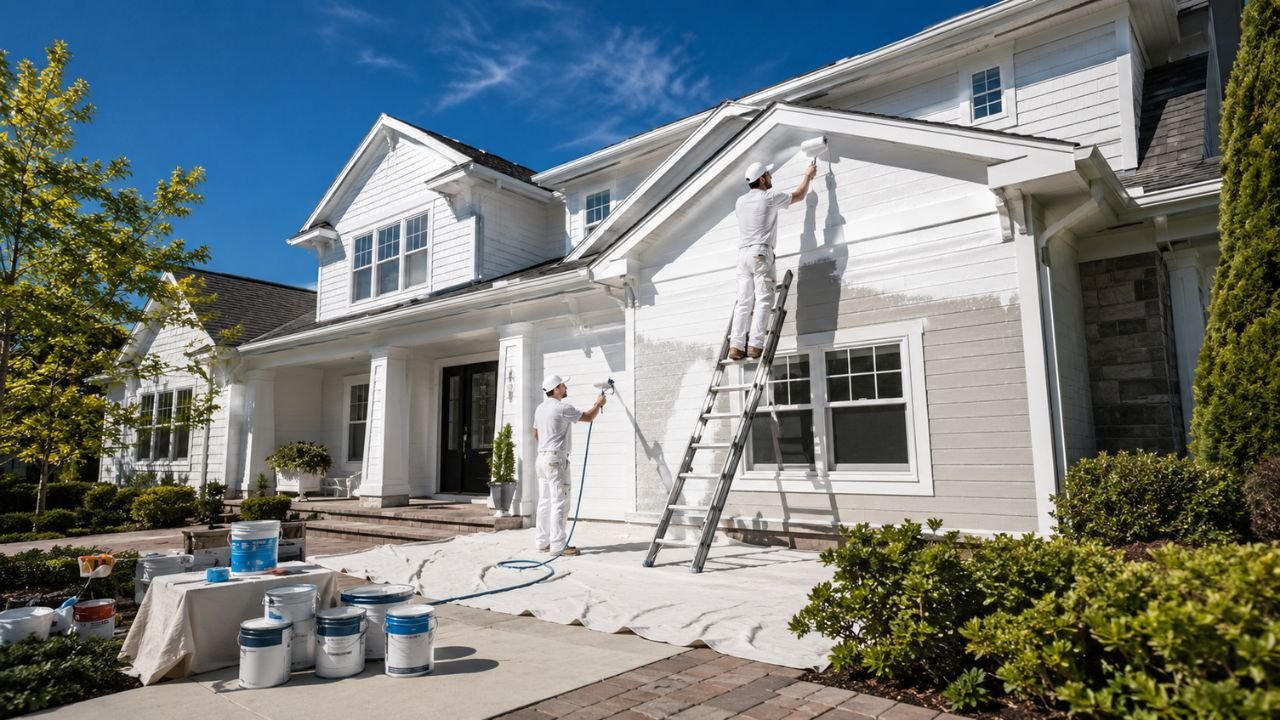
If you want to know how to become a builder in Florida, you must navigate a multi-step licensing framework designed to protect property owners and maintain safety across the state. Becoming a licensed builder in Florida requires a combination of hands-on construction experience, formal education, state examination success, and legal proof of financial responsibility. Whether you are a carpenter, site foreman, project manager, or construction management graduate, learning how to become a builder in Florida opens the door to running your own residential or commercial contracting firm.
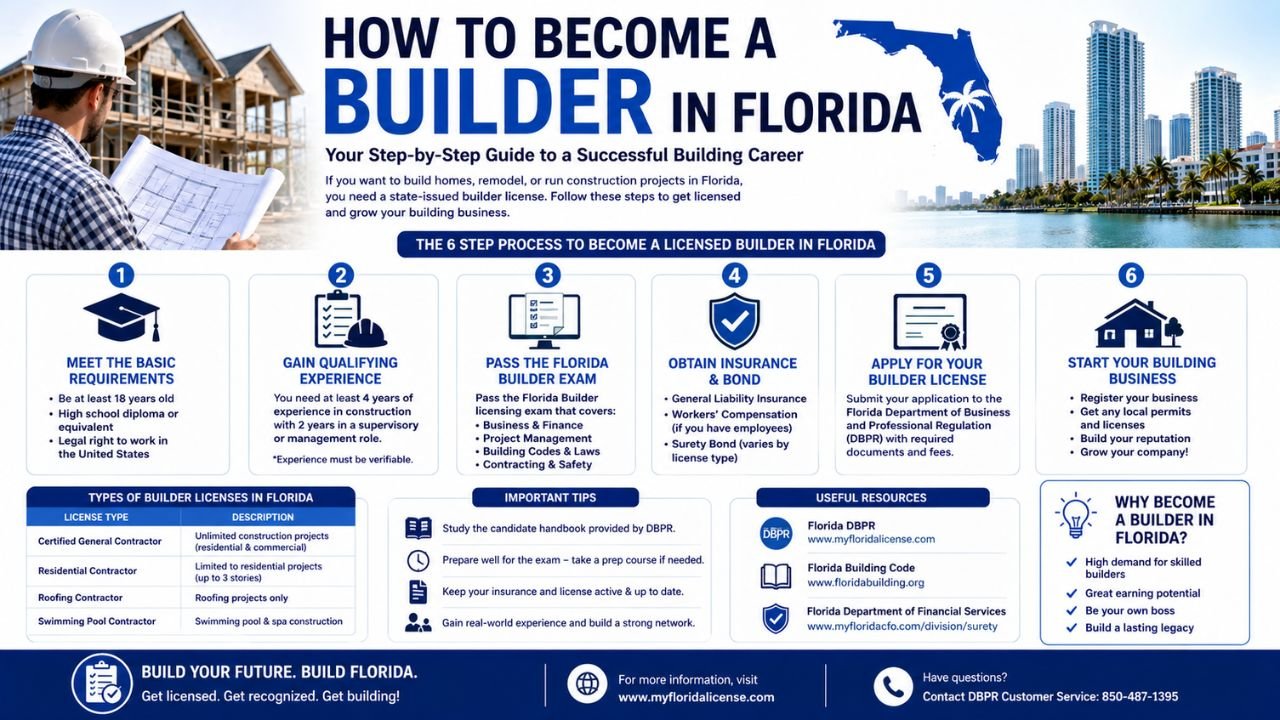
Florida offers several licensing pathways depending on the size and scope of the projects you plan to direct. By understanding what the state expects—from field experience and exam preparation to insurance and background checks—you can systematically prepare your application and build a thriving construction business.
What Type of Builder License Do You Need?
Before applying to the state, you must select the license category that aligns with your professional background and long-term business goals. Florida divides main building contractors into three distinct scope levels:
-
Residential Contractor (CR / RR): Authorizes construction, remodeling, repair, or improvement of one-family, two-family, or three-family residences. These structures cannot exceed two stories in height. It also covers related accessory structures such as garages and sheds.
-
Building Contractor (CB / RB): Authorizes work on commercial buildings and residential structures that do not exceed three stories in height. A building contractor can also perform structural remodeling or repairs on buildings of any height, provided structural elements are not compromised.
-
General Contractor (CG / RG): Provides unlimited authority regarding the type, height, and scale of structures you can construct, repair, or alter. This is the highest license tier in Florida.
| License Type | Height Limit | Scope of Work | Ideal Applicant |
| Residential Contractor | Max 2 Stories | Single-family, duplexes, triplexes, accessory structures | Home builders, residential remodelers |
| Building Contractor | Max 3 Stories | Commercial structures, multi-family units, non-structural high-rise repairs | Light commercial and multi-family builders |
| General Contractor | Unlimited | All commercial, industrial, high-rise, and residential structures | Large-scale commercial & civil builders |
Choosing the right category early ensures you collect the correct work verification records and take the appropriate state exam.
Certified vs Registered Licenses
Florida issues contractor licenses in two primary operational formats: Certified and Registered. Knowing the difference is vital when mapping out your expansion plans.
-
Certified Licenses (Statewide): Issued after passing the Florida state contractor exam. A certified builder can pull permits and operate anywhere within the state of Florida without having to take additional local competency exams. Certified license numbers start with C (e.g., CBC, CGC, CRC).
-
Registered Licenses (Local Jurisdiction): Issued when an applicant holds a certificate of competency from a specific city or county. A registered contractor is limited to working within that specific local jurisdiction and any neighboring areas that accept local reciprocity. Registered license numbers start with R (e.g., RBC, RGC, RRC).
Most modern builders opt for a certified license to maximize their geographic flexibility and growth potential across the state.
Experience and Education Requirements
To earn a builder license, applicants must demonstrate a minimum level of technical competence. The Florida Construction Industry Licensing Board (CILB) evaluates candidates through three main qualification routes:
-
Field Experience Route: Four years of active experience in the construction trade, with at least one year acting as a foreman or supervisor.
-
Degree Route: A four-year accredited college degree in construction, engineering, or architecture, combined with at least one year of supervisory experience.
-
Combined Route: A combination of college credits and active field experience totaling four years, including at least one year of supervisory trade experience.
At least one year of your experience must involve structural active trade experience (such as foundations, framing, masonry, or structural steel) relevant to the license category you seek.
Aspiring builders will find that mastering project fundamentals early pays off during licensing. For instance, knowing what are the 7 stages of construction helps candidates properly document site experience, while mastering residential construction estimating prepares applicants for the practical management sections of the state examination.
Exam and Application Process
Getting certified involves a clear sequence of steps administered by the state and its testing vendor:
-
Select Your Category: Decide between Residential, Building, or General Contractor.
-
Register for the Exam: The Florida contractor exam consists of two primary components:
-
Trade Knowledge: Tests building codes, structural components, safety standards, and site execution.
-
Business and Finance: Tests accounting, lien laws, tax requirements, project management, and employment rules.
-
-
Pass the Exam: Exams are open-book, rigorous, and timed. Most successful applicants dedicate 80 to 120 hours to structured study and book-tabbing.
-
Submit Your DBPR Application: Complete the application forms provided by the Florida Department of Business and Professional Regulation (DBPR).
-
Provide Proof of Experience: Submit signed W-2s, tax returns, or affidavits from licensed contractors confirming your supervisory field experience.
-
Pay Licensing Fees: Pay the required initial application fees to the CILB.
Financial, Insurance, and Background Requirements
Florida requires all licensed builders to demonstrate financial stability and public responsibility before granting active license status.
Financial Responsibility & Credit
Applicants must submit a personal credit report showing a FICO score of 660 or higher. If your credit score is below 660, you can still qualify by taking a board-approved financial responsibility course or securing a licensing bond. A credit report is also required for the business entity you intend to qualify.
Insurance Coverage
You must carry public liability and property damage insurance in amounts dictated by your license class:
-
General Contractor: Minimum $300,000 public liability and $50,000 property damage.
-
Building / Residential Contractor: Minimum $100,000 public liability and $25,000 property damage.
-
Workers’ Compensation insurance (or an official state-approved exemption) is required before pulling any permits.
Fingerprinting and Background Check
All applicants must undergo a background check using electronic fingerprinting through a vendor approved by the Florida Department of Law Enforcement (FDLE). Criminal history does not automatically disqualify an applicant, but full disclosure is mandatory during CILB review.
Business Setup After Licensure
Passing the exam and receiving your license number is a major milestone, but starting operations requires setting up a compliant business framework:
-
Business Registration: Register your LLC or Corporation with the Florida Division of Corporations (Sunbiz).
-
Qualifying the Entity: Submit a DBPR application to tie your personal license to your business entity as the “Qualifying Agent”.
-
Tax Accounts: Obtain a Federal Employer Identification Number (FEIN) from the IRS and register with the Florida Department of Revenue.
-
Operational Systems: Set up professional accounting, project management, and estimating software. Establish contract templates that strictly follow Florida’s Construction Lien Law (Chapter 713, Florida Statutes).
How to Prepare as an Aspiring Builder
If you are currently working in the trades or studying construction management, you can take active steps today to streamline your future application:
-
Work Under Licensed Builders: Ensure your direct supervisor holds an active certified or registered license so they can officially verify your experience later.
-
Document Your Projects: Keep a personal logbook of projects you work on, including job sites, dollar values, structural scopes, and your exact duties (e.g., site foreman, lead framer, field manager).
-
Gain Formal Training: Pursue coursework or degree programs accredited by institutions under the Florida Department of Education or recognized technical colleges.
-
Build Credit & Financial Records: Monitor your personal credit score and clear up outstanding judgments or liens long before applying.
Costs and Time to Become Licensed
The total investment required when learning how to become a builder in Florida depends on your current experience, educational background, and business scale.
Estimated Licensing Costs
-
Exam Registration & Test Fees: ~$250–$350
-
Books & Exam Prep Courses: ~$1,000–$2,200
-
DBPR Application Fee: ~$205–$305
-
Fingerprinting & Background Check: ~$50–$85
-
Initial General Liability & Workers’ Comp Setup: ~$1,200–$3,500+
Practical Business Financial References
Once licensed, running a business requires detailed project budgeting. For example, understanding how much does it cost to build a house in Florida helps residential builders produce realistic bids, while downloading a sample BOQ for house construction excel complete format with example ensures accurate line-item material tracking. If you plan to scale into commercial sectors, knowing how much does it cost to build a warehouse in Florida gives you a competitive benchmark during commercial project bidding.
Most candidates spend 3 to 6 months preparing for exams, collecting documents, and completing the approval process once they meet the four-year experience threshold.
Final Thoughts
Learning how to become a builder in Florida requires dedication, thorough preparation, and compliance with state regulations. By identifying the correct license path early—whether Residential, Building, or General Contractor—you can intentionally build the supervisory experience and financial stability necessary for board approval. Keep meticulous records of your project work, invest in comprehensive state exam preparation, and establish robust estimating and legal systems so you can launch a successful construction business in Florida.