Every successful building project relies on strict quality control, proactive risk management, and uncompromising safety standards. Using a standardized construction site inspection checklist PDF is one of the most effective ways to guarantee that site supervisors, safety managers, and general contractors catch issues before they escalate into expensive mistakes. This simple, structured document helps inspectors efficiently document hazards, track structural defects, and assign corrective actions all in one place.
Whether you are pouring a foundation for a custom home or framing a massive commercial facility, relying on memory to verify site conditions is a recipe for disaster. In this comprehensive guide, we will break down exactly what a top-tier checklist should contain, why utilizing a PDF format streamlines your workflow, and how to implement it daily to keep your project compliant, safe, and on schedule.
What Is a Construction Site Inspection Checklist PDF?
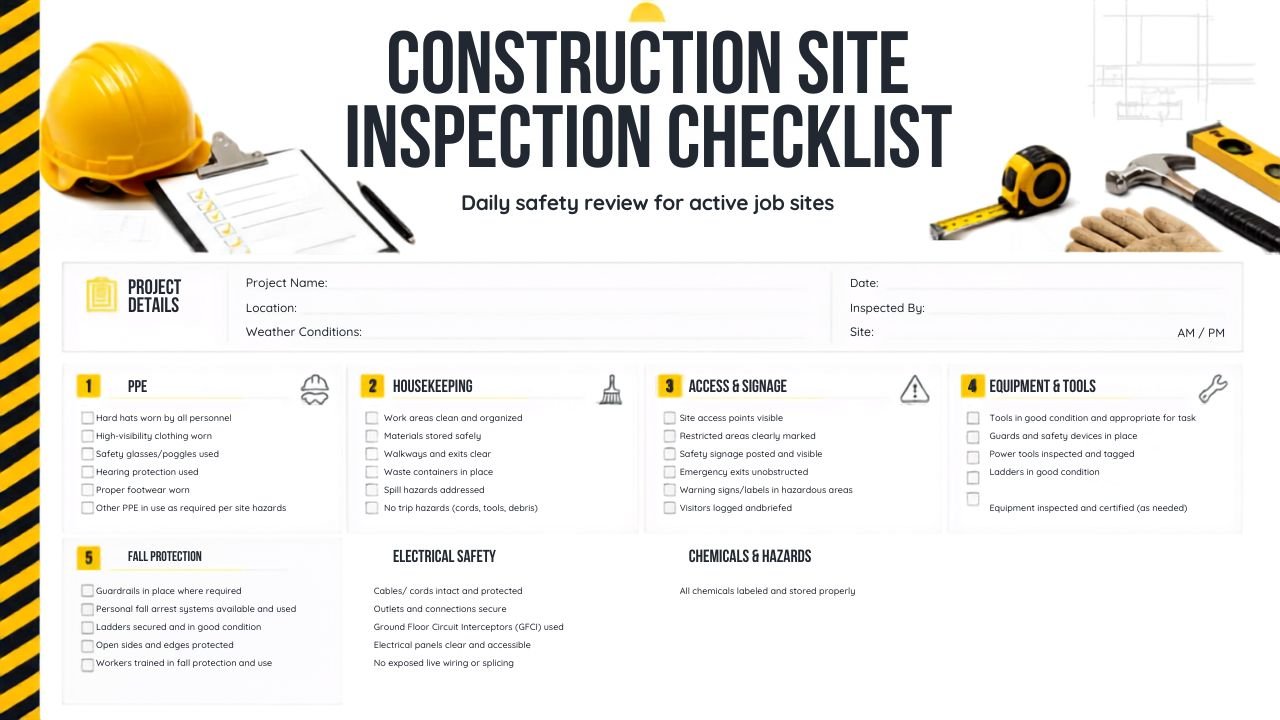
A construction site inspection checklist PDF is a pre-formatted, standardized document used by jobsite leaders to evaluate the safety, quality, and compliance of an active construction project.
The PDF (Portable Document Format) is the gold standard for construction forms because of its universal compatibility and unalterable formatting. Unlike a fragile spreadsheet that can have its formulas accidentally broken on a mobile device, a construction inspection form pdf looks exactly the same whether it is printed on paper and attached to a clipboard or filled out digitally on a rugged site tablet.
Using a structured building site inspection checklist PDF is vastly superior to jotting down informal notes on a legal pad. A formal checklist forces the inspector to physically check specific items—like scaffolding ties, fire extinguisher tags, and trench shoring—ensuring that critical safety and quality metrics are never accidentally overlooked during a busy workday.
Why Inspection Checklists Matter
Construction sites are dynamic, chaotic environments where conditions change by the hour. Implementing a standardized site inspection checklist PDF offers immense benefits across the entire project lifecycle.
-
Better Safety: Routine site audits ensure strict safety compliance, protecting workers from severe injuries and fatal accidents.
-
Fewer Missed Defects: Quality control checklists force supervisors to verify that work meets the architectural plans, drastically reducing the size of the final punch list.
-
More Consistent Inspections: When every superintendent uses the same jobsite inspection checklist pdf, the company maintains a uniform standard of excellence across all its projects.
-
Easier Recordkeeping: Daily and weekly reports create a permanent paper trail that proves due diligence in the event of an OSHA audit or a legal dispute.
-
Improved Accountability: A good inspection form assigns specific corrective actions to specific subcontractors, eliminating the “I thought someone else was fixing that” excuse.
Catching an issue early—like a missing structural tie-down or an improperly sloped pipe—saves thousands of dollars in rework. In fact, precise jobsite documentation is just as important to your bottom line as accurate residential construction estimating, because fixing mistakes after the drywall goes up will instantly destroy your profit margins.
What Should Be in the Checklist?
A comprehensive construction inspection checklist pdf must cover a wide array of categories, balancing worker safety with structural quality. A well-designed form typically includes the following core sections:
-
Site Access and Signage: Are warning signs posted? Is the perimeter fence secure? Are visitors logging in?
-
Personal Protective Equipment (PPE): Is everyone wearing hard hats, safety glasses, high-visibility vests, and steel-toe boots?
-
Housekeeping: Are walkways clear of trip hazards? Is combustible trash placed in dumpsters? Are protruding nails removed or bent flat?
-
Scaffolds and Ladders: Are scaffolds built on solid mudsills? Are guardrails in place? Are ladders tied off and free of defects?
-
Fall Protection: Are workers tied off when working at heights? Are leading edges and floor holes securely covered?
-
Electrical Safety: Are extension cords free of cuts and frays? Are temporary power boxes equipped with GFCIs?
-
Excavation and Trench Safety: Are trenches over five feet deep properly shored or sloped? Are spoils kept at least two feet from the edge?
-
Materials Storage: Are materials stacked safely? Are delivered goods protected from the weather? (This is a great time to verify deliveries against your sample BOQ for house construction excel complete format with example).
-
Equipment Condition: Are heavy machines inspected before use? Are backup alarms functioning properly?
-
Fire Safety: Are fire extinguishers highly visible and fully charged? Are hot work protocols being followed?
-
Emergency Readiness: Is the first aid kit fully stocked? Is the emergency evacuation route clear?
Beyond the checklist items, the PDF must feature dedicated spaces for inspector notes, photo references, and follow-up sign-offs to ensure that identified issues are actually resolved.
Daily, Weekly, and Milestone Inspections
One of the great advantages of a PDF checklist is that the same core document can be adapted for different inspection frequencies. Not every item needs to be checked every single day, but a rigid schedule guarantees that nothing slips through the cracks.
Daily Safety Walk
The daily inspection is a rapid, high-level sweep focused strictly on life safety, PPE compliance, and immediate hazard mitigation.
Weekly Safety and Quality Audit
The weekly audit is a much deeper dive. It involves a thorough check of temporary electrical setups, scaffolding integrity, heavy equipment maintenance logs, and broader quality control reviews.
Milestone Progress Inspections
Milestone inspections are hyper-focused checks that occur before a major phase of construction begins or ends, such as a pre-pour inspection for a foundation or a pre-drywall close-in inspection. Understanding exactly what are the 7 stages of construction helps supervisors schedule these milestone inspections at the perfect moment to ensure quality without delaying the schedule.
Inspection Frequency and Purpose Table
| Inspection Type | Frequency | Primary Purpose | Sample Checklist Items |
| Safety Walk | Daily | Spot immediate hazards and ensure worker PPE compliance. | Hard hats worn, trip hazards cleared, trenches stable. |
| Quality/Site Audit | Weekly | Deep review of equipment, detailed safety gear, and QC. | Scaffold tags updated, GFCI tested, fire extinguishers checked. |
| Pre-Pour Check | Milestone | Verify rebar, forms, and plumbing before concrete arrives. | Rebar clearance, vapor barrier intact, sleeves in place. |
| Close-In Check | Milestone | Verify MEP rough-ins and framing before drywall. | Wires protected, nail plates installed, framing plumb. |
| Pre-Closeout | Milestone | Generate the final punch list for project turnover. | Paint touch-ups, hardware installed, final clean complete. |
Florida-Specific Inspection Concerns
If you are managing a project in the Southeast, your construction site safety checklist pdf must be customized to address extreme local weather and strict coastal building codes. Florida jobsites require special attention for several unique hazards:
-
Heavy Rain and Flooding: Sudden downpours can wash out trenches and destroy unprotected materials. Inspectors must verify that site drainage is functioning and refer to FEMA Flood Maps to ensure materials are stored above potential flood elevations.
-
Heat and Humidity: Supervisors must verify that workers have access to shade, mandatory hydration stations, and adequate rest breaks to prevent heatstroke.
-
Lightning: Florida’s afternoon thunderstorms are deadly. Checklists must include a protocol for monitoring radar and halting work when lightning is within a 10-mile radius.
-
Hurricane Prep: During storm season, inspectors must ensure the site has a rapid-shutdown plan to secure loose materials, brace walls, and empty dumpsters.
-
Coastal Corrosion: Salt air rapidly degrades metal tools and scaffolding. Equipment must be inspected more frequently for rust and structural fatigue.
Because of these extreme conditions, inspectors must ensure that all work strictly complies with the Florida Building Code and OSHA Construction standards. Furthermore, keeping up with these rigorous inspections is vital for maintaining compliance with the Florida Department of Business and Professional Regulation and ensuring that you successfully pass all municipal inspections required when you learn how to get a building permit in Florida.
How to Document Findings
A checklist is only as good as the documentation it produces. When filling out a construction inspection checklist pdf, inspectors must be thorough, objective, and clear.
For every line item, the inspector should record a clear status: Pass, Fail, or N/A.
When an item fails, the inspector must capture:
-
Detailed Notes: Describe exactly what is wrong (e.g., “Extension cord on 2nd floor has sliced insulation”).
-
Photos: Pin a photo to the PDF report. Visual evidence eliminates arguments.
-
Responsible Party: Assign the corrective action to a specific subcontractor or worker.
-
Due Date: Set a hard deadline for the fix.
-
Sign-Off: Require a signature from the responsible party once the hazard is corrected.
Proper documentation helps with compliance, prevents disputes, and protects the general contractor from liability. If you need a specialized template for safety protocols, you can easily incorporate elements from a standard construction safety checklist for Florida or a construction site safety checklist template for Florida into your master PDF form.
Using the Checklist on Real Projects
The beauty of a PDF checklist is its adaptability. Contractors can apply these forms across a wide variety of job types, customizing the line items to fit the specific stage of work.
-
Residential Construction: Home builds require intense focus on framing quality, moisture protection, and subcontractor coordination. If you are a homeowner figuring out how to choose a contractor to build a house in Florida, ask potential builders if they use standardized inspection checklists—it is a massive indicator of their professionalism.
-
Commercial Construction: Large-scale projects require multi-page checklists focusing heavily on crane safety, steel erection, heavy machinery logistics, and complex MEP (mechanical, electrical, plumbing) rough-ins.
-
Renovation Projects: Remodels require unique checklist items regarding dust control, lead/asbestos awareness, and protecting the owner’s existing property.
-
Pool and Outdoor Living: These projects require hyper-focused inspections on deep excavations, temporary safety fencing, and waterproofing measures before gunite is applied.
No matter the project, the checklist should always be customized to the job and the current stage of construction.
Common Inspection Mistakes to Avoid
Even with the best construction site inspection checklist PDF in hand, human error can undermine the process. Avoid these common inspection mistakes to keep your site safe and defect-free:
-
Checking Too Quickly: “Pencil-whipping” the form—just checking the boxes without actually looking at the work—defeats the entire purpose of the audit.
-
Skipping Photo Evidence: Failing to take photos makes it incredibly difficult to explain a defect to an off-site subcontractor.
-
Not Assigning Corrective Action: Identifying a hazard is useless if no one is explicitly assigned to fix it.
-
Failing to Re-Inspect: A failed item must be re-inspected the next day. Assuming the subcontractor fixed it is a dangerous gamble.
-
Using Outdated Forms: Ensure your PDF reflects the latest OSHA safety standards and local building codes.
-
Ignoring Weather Risks: Failing to adapt the daily inspection to account for impending storms or extreme heat can put workers in immediate danger.
Final Thoughts
A construction site inspection checklist PDF is one of the most powerful tools in a project manager’s arsenal, but it is only useful if it is simple, consistent, and actually utilized by the field team. By standardizing your safety observations and quality control reviews, you protect your workers from injury and your budget from costly rework.
The best checklists make inspections faster, safer, and more reliable by taking the guesswork out of jobsite documentation. Make it a daily habit to walk the site with your checklist in hand, keep the form updated as the project progresses from foundation to final punch list, and build a lasting culture of safety and excellence on every project you manage.