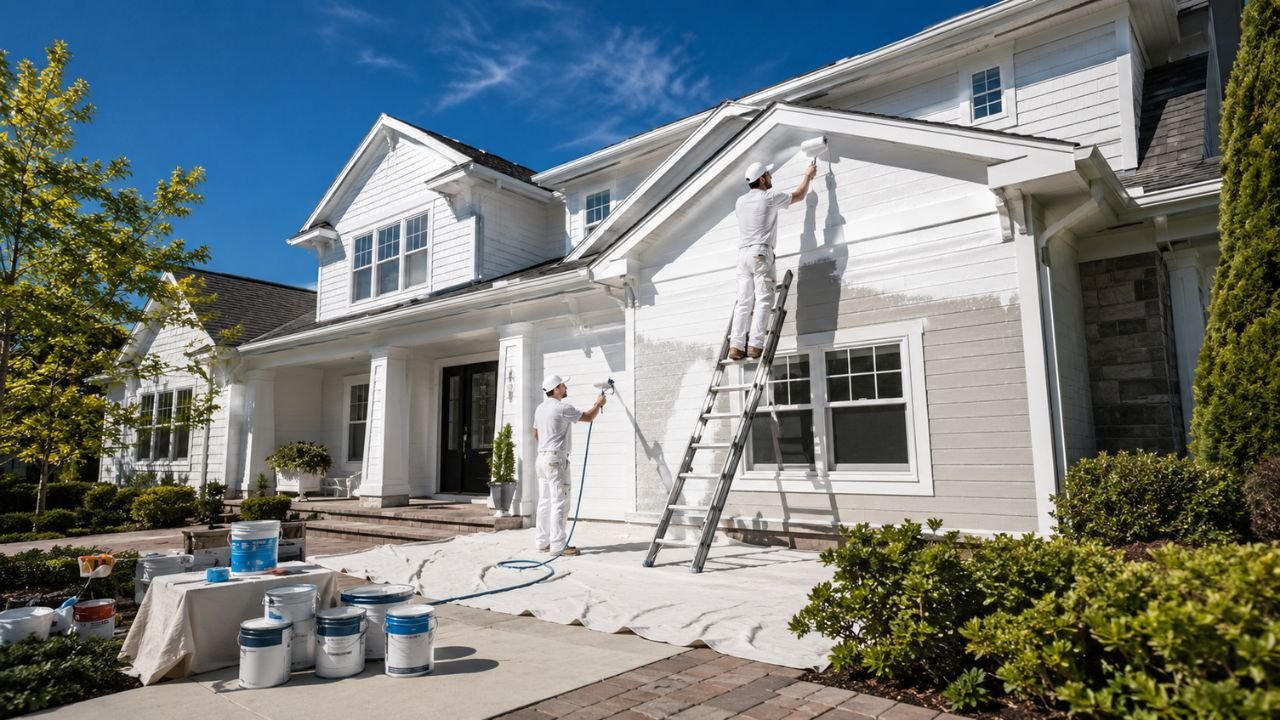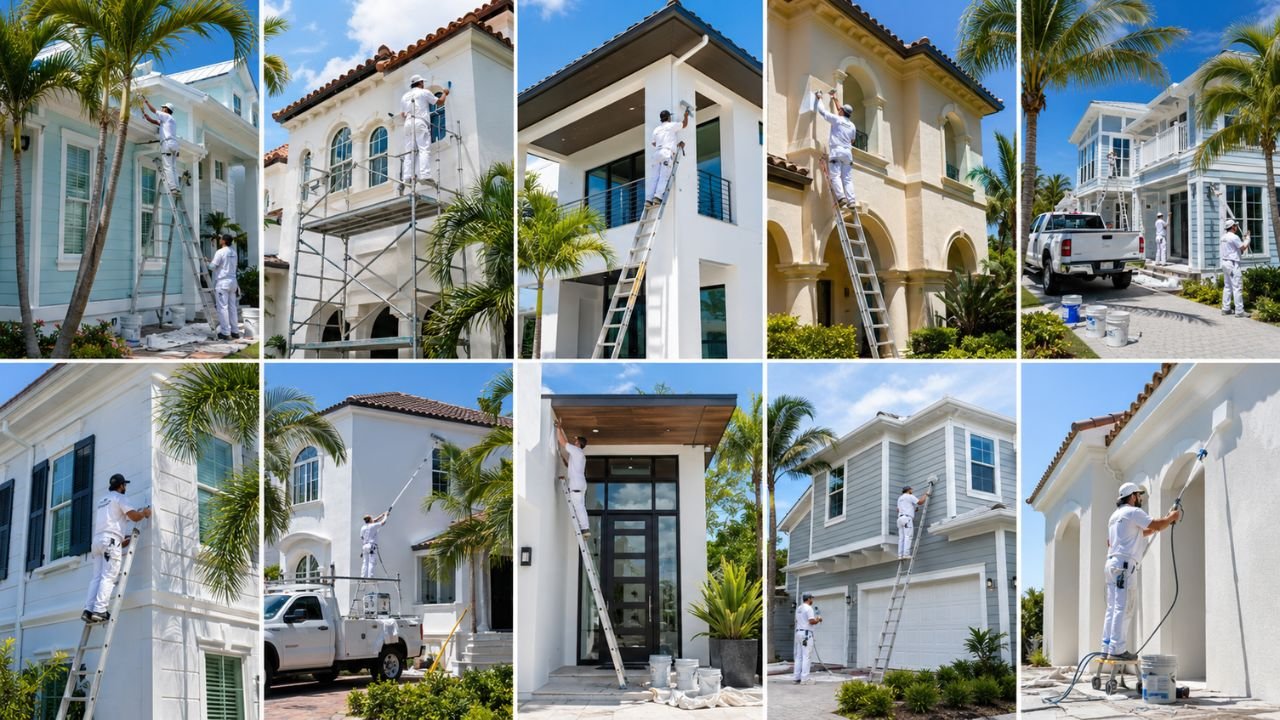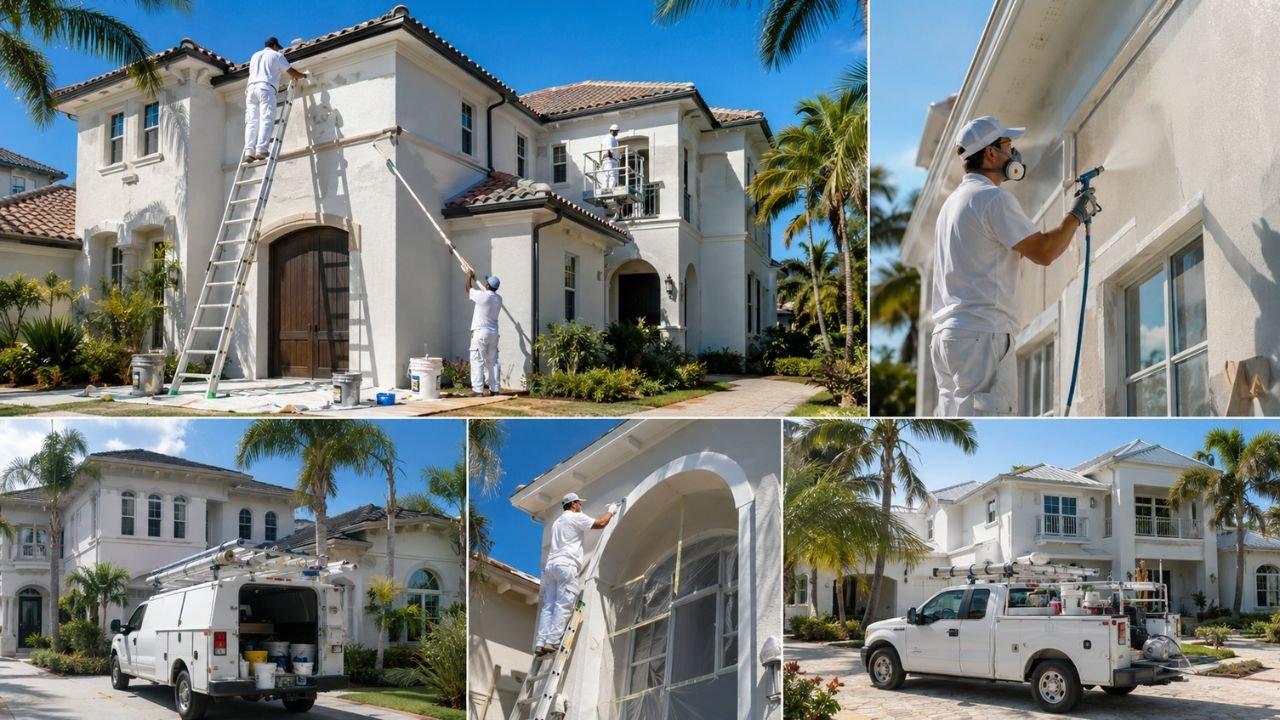
In Florida, exterior paint typically lasts between 5 and 7 years, while interior paint can last 7 to 10 years or longer. The intense Florida climate—characterized by extreme UV radiation, high humidity, and salt-laden air—can significantly shorten these lifespans compared to more temperate regions. The actual longevity of a paint job depends heavily on surface preparation, material quality, exposure levels (such as coastal vs. inland), and the specific substrate being coated, such as stucco or wood.
While manufacturer warranties may suggest longer durations, actual field performance is dictated by environmental stressors. Understanding these variables is critical for homeowners and contractors alike to plan maintenance cycles and accurately estimate the costs of long-term property preservation.
How Long Does Paint Last in Florida?
There is no universal expiration date for a paint job. Instead, service life is a spectrum influenced by location and application standards. Properties directly on the Atlantic or Gulf coasts often require repainting every 3 to 5 years due to salt-air corrosion and wind-driven rain, whereas inland homes in Central Florida may see 7 to 8 years of performance from the same coating system.
Paint Lifespan Overview
| Paint Type | General Lifespan Considerations | Major Factors |
|---|---|---|
| Exterior | 5 – 7 Years (Average) | UV radiation, humidity, salt air, rain. |
| Interior Walls | 7 – 10+ Years | Traffic, cleaning frequency, sunlight. |
| Ceilings | 10 – 15 Years | Minimal physical contact or UV. |
| Trim (Interior/Exterior) | 4 – 8 Years | High contact (int) / High exposure (ext). |
| High-Exposure Exterior | 3 – 5 Years | Direct south/west sun, coastal location. |
How Long Does Exterior Paint Last in Florida?
Exterior paint serves as the primary sacrificial layer protecting a building’s structure. In the Sunshine State, this layer is under constant assault. According to data from the National Oceanic and Atmospheric Administration (NOAA), Florida receives some of the highest solar radiation levels in the United States. This UV exposure breaks down the chemical binders in paint, leading to “chalking”—a powdery residue that indicates the coating is no longer providing an effective seal.
Furthermore, Florida’s average relative humidity often exceeds 70%, creating an environment where moisture can become trapped behind the paint film if not properly ventilated or applied. When combined with the thermal expansion and contraction caused by rapid temperature shifts during afternoon thunderstorms, the paint film can lose adhesion, leading to peeling and cracking.
How Long Does Interior Paint Last in Florida?
Interior paint typically enjoys a much longer lifespan because it is shielded from the direct elements. However, Florida’s humidity still plays a role indoors. In areas like kitchens and bathrooms, condensation can lead to surfactant leaching or mildew growth if the paint lacks high-quality antimicrobial properties.
In high-traffic areas like hallways and mudrooms, the lifespan is often determined by “burnishing” (shiny spots from rubbing) or the need for frequent scrubbing. Modern high-quality interior coatings are designed for “washability,” but even the best products will eventually show wear after years of cleaning.
How Florida Weather Affects Paint Lifespan
Every region of Florida presents a unique set of atmospheric challenges that estimators must account for when calculating material needs and maintenance schedules.
Florida Climate Factors
| Climate Factor | Effect on Paint | Maintenance Consideration |
|---|---|---|
| UV Exposure | Fades pigments and breaks down binders. | Choose high-LRV (Light Reflectance Value) colors. |
| Heat | Causes substrate expansion/contraction. | Ensure paint has high flexibility/elasticity. |
| Humidity | Promotes mildew growth and slows drying. | Use paints with mildewcides; check surface moisture. |
| Rain | Washes away chalking; can cause blistering. | Maintain functioning gutters and downspouts. |
| Salt Air | Corrodes surfaces and builds up on the film. | Regular freshwater rinsing of the exterior. |
| Wind/Storms | Drives moisture into cracks and pores. | Inspect for hairline cracks after storm season. |
Does Florida Sun Make Exterior Paint Fade Faster?
Yes. UV radiation is the leading cause of premature paint failure in Florida. Darker colors absorb more heat and UV energy, which often leads to faster pigment degradation compared to lighter shades. However, modern inorganic pigments used in premium exterior paints are significantly more stable than organic dyes. South-facing and west-facing walls typically show signs of fading 20% to 30% faster than northern or shaded exposures.
Does Humidity Affect How Long Paint Lasts in Florida?
Humidity affects both the application and the longevity of the paint. If paint is applied when the humidity is above 85%, the film may not cure properly, leading to a weak bond with the substrate. Once cured, high humidity provides the moisture necessary for mold and mildew to thrive on the surface. If the substrate, particularly wood or porous masonry, absorbs too much moisture, the resulting vapor pressure can cause the paint to bubble or “blister” from the inside out.
Does Salt Air Shorten Paint Life Near the Florida Coast?
Properties in coastal cities like Miami, Fort Lauderdale, Tampa, and Jacksonville Beach face the added challenge of salt spray. Salt is hygroscopic, meaning it attracts moisture. When salt deposits sit on a painted surface, they keep the surface damp for longer periods, accelerating the breakdown of the coating and promoting the corrosion of any underlying metal lath or fasteners. Contractors in these areas often recommend more frequent wash-downs and the use of high-build coatings to provide a thicker barrier.
How Long Does Paint Last on Stucco in Florida?
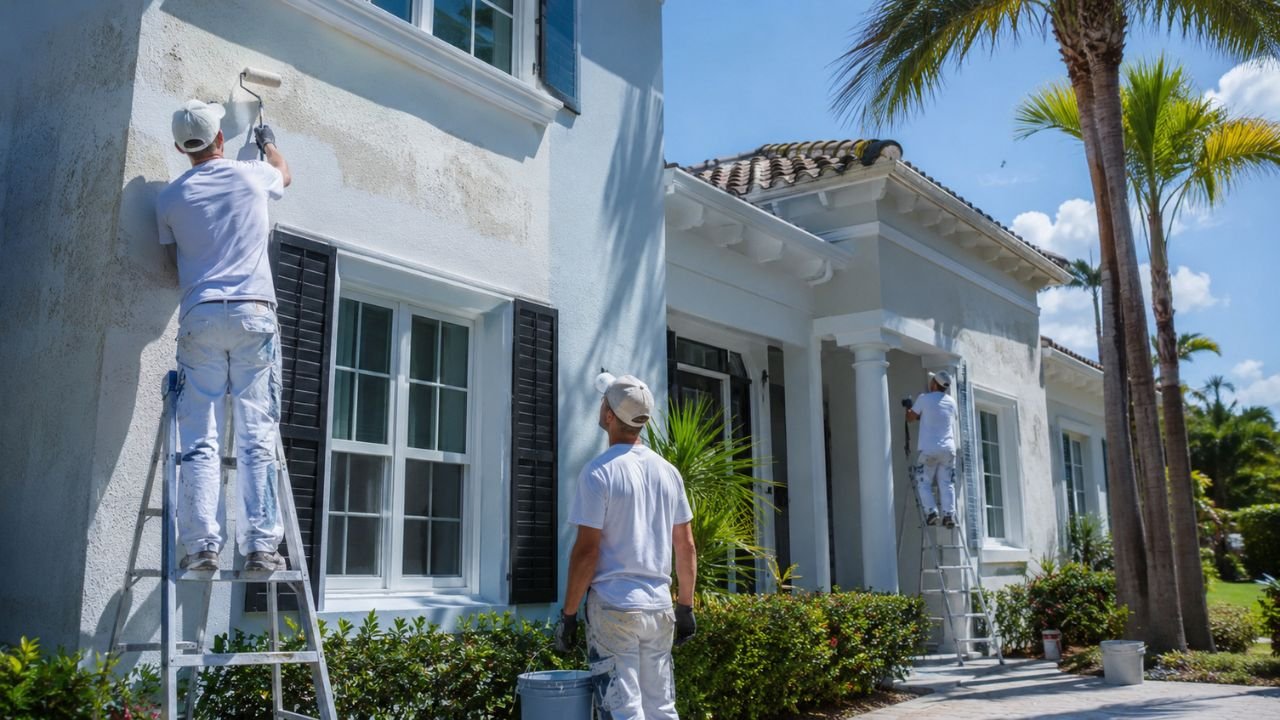
Stucco is the most common exterior finish in Florida. Because it is a cementitious, porous material, it naturally “breathes.” If the paint is too brittle, it will crack as the stucco expands and contracts. Elastomeric coatings are frequently used on stucco because they can bridge small hairline cracks and move with the building. On well-prepped stucco, a high-quality acrylic paint system typically lasts 5 to 7 years before chalking becomes excessive.
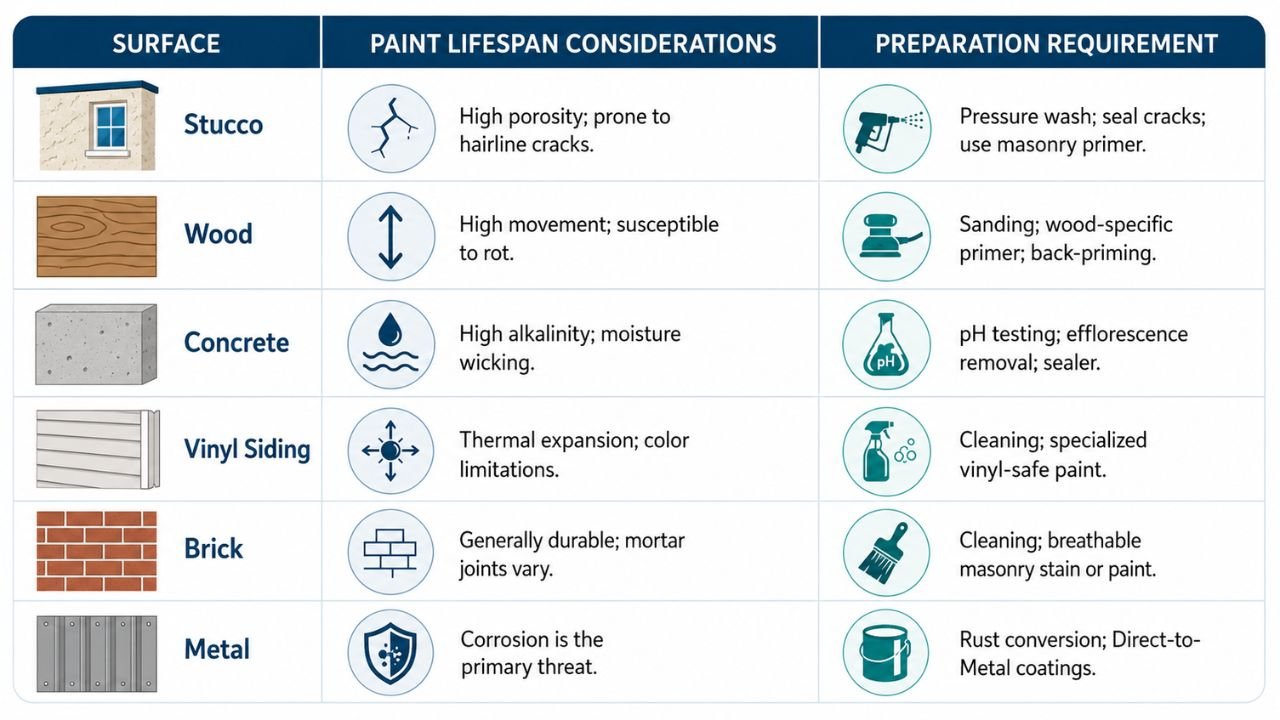
Surface Types and Paint Performance
| Surface | Paint Lifespan Considerations | Preparation Requirement |
|---|---|---|
| Stucco | High porosity; prone to hairline cracks. | Pressure wash; seal cracks; use masonry primer. |
| Wood | High movement; susceptible to rot. | Sanding; wood-specific primer; back-priming. |
| Concrete | High alkalinity; moisture wicking. | pH testing; efflorescence removal; sealer. |
| Vinyl Siding | Thermal expansion; color limitations. | Cleaning; specialized “vinyl-safe” paint. |
| Brick | Generally durable; mortar joints vary. | Cleaning; breathable masonry stain or paint. |
| Metal | Corrosion is the primary threat. | Rust conversion; DTM (Direct to Metal) coatings. |
Signs That Your Florida House Needs Repainting
Waiting until paint is falling off in sheets can lead to expensive substrate damage. Regular inspections can identify early warning signs that the protective barrier is failing.
Paint Failure Signs
| Sign | What It May Indicate | Recommended Consideration |
|---|---|---|
| Fading | UV degradation of the pigment. | Aesthetic issue; sign that binder loss is next. |
| Chalking | Breakdown of the paint binder. | Critical sign that the seal is failing. |
| Peeling | Loss of adhesion to the substrate. | Requires scraping and possible priming. |
| Bubbling | Moisture trapped behind the paint film. | Investigate source of water (leaks/humidity). |
| Cracking | Paint has become too brittle for the surface. | Sanding and flexible fillers needed. |
| Mildew | Organic growth on the surface. | Clean with bleach solution; use mildewcides. |
How Often Should You Repaint a House in Florida?
While every 5 to 7 years is the general rule, your specific “repainting clock” depends on several variables.
Factors Affecting Paint Lifespan
| Factor | Impact on Longevity |
|---|---|
| Paint Quality | Premium 100% acrylic paints outlast cheap vinyl blends by years. |
| Preparation | 90% of failures are due to poor cleaning, sanding, or priming. |
| Application | Correct millage (thickness) is essential for a durable film. |
| Sun Exposure | Unshaded homes fail faster than those with large overhangs. |
| Color | Light colors reflect heat; dark colors absorb and degrade faster. |
| Maintenance | Regular washing can extend paint life by 1 to 2 years. |
Florida Regions and Paint Lifespan
South Florida
In cities like Miami, West Palm Beach, and Naples, the combination of tropical heat and intense UV means that paint binders break down rapidly. The hurricane season also brings wind-driven rain that can test the waterproof integrity of any coating system.
Central Florida
Orlando and Tampa experience high humidity and frequent lightning storms. The primary issue here is often mildew and the rapid thermal cycles that cause stucco and wood to move, stressing the paint film.
North Florida
Jacksonville, Tallahassee, and Pensacola experience more significant temperature fluctuations, including occasional freezes. This expansion and contraction can lead to cracking in older, less flexible paint films.
How to Extend the Life of Exterior Paint in Florida
- Annual Inspections: Walk around your property every spring. Look for new cracks in stucco or soft spots in wood.
- Soft Washing: Gently clean your home’s exterior once a year to remove salt, dirt, and organic growth that can trap moisture against the paint.
- Landscape Management: Ensure bushes and trees are at least 12–18 inches away from walls to allow for proper airflow and drying.
- Gutter Maintenance: Divert water away from the walls. Constant splashing on the lower parts of a house is a common cause of peeling.
- Seal the Cracks: Use high-quality, paintable caulk to seal small gaps around windows and doors before moisture gets behind the coating.
Does Paint Lifespan Affect the Cost of Painting?
Selecting a more durable, premium coating often involves a higher initial material cost. However, from a construction estimating perspective, the material cost is usually a small fraction (15–25%) of the total project cost, with labor and preparation taking the lion’s share. By choosing a product that lasts 7 years instead of 4, a property owner effectively reduces their long-term maintenance costs and the frequency of disruptive site work.
What Is a Painting Quantity Takeoff?
A painting quantity takeoff is a precise calculation of all surfaces requiring a finish. For a Florida home, this involves measuring:
- Net Wall Area: Total square footage minus windows and doors.
- Trim and Fascia: Linear footage of eaves, soffits, and decorative moldings.
- Specialty Items: Garage doors, shutters, and exterior ceilings (lanai).
- Material Counts: Calculating the exact gallons of primer, body paint, and trim paint needed based on the theoretical coverage rates of the specified products.
Accurate takeoffs prevent over-ordering (waste) and under-ordering (project delays), which are critical for maintaining tight construction budgets.
How Estimate Florida Helps With Painting Estimates
Estimate Florida provides professional construction estimating and quantity takeoff services for contractors, developers, and homeowners throughout the state. Utilizing advanced software like PlanSwift and Bluebeam, our team delivers highly accurate material lists and labor hour assessments based on your specific project blueprints.
Our services include:
- Residential & Commercial Painting Takeoffs
- Comprehensive Material Takeoffs
- Bid Estimates for Subcontractors
- Preliminary Budget Estimates
By leveraging our local expertise in Florida’s unique building requirements, we help ensure your project is budgeted correctly from the start.
Frequently Asked Questions (FAQs)
How long does paint last in Florida?
On average, exterior paint lasts 5 to 7 years, while interior paint lasts 7 to 10+ years.
How long does exterior paint last in Florida?
Expect 5 to 7 years for inland homes and 3 to 5 years for coastal properties due to salt and wind exposure.
How long does interior paint last in Florida?
Interior paint can last a decade or more, though high-traffic areas or humid bathrooms may need refreshing every 5 to 7 years.
How often should you repaint a house in Florida?
Most professionals recommend a full repaint every 6 years to maintain the protective seal on the substrate.
Does Florida sun make paint fade faster?
Yes, high UV levels degrade pigments. Choosing high-quality acrylic paints with UV inhibitors can slow this process.
Does humidity affect exterior paint?
Yes. High humidity can cause adhesion issues during application and promote mildew growth afterward.
Does salt air damage exterior paint?
Salt air is highly corrosive and can cause paint to fail prematurely, especially on metal or near the coast.
How long does paint last on stucco in Florida?
Properly applied paint on stucco typically lasts 5 to 7 years. Using elastomeric coatings can help bridge cracks and extend life.
How long does paint last on wood siding in Florida?
Wood siding is more susceptible to rot and movement, often requiring a refresh every 4 to 6 years.
How long does paint last on concrete in Florida?
Concrete coatings usually last 5 to 7 years, provided the surface was properly tested for pH and moisture before application.
Do dark paint colors fade faster in Florida?
Generally, yes. Dark colors absorb more UV energy and heat, which accelerates the breakdown of the paint film.
What are the signs that a house needs repainting?
Look for chalking (powder), peeling, cracking, bubbling, or heavy fading.
Does surface preparation affect paint lifespan?
Preparation is the most critical factor. Paint applied to a dirty or wet surface will fail within months, regardless of quality.
Does high-quality paint last longer in Florida?
Absolutely. 100% acrylic paints have better flexibility and UV resistance than cheaper alternatives.
What is the best exterior paint for Florida weather?
A 100% acrylic latex paint formulated for high UV and mildew resistance is typically recommended for the Florida climate.
Conclusion
Determining how long paint lasts in Florida requires a balanced look at environmental exposure, substrate type, and the quality of the initial application. While the average lifespan of 5 to 7 years serves as a baseline, the “Florida factor” of intense sun and humidity means that maintenance cannot be ignored. Protecting your property’s exterior is not just about curb appeal; it is a critical step in preventing structural deterioration from moisture and salt.
By understanding the signs of paint failure and planning for repainting before the protective layer is completely gone, property owners can save significantly on repair costs. If you are preparing for a project and need professional support to determine the exact quantities of materials required, Estimate Florida is here to help. Our professional quantity takeoffs and construction estimates provide the clarity you need to manage your budget and ensure project success.
Contact Estimate Florida today for a professional painting quantity takeoff or a detailed construction estimate for your next Florida project.
Email: info@estimateflorida.com |