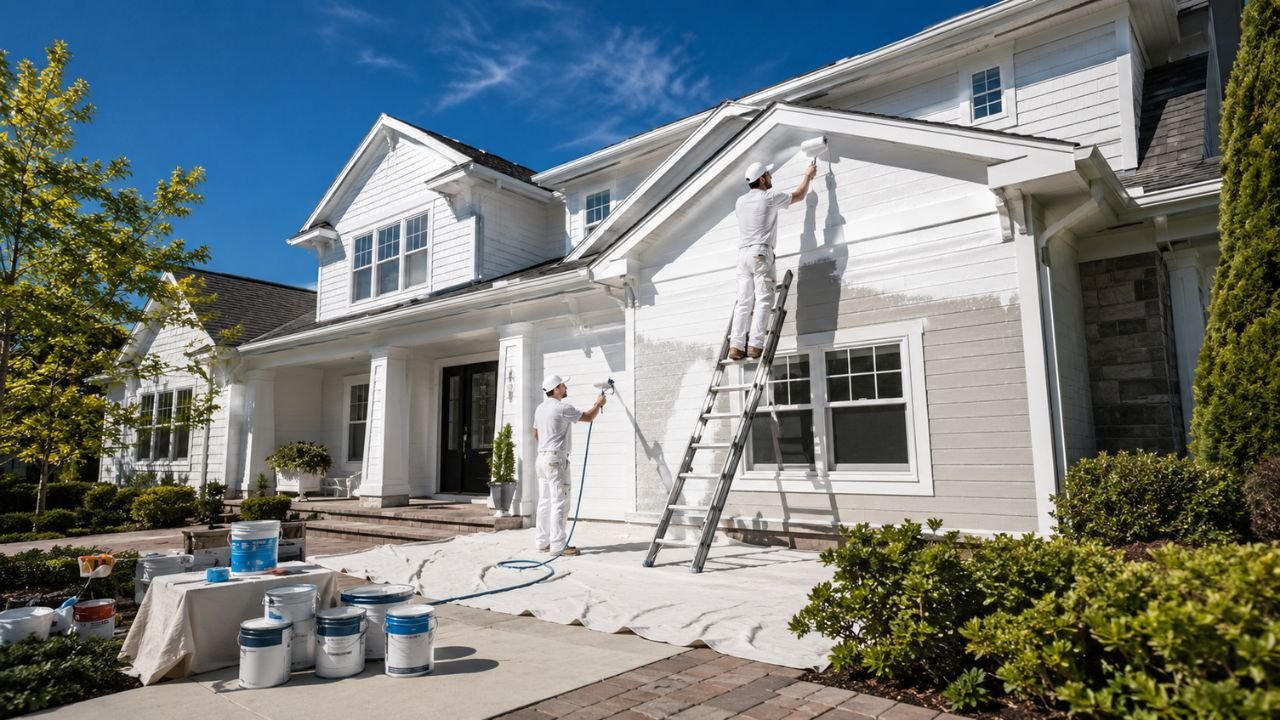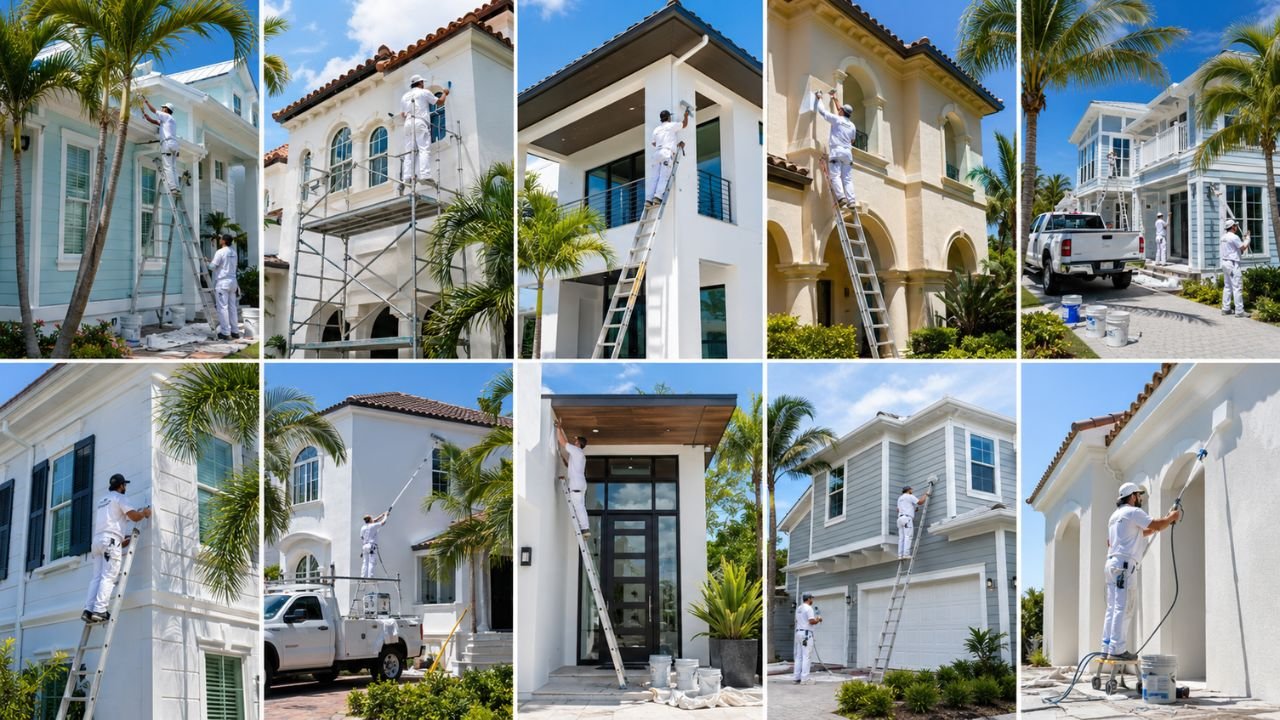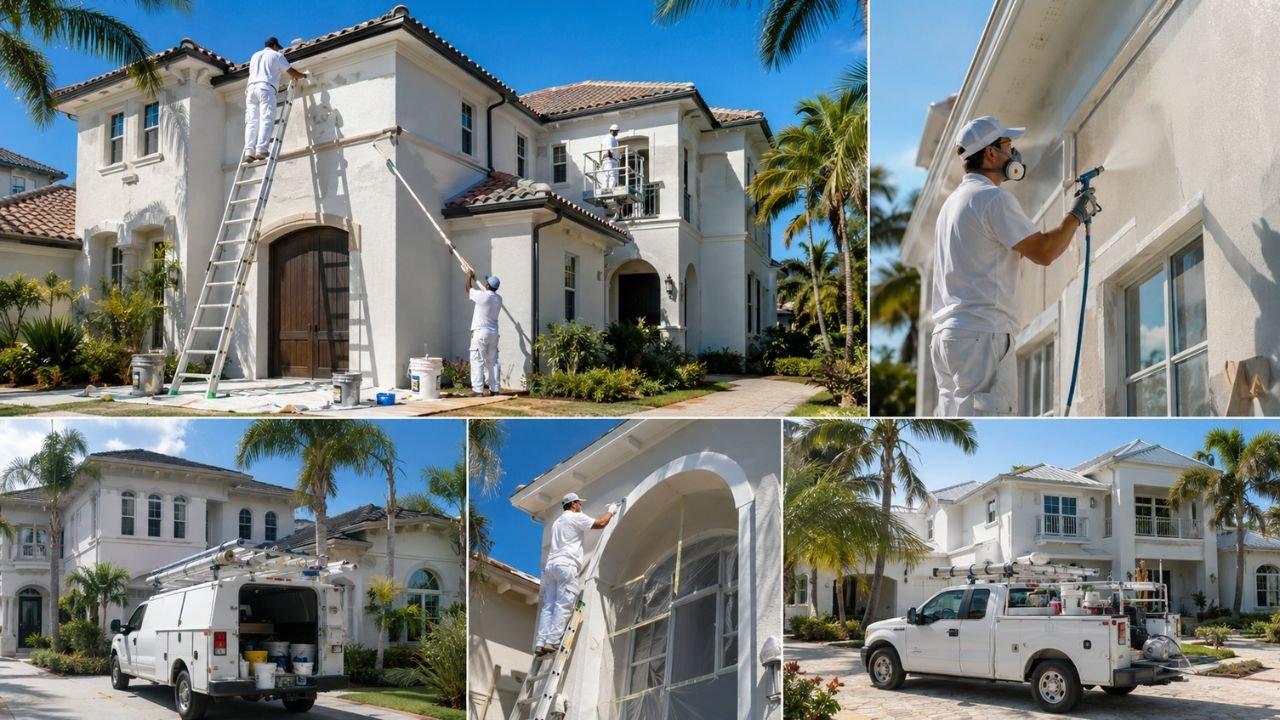
One of the first questions homeowners, contractors, developers, and investors ask before starting a building project is: how to calculate construction cost per square feet in Florida?
A square-foot cost is one of the simplest ways to create an early construction budget. However, the number is not the same for every Florida project. The final construction cost per square foot in Florida can vary significantly depending on the building type, location, materials, labor, site conditions, architectural design, finish level, hurricane requirements, flood-zone requirements, and local permitting conditions.
For example, the cost per square foot for a basic single-family home in an inland Florida market may be very different from the cost of a custom coastal home with impact-rated windows, elevated foundations, premium finishes, and enhanced wind resistance.
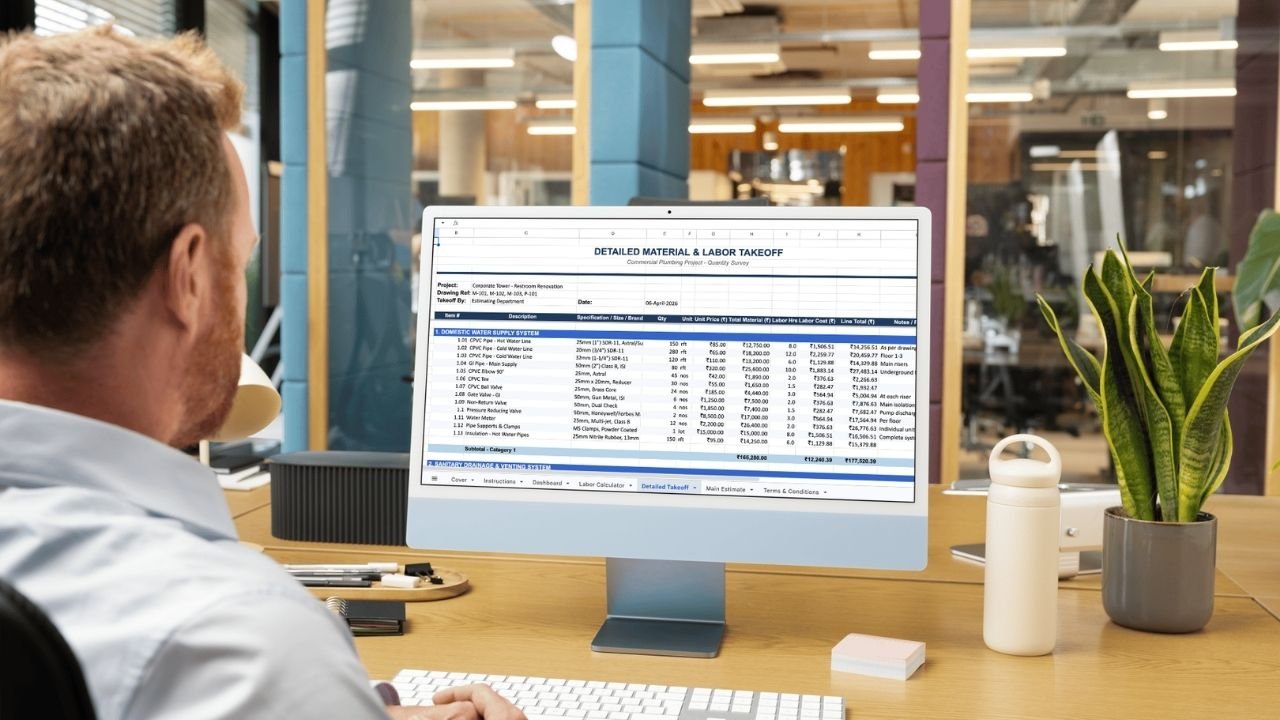
This guide explains how to calculate construction cost per square feet in Florida, what costs should be included, what should be excluded, how to adjust the calculation for Florida conditions, and how to use the result for construction budgeting and project planning.
What Does Construction Cost Per Square Foot Mean?
Construction cost per square foot is a budgeting method that expresses the estimated cost of a building as a cost for each square foot of construction.
The calculation is straightforward:
Construction Cost Per Square Foot = Total Construction Cost ÷ Total Square Footage
If a project is expected to cost $600,000 and contains 3,000 square feet:
$600,000 ÷ 3,000 = $200 per square foot
This means the project’s estimated construction cost is $200 per square foot.
The calculation is useful because it gives owners and project teams a quick way to understand the approximate scale of a project.
For example, if a developer is considering a 10,000-square-foot commercial building and has established a preliminary budget of $2 million:
$2,000,000 ÷ 10,000 = $200 per square foot
The figure can then be used to compare alternative designs, evaluate feasibility, establish preliminary budgets, and review contractor proposals.
However, square-foot pricing should be treated as an early budgeting tool rather than a final construction bid. Two buildings with exactly the same square footage can have dramatically different costs.
How to Calculate Construction Cost Per Square Feet in Florida: The Basic Formula
The basic cost per square foot calculation is:
Total Construction Cost ÷ Total Square Footage = Cost Per Square Foot
Each part of the formula has to be defined correctly.
1. Determine the total construction cost
Start by identifying which costs you want the calculation to represent.
You might calculate:
- Hard construction cost only
- Hard costs plus contractor overhead and profit
- Hard costs plus soft costs
- Total project cost
- Construction cost including contingency
The definition must remain consistent when comparing different projects.
2. Determine the total square footage
Next, determine the building area used for the calculation.
Depending on the project and estimating method, this could include:
- Conditioned/living area
- Gross building area
- Garage
- Covered areas
- Common areas
- Corridors
- Mechanical spaces
- Storage areas
- Other constructed spaces
Do not automatically assume that the living area and total constructed area are the same.
3. Divide the cost by the area
For example:
Estimated construction cost: $750,000
Building area: 3,000 square feet
$750,000 ÷ 3,000 = $250 per square foot
The preliminary Florida build cost would therefore be approximately $250 per square foot based on the assumptions used.
What Costs Should Be Included?
A useful Florida construction estimate should account for the costs that actually contribute to constructing the building.
Depending on the purpose of the estimate, the following categories may be included.
Materials
Materials can include:
- Concrete
- Reinforcing steel
- Lumber
- Structural steel
- Roofing materials
- Drywall
- Insulation
- Windows and doors
- Flooring
- Cabinets
- Countertops
- Paint
- Electrical materials
- Plumbing materials
- HVAC equipment
- Fixtures
- Exterior finishes
Material selections can have a major impact on the cost per square foot.
A basic builder-grade finish package will generally produce a different budget from a high-end custom finish package.
Labor
Labor includes the cost of workers required to construct the project.
Typical labor categories include:
- General labor
- Carpenters
- Electricians
- Plumbers
- HVAC technicians
- Roofers
- Drywall installers
- Painters
- Flooring installers
- Masonry crews
- Concrete crews
- Equipment operators
Labor rates can vary across Florida markets and can also change based on project complexity and schedule.
Equipment
Construction equipment may include:
- Excavators
- Skid steers
- Cranes
- Lifts
- Concrete equipment
- Compaction equipment
- Temporary equipment
- Specialized installation equipment
Equipment costs may be directly included in subcontractor pricing or separately estimated.
Subcontractor Costs
Many construction projects rely heavily on subcontractors.
A construction estimate may include subcontractor costs for:
- Site work
- Concrete
- Masonry
- Roofing
- Electrical
- Plumbing
- HVAC
- Drywall
- Painting
- Flooring
- Landscaping
- Specialty systems
For a reliable estimate, these costs should be identified by trade instead of relying only on a broad square-foot allowance.
Permits and Inspections
Depending on the estimating method, permit fees and inspection-related costs may be included in the construction budget.
Florida projects must also account for local jurisdiction requirements, which can vary by location and project type.
Site Work
Site work is one of the easiest costs to overlook when calculating cost per square foot.
Potential site costs include:
- Clearing
- Excavation
- Grading
- Soil preparation
- Drainage
- Utility connections
- Site concrete
- Driveways
- Walkways
- Stormwater requirements
- Landscaping
- Retaining structures
A small building on a complicated site can have a higher effective cost per square foot than a larger building on a simple site.
Utilities
Depending on the project scope, budgeting may include:
- Water connection
- Sewer connection
- Electrical service
- Gas service
- Stormwater systems
- Site lighting
- Communications infrastructure
Contractor Overhead and Profit
A contractor does not simply charge for materials and labor.
The construction budget may need to account for:
- Office expenses
- Project management
- Insurance
- Supervision
- Administration
- General conditions
- Contractor overhead
- Contractor profit
Whether these are included depends on the purpose of the calculation.
Contingency
A contingency allowance provides protection against unknown or changing costs.
For early-stage budgeting, a contingency may be appropriate because the plans are not yet fully developed.
The appropriate contingency depends on project maturity and risk. A conceptual budget generally needs more flexibility than a detailed estimate based on completed construction documents.
What Costs Should Be Excluded?
Not every project expense belongs in the construction cost per square foot.
If the calculation is intended to represent hard construction cost, the following items are commonly excluded:
- Land acquisition
- Property purchase costs
- Mortgage interest
- Financing fees
- Investor costs
- Furniture
- Loose equipment
- Certain appliances
- Owner-supplied materials
- Certain professional design fees
- Marketing costs
- Real estate commissions
- Legal expenses
- Some development fees
The important point is consistency.
For example, if one project uses $200 per square foot based only on hard construction costs while another uses $250 per square foot including design and financing expenses, the two numbers cannot be compared directly.
Always define exactly what the square-foot price represents.
Florida-Specific Adjustments
Calculating construction cost per square feet in Florida requires more than multiplying a national average by the size of a building.
Florida has unique construction conditions that can materially affect the budget.
Regional Labor Differences
Construction labor costs vary across Florida.
Pricing can differ between markets such as:
- Miami
- Fort Lauderdale
- West Palm Beach
- Orlando
- Tampa
- Jacksonville
- Naples
- Sarasota
- Tallahassee
- Smaller inland communities
A labor allowance that works for one market may not be appropriate for another.
Coastal vs. Inland Construction
Coastal construction can require additional materials, engineering, protection, and installation requirements.
A coastal home may have a higher cost per square foot construction Florida budget than a comparable inland home because of additional structural and environmental requirements.
Hurricane and Wind Requirements
Florida construction must account for wind exposure and applicable building requirements.
Depending on the project, this can influence:
- Structural framing
- Roof systems
- Roofing attachments
- Windows
- Exterior doors
- Garage doors
- Fasteners
- Waterproofing
- Structural connections
Impact Windows and Doors
For projects where impact-rated windows and doors are required or selected, the window and door package can become a significant component of the overall budget.
This is especially important when estimating higher-end coastal properties.
Flood Zones
Flood exposure can influence:
- Foundation design
- Elevation requirements
- Site preparation
- Drainage
- Structural design
- Waterproofing
- Utility placement
A property in a flood-sensitive location should not be budgeted using the same assumptions as a simple inland site without reviewing the project requirements.
Soil and Foundation Conditions
Soil conditions can affect foundation costs.
Potential requirements may include:
- Soil testing
- Additional excavation
- Soil stabilization
- Deeper foundations
- Reinforcement
- Specialized foundation systems
These costs are particularly important because they may not be obvious from the building’s square footage.
Moisture Protection
Florida’s climate can make moisture management an important construction consideration.
The budget may need to account for appropriate:
- Waterproofing
- Roofing systems
- Exterior coatings
- Sealants
- Flashing
- Drainage
- Moisture-resistant materials
Permits and Inspections
Local permitting and inspection requirements should be considered during construction budgeting.
The jurisdiction, building type, project value, and scope can influence the overall allowance.
Cost Per Square Foot by Project Type
There is no single Florida construction cost per square foot that applies to every building.
The following ranges are best viewed as early budgeting examples, not guaranteed market prices or final bids.
| Project Type | Illustrative Early Budget Range | Main Cost Drivers |
|---|---|---|
| Basic single-family home | $150–$250+/sq. ft. | Design, finishes, structure, labor |
| Mid-range custom home | $200–$350+/sq. ft. | Finishes, layout, MEP systems |
| Luxury/custom home | $300–$600+/sq. ft. | Premium finishes, complex design, specialty systems |
| Commercial shell | $100–$200+/sq. ft. | Structure, shell, site work, size |
| Multifamily construction | $150–$300+/sq. ft. | Unit count, structure, common areas |
| Warehouse/industrial | $80–$180+/sq. ft. | Structure, clear height, MEP, site work |
| Renovation/addition | $150–$400+/sq. ft. | Existing conditions, demolition, complexity |
These ranges should not be used as a substitute for a detailed estimate. They are useful for understanding the relationship between building type and construction cost.
A luxury coastal home, for example, could exceed a basic home budget by a substantial amount even if both properties have the same square footage.
How to Calculate Construction Cost Per Square Feet in Florida Step by Step
A reliable early budget can be developed using the following process.
Step 1: Define the Project Scope
Start with the basics:
- Project type
- Location
- Building size
- Number of floors
- Construction type
- Finish level
- Major systems
- Site conditions
- Special requirements
The more clearly the scope is defined, the more useful the estimate becomes.
Step 2: Measure Total Square Footage
Determine exactly what area is being measured.
For example:
Conditioned area: 2,500 sq. ft.
Garage: 500 sq. ft.
Covered area: 300 sq. ft.
If the estimator is using gross constructed area, the calculation may be based on a different figure than the home’s advertised living area.
Step 3: Calculate Hard Construction Costs
Estimate the major construction divisions:
- Site work
- Concrete
- Masonry
- Structural framing
- Roofing
- Doors and windows
- Finishes
- Plumbing
- HVAC
- Electrical
- Exterior improvements
Add the trade costs together to determine the hard construction budget.
Step 4: Add Appropriate Soft Costs
If the purpose is total project budgeting rather than hard-cost comparison, consider:
- Architecture
- Engineering
- Surveying
- Testing
- Permitting
- Other professional services
Do not mix soft costs into one project’s square-foot calculation and exclude them from another project’s calculation.
Step 5: Add Contractor Overhead and Profit
If you are estimating the expected contract value, include appropriate contractor overhead and profit.
Step 6: Add Contingency
Add a contingency allowance based on the project’s stage and risk.
A conceptual estimate should generally recognize more uncertainty than a detailed bid estimate.
Step 7: Apply Florida Adjustments
Review:
- Location
- Labor market
- Wind requirements
- Hurricane requirements
- Flood zone
- Soil
- Foundation
- Material availability
- Site access
- Permitting
- Finish level
Step 8: Divide by Square Footage
Finally:
Total Budget ÷ Total Square Footage = Estimated Cost Per Square Foot
This becomes your preliminary square-foot construction cost.
Example Calculations
Example 1: Basic Florida Home
Suppose a homeowner is planning a 2,500-square-foot home.
Estimated construction budget:
- Site work: $40,000
- Concrete/foundation: $65,000
- Framing: $100,000
- Roofing: $30,000
- Windows/doors: $40,000
- MEP systems: $110,000
- Interior finishes: $140,000
- Exterior work: $25,000
- General conditions and other costs: $50,000
Estimated construction cost = $600,000
Calculation:
$600,000 ÷ 2,500 sq. ft. = $240 per sq. ft.
The preliminary construction cost is therefore $240 per square foot.
Example 2: Commercial Shell
Consider a 10,000-square-foot commercial shell.
Suppose the preliminary construction budget is $1.5 million.
$1,500,000 ÷ 10,000 = $150 per square foot
The preliminary shell construction cost is $150 per square foot.
However, tenant improvements, specialty mechanical systems, interior finishes, furniture, and equipment could significantly increase the final project cost.
Example 3: Renovation Project
Suppose a homeowner plans a 1,500-square-foot renovation.
The estimated project budget is $375,000.
$375,000 ÷ 1,500 = $250 per square foot
This demonstrates why renovation pricing can be misleading when compared directly with new construction.
A renovation may involve:
- Demolition
- Existing-condition repairs
- Structural modifications
- Utility relocation
- Temporary protection
- Difficult access
- Custom work
- Reworking existing systems
The square-foot price may therefore be high even though the project is relatively small.
Example 4: Coastal Florida Home
Suppose a 3,000-square-foot coastal home has an estimated budget of $1.05 million.
$1,050,000 ÷ 3,000 = $350 per square foot
The higher figure could reflect factors such as:
- Higher-end finishes
- Impact-rated windows
- Enhanced wind resistance
- More expensive roofing
- Coastal site conditions
- Specialized foundation requirements
- Premium exterior materials
This example illustrates why a Florida construction calculator should not rely solely on building size.
Common Mistakes to Avoid
1. Using National Averages Without Florida Adjustments
A national average may not account for Florida’s labor, weather, code, flood, wind, or coastal conditions.
Use location-specific assumptions whenever possible.
2. Forgetting Site Work
Site work can have a major effect on total project cost.
Do not assume that the building itself represents the entire construction budget.
3. Mixing Hard and Soft Costs
A $200-per-square-foot hard-cost estimate cannot be directly compared with a $200-per-square-foot total-project estimate.
Define the cost basis before comparing numbers.
4. Ignoring Project Scope
A 3,000-square-foot basic home and a 3,000-square-foot luxury home are not equivalent projects.
The same applies to commercial buildings.
5. Confusing Living Area With Gross Area
Always confirm which square-foot measurement is being used.
A home’s listed living area may not include every constructed area that contributes to the project cost.
6. Ignoring Contingency
Early budgets contain uncertainty.
Material pricing, design changes, site conditions, and unforeseen work can increase costs.
7. Relying on One Square-Foot Number
A single number can hide important cost differences.
For better budgeting, break the estimate into construction divisions and review the major cost drivers.
How to Use the Result
A calculated construction cost per square foot can be useful in several stages of a project.
Early Budgeting
Before detailed plans are complete, a square-foot estimate can provide a preliminary budget.
For example:
Estimated size: 5,000 sq. ft.
Planning rate: $200/sq. ft.
Preliminary budget:
5,000 × $200 = $1,000,000
This is useful for determining whether a project is financially realistic before spending heavily on design and development.
Comparing Projects
Developers can use square-foot pricing to compare similar buildings.
For example, if one design produces an estimated cost of $220 per square foot and another produces $270 per square foot, the difference can prompt further investigation.
Loan Planning
A preliminary construction budget can help owners and developers understand the approximate scale of financing required.
However, lenders may require a more detailed construction budget, plans, specifications, appraisal, or contractor documentation.
Feasibility Studies
For developers, square-foot pricing is useful during the feasibility stage.
A preliminary calculation can help evaluate:
- Construction budget
- Expected development cost
- Potential return
- Project size
- Design alternatives
- Land acquisition decisions
Contractor Bid Review
Owners can also use cost-per-square-foot calculations to identify unusually high or low bids.
However, the number should never be the only basis for selecting a contractor.
A bid should be reviewed by scope, quantities, specifications, exclusions, allowances, schedule, and individual trade costs.
Why Square-Foot Pricing Is Only a Starting Point
Square-foot pricing is powerful because it is simple.
But simplicity is also its biggest limitation.
Consider two Florida homes that are both 3,000 square feet.
Home A:
- Standard finishes
- Simple rectangular design
- Inland location
- Standard site conditions
- Conventional foundation
- Basic landscaping
Home B:
- Luxury finishes
- Complex architecture
- Coastal location
- Premium windows and doors
- Higher wind requirements
- Difficult site conditions
- Custom cabinetry
- High-end outdoor living
Both homes have the same square footage.
Their construction budgets could be dramatically different.
This is why professional estimating moves beyond square-foot pricing.
A detailed construction cost estimate can identify quantities, labor, materials, subcontractor pricing, equipment, assemblies, and individual trade costs.
Square-foot pricing tells you approximately how much the project might cost.
Detailed estimating helps explain why it costs that much.
Improving Your Florida Construction Cost Estimate
Once the preliminary square-foot calculation has been completed, the next step is to improve its accuracy.
Consider developing a trade-by-trade estimate covering:
- General conditions
- Site work
- Concrete
- Masonry
- Structural framing
- Roofing
- Doors and windows
- Insulation
- Drywall
- Flooring
- Painting
- Cabinets
- Countertops
- Plumbing
- HVAC
- Electrical
- Exterior improvements
- Landscaping
Then compare the resulting total with your square-foot budget.
If the detailed estimate is significantly different from the initial square-foot calculation, investigate why.
Possible reasons include:
- High-end finishes
- Unusual building geometry
- High labor costs
- Difficult site conditions
- Coastal requirements
- Extensive MEP systems
- Large amounts of site work
- Incomplete scope
- Incorrect square-foot measurement
This process makes the Florida construction estimate much more useful for actual decision-making.
A Simple Florida Construction Cost Calculator Approach
You can create a basic Florida construction cost calculator using this structure:
Step 1: Enter building size
Step 2: Select project type
Step 3: Select location
Step 4: Select finish level
Step 5: Establish a preliminary cost per square foot
Step 6: Multiply square footage by the preliminary rate
Step 7: Add site-specific costs
Step 8: Add soft costs where applicable
Step 9: Add contractor overhead and profit
Step 10: Add contingency
Step 11: Review the result against a detailed estimate
For example:
Building size: 4,000 sq. ft.
Preliminary rate: $225/sq. ft.
4,000 × $225 = $900,000
Then review whether $900,000 adequately accounts for the project’s location, design, site conditions, finishes, permitting, and Florida-specific requirements.
This is a much better approach than selecting an arbitrary number from a generic online calculator.
Frequently Asked Questions
What is the easiest way to calculate construction cost per square foot in Florida?
The basic calculation is:
Total construction cost ÷ total square footage = construction cost per square foot.
For example, a $1 million project covering 5,000 square feet has a preliminary cost of $200 per square foot.
What is included in construction cost per square foot?
Depending on the estimate, it may include materials, labor, subcontractors, equipment, site work, permits, general conditions, contractor overhead and profit, and contingency.
Always define the cost basis before using the number for comparisons.
Does location affect Florida construction cost per square foot?
Yes. Labor, site conditions, material availability, permitting, coastal exposure, wind requirements, flood zones, and local market conditions can all affect the cost.
Is construction cost per square foot accurate enough for a final bid?
Generally, no. Square-foot pricing is best used for preliminary budgeting and feasibility analysis. A final bid should be based on detailed plans, specifications, quantities, labor, materials, subcontractor pricing, and project-specific conditions.
Why can renovations have a higher cost per square foot?
Renovations often involve demolition, existing-condition problems, structural modifications, utility relocation, difficult access, and custom work. These costs can make the square-foot price higher than comparable new construction.
Should land be included in construction cost per square foot?
Usually not when calculating building construction cost. Land is normally treated as a separate acquisition or development expense.
Should contractor profit be included?
It depends on the purpose of the calculation. If you are estimating the expected contract value, contractor overhead and profit should generally be considered. If you are analyzing raw hard construction costs, they may be shown separately.
Final Thoughts
Understanding how to calculate construction cost per square feet in Florida is an important first step for homeowners, developers, contractors, investors, and project managers.
The formula itself is simple:
Total Construction Cost ÷ Total Square Footage = Cost Per Square Foot
The challenge is determining what should go into the total construction cost.
A realistic Florida build cost should consider the project type, location, labor, materials, finish level, site conditions, permits, foundation requirements, hurricane and wind requirements, flood exposure, contractor overhead and profit, and contingency.
Use square-foot pricing as a planning tool, not as a guaranteed final price.
For the best results, start with a preliminary cost per square foot, then refine the budget with a detailed trade-by-trade estimate. This approach provides a much stronger foundation for construction budgeting, project feasibility, contractor bid review, financing decisions, and project planning.
If you are planning a residential, commercial, multifamily, renovation, shell, or custom construction project in Florida, a project-specific construction cost estimate can provide a more meaningful number than a generic square-foot allowance.