
Accurate steel structure rate analysis is the backbone of profitable structural steel projects in Florida and across the United States. Whether you’re bidding on a warehouse, industrial shed, or commercial building, a disciplined approach to breaking down material, fabrication, erection, and indirect costs ensures you win work without eroding margins.
This step‑by‑step guide explains whatmeans, why it matters specifically in Florida, how to build a professional steel structure BOQ from drawings, and which mistakes to avoid. You’ll also see a sample rate breakdown and learn how Estimate Florida’s Structural Steel Works BOQ Template ($49) can standardize your process and reduce estimation risk.
👉Buy Structural Steel Works BOQ Template at $49 Only
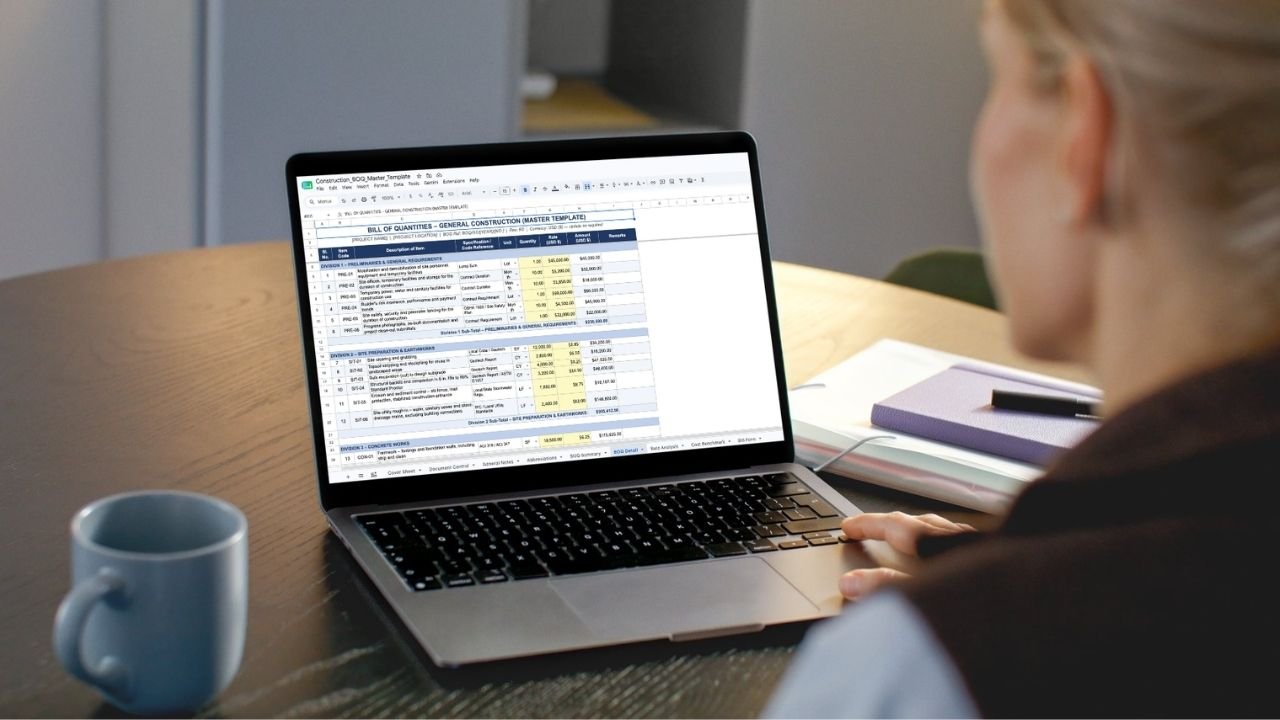
What Is Steel Structure Rate Analysis?
Steel structure rate analysis is the systematic breakdown of all costs required to execute structural steel works per unit—typically per ton, per kilogram, or per defined BOQ item. It goes far beyond a simple material take‑off or a high‑level budget number; it builds a transparent, auditable cost model that ties every dollar back to a specific activity or resource.
A professional rate analysis for steel structure includes:
-
Material costs: structural sections (beams, columns, channels, angles), plates, gussets, base plates, bolts, nuts, washers, anchor bolts, welding consumables, primers, paints, galvanizing, and fire‑proofing materials.
-
Fabrication costs: cutting, drilling, welding, fitting, straightening, blasting, painting, and shop overheads (power, equipment depreciation, supervision).
-
Erection costs: transportation to site, cranes and rigging, erection labor (fitters, erectors, site welders), grouting, alignment, and temporary supports.
-
Indirect costs: site and head‑office overheads, insurance, bonds, permits, contingency, and profit margin.
Rate analysis is shaped by applicable codes and standards. In the U.S., the American Institute of Steel Construction (AISC) and AWS D1.1 Structural Welding Code – Steel define design, fabrication, and inspection requirements that directly influence specifications and costs.
👉Buy Structural Steel Works BOQ Template at $49 Only
Why Accurate Steel Structure Rate Analysis Matters in Florida
Florida’s construction environment introduces unique variables that must be reflected in your steel structure estimation. Ignoring them can lead to under‑bidding, disputes, and cash flow problems mid‑project.
Florida‑Specific Factors
-
Hurricane and wind load requirements: Higher wind zones demand heavier sections, more robust connections, and stricter quality control, which increases both material and fabrication costs.
-
Corrosion considerations: Coastal humidity, salt air, and high moisture levels often require enhanced coating systems (e.g., high‑performance primers, galvanizing, or specialized paint systems) and sometimes stainless or weathering steel in critical areas.
-
Local labor rates and availability: Florida’s labor market and union/non‑union dynamics affect both shop and field labor rates, crane availability, and productivity assumptions.
-
Permit and inspection processes: Local building departments, special inspections, and welding inspector requirements (often tied to AWS D1.1) add time and cost that must be captured in your rate analysis.
👉Buy Structural Steel Works BOQ Template at $49 Only
Impact on Your Estimate
These factors influence:
-
Steel grades and sections used (heavier members, different profiles).
-
Coating and fire‑protection requirements (more expensive surface treatments).
-
Fabrication and erection methods (additional QA/QC, specialized welding procedures, more crane time).
Inaccurate steel structure rate analysis in Florida can result in:
-
Winning bids at unsustainable prices.
-
Margin erosion due to unpriced corrosion protection or wind‑related detailing.
-
Disputes with clients or subcontractors over “unforeseen” requirements.
-
Cash flow strain when actual costs exceed bid assumptions.
Estimate Florida builds these local conditions into its structural steel estimating workflows, helping contractors produce bids that reflect real Florida project risks and costs.
👉Buy Structural Steel Works BOQ Template at $49 Only
Key Components of a Steel Structure Rate Analysis
A robust steel structure BOQ separates costs into clear, manageable categories. Below are the core components you should include in every rate analysis.
Material Costs
Material costs form the largest single component of most structural steel projects.
Major material items include:
-
Structural sections: beams, columns, channels, angles, tubes, HSS.
-
Plates: gussets, stiffeners, base plates, splice plates.
-
Fasteners: bolts, nuts, washers, anchor bolts, shear studs.
-
Welding consumables: electrodes, wires, flux, shielding gases.
-
Coatings and finishes: primers, intermediate and finish coats, galvanizing, fire‑proofing materials.
How to derive material costs:
-
Take‑off from drawings: Use structural and architectural drawings to list all members, plates, and connections. Tools like the AISC Structural Steel Dimensioning Tool can help verify section properties and weights.
-
Convert to weight: Convert lengths and counts into tons or kilograms using standard section weights.
-
Apply current market rates: Use up‑to‑date prices per ton or per kg. In 2026, Florida structural steel costs typically range from around $3,325 to $6,175 per ton, depending on grade, complexity, and market conditions.
-
Include wastage: Add 3–7% for cutting and fabrication wastage, depending on member complexity and shop practices.
Example (illustrative):
-
1 ton of structural steel at $4,200/ton.
-
Add 5% wastage: 0.05 × $4,200 = $210.
-
Material cost per ton = $4,200 + $210 = $4,410/ton (before fabrication, erection, and overheads).
👉Buy Structural Steel Works BOQ Template at $49 Only
Fabrication Costs
Fabrication covers all shop work needed to turn raw steel into erectable components.
Typical fabrication activities:
-
Cutting (sawing, plasma, oxy‑fuel).
-
Drilling and punching.
-
Welding and fitting (including preheat, post‑weld treatments where required).
-
Straightening, cambering, and fit‑up.
-
Surface preparation: blasting to specified Sa levels, shop priming, and painting.
Common pricing approaches:
-
Rate per ton for fabrication: A single $/ton rate covering all shop operations (common for standard buildings and warehouses).
-
Itemized rates: Separate rates for cutting, drilling, welding (per meter or per joint), blasting, and painting, useful for complex or heavy industrial structures.
Quality standards and inspections defined by AISC and AWS D1.1 affect fabrication time and cost. For example, projects requiring full AWS D1.1 welder and procedure qualification, NDE (non‑destructive examination), and third‑party inspection will carry higher fabrication rates than basic, non‑code‑intensive work.
👉Buy Structural Steel Works BOQ Template at $49 Only
Erection and Installation Costs
Erection costs cover everything from the shop gate to final alignment and handover on site.
Key elements:
-
Transportation from shop to site (including special permits for oversized loads).
-
Cranes, rigging, and lifting equipment (mobile cranes, tower cranes, telehandlers).
-
Erection labor: steel fitters, erectors, bolters, site welders, and helpers.
-
Grouting of base plates, alignment, shimming, and temporary bracing.
-
Site safety measures, fall protection, and access equipment (scaffolding, MEWPs).
Factors that change erection rates:
-
Height and access: Multi‑story buildings and high‑bay industrial sheds require larger cranes and more time per ton.
-
Site constraints: Tight urban sites, limited laydown areas, and live facility work increase complexity and crane time.
-
Working hours and safety requirements: Night work, overtime, and enhanced safety protocols (common in Florida’s industrial and coastal projects) raise labor and equipment costs.
Indirect Costs, Overheads, and Profit
Indirect costs and profit complete the rate analysis and ensure your bid reflects the true cost of doing business.
Typical indirect items:
-
Site overheads: site office, temporary facilities, site supervision, safety officers, utilities, small tools, and consumables.
-
Head office overheads: estimating, project management, accounting, IT, and business development.
-
Insurance, bonds, and permits: general liability, workers’ comp, performance bonds, and local permit fees.
-
Contingency: allowance for design changes, unforeseen conditions, and market volatility (especially important given fluctuating steel prices).
-
Profit margin: your target return after all direct and indirect costs.
These are usually applied as percentages on top of direct costs (material + fabrication + erection), though some firms distribute overhead across individual BOQ items for more granular control.
Step‑by‑Step Process for Steel Structure Rate Analysis
Follow this structured workflow to build a consistent, defensible steel structure rate analysis for any project.
-
Collect and Review Drawings & Specifications
Gather structural drawings, architectural coordination drawings, specifications, and referenced standards (AISC, AWS, ASTM). Confirm design loads, connection details, coating systems, and fire‑protection requirements. -
Prepare a Detailed Take‑Off
List all steel members, connections, plates, bolts, and accessories. Convert lengths and counts into weights (tons/kg) using standard section properties. Flag any ambiguous details for clarification before finalizing quantities. -
Classify Items for the BOQ
Group items logically: columns, beams and rafters, trusses, bracing, purlins and girts, stairs and handrails, base plates and anchor bolts, surface preparation, and painting. This structure mirrors how most contracts measure and pay for steel structure works. -
Assign Unit Rates to Each Item
Apply current material prices, fabrication rates, and erection rates. Use your internal database, supplier quotes, and regional benchmarks (e.g., Florida cost per ton ranges) to set realistic rates. -
Add Wastage, Overheads, and Profit
Apply wastage to material quantities, then layer on site and head‑office overheads, contingency, and profit. Ensure these percentages align with your company policy and the specific project risk profile. -
Cross‑Check with Historical Data
Compare your resulting $/ton or $/sqft rates with past similar projects. Large deviations should trigger a review of quantities, rates, or assumptions. -
Finalize the BOQ and Rate Summary
Produce a clean, client‑ready BOQ with clear item descriptions, units, quantities, unit rates (broken down if needed), and totals. This document becomes the basis for your bid, change orders, and progress billing.
This exact logic is embedded in Estimate Florida’s Structural Steel Works BOQ Template, which helps estimators avoid missing critical items and standardizes the rate analysis process across projects.
👉Buy Structural Steel Works BOQ Template at $49 Only
Sample Steel Structure BOQ and Rate Breakdown
The table below illustrates a simplified BOQ for a small to medium steel structure project (e.g., a warehouse or industrial shed). All figures are illustrative; actual rates vary by project size, geometry, location, and market conditions.
Notes:
-
Material rates include an assumed 5% wastage and reflect approximate 2026 Florida market levels.
-
Fabrication and erection rates are indicative and depend on complexity, height, access, and local labor costs.
-
Surface preparation and painting are shown separately for clarity but may be integrated into fabrication rates in some contracts.
Professional templates like the Structural Steel Works BOQ Template from Estimate Florida come pre‑structured with such items and formulas so estimators only need to input quantities and local rates, significantly reducing setup time and error risk.
Common Mistakes in Steel Structure Rate Analysis
Even experienced estimators can miss critical cost drivers. Watch out for these common pitfalls:
-
Missing connection details: Overlooking gussets, stiffeners, splice plates, and base plates can substantially understate tonnage and fabrication time.
-
Ignoring erection challenges: Failing to account for height, access constraints, crane time, and site logistics leads to underestimated erection costs.
-
Using outdated material prices: Steel prices are volatile; relying on old data or ignoring market volatility can erode margins quickly.
-
Not accounting for wastage: Skipping wastage allowances in cutting and fabrication understates material costs. Typical wastage ranges from 3–7%, depending on complexity.
-
Overlooking coating, fire‑protection, and corrosion requirements: Especially critical in Florida’s coastal and high‑humidity environments, these items can represent a significant portion of total cost.
-
Failing to include indirect costs and contingency: Site overheads, insurance, bonds, permits, and contingency must be explicitly included to protect profitability.
-
Misalignment with contract measurement and payment terms: If your BOQ structure doesn’t match the contract’s measurement rules, you risk disputes and cash flow issues.
A structured BOQ template—like the one offered by Estimate Florida—helps reduce these risks by enforcing a consistent item list, calculation logic, and clear separation of cost components.
👉Buy Structural Steel Works BOQ Template at $49 Only
How Estimate Florida’s Structural Steel Works BOQ Template Helps
If you’re tired of rebuilding steel structure BOQs from scratch for every new project, Estimate Florida’s Structural Steel Works BOQ Template is designed to streamline your workflow.
What it includes:
-
Pre‑built item categories for structural steel works: columns, beams, trusses, bracing, purlins/girts, stairs/handrails, base plates, anchor bolts, surface preparation, and painting.
-
Clear separation of material, fabrication, erection, and finishing costs.
-
Built‑in formulas for automatic calculation of totals, wastage, overheads, and profit (in Excel/Google Sheets format).
-
Professional, client‑ready formatting suitable for bids, internal reviews, and change order substantiation.
Benefits for contractors and estimators:
-
Saves hours of setup time on each new project.
-
Reduces the risk of missing items or miscalculations.
-
Provides a standardized BOQ structure that can be used across your team.
-
Helps you produce more consistent, defensible bids.
Pricing and availability:
The Structural Steel Works BOQ Template is available for $49 as a one‑time purchase from Estimate Florida. It’s built from real projects and refined over years of estimating work in Florida and beyond.
If you want a ready‑to‑use BOQ structure instead of building one from scratch, you can get our Structural Steel Works BOQ Template for $49 from Estimate Florida.
Tools and Resources to Improve Your Steel Estimating
To elevate your steel structure estimation capabilities, consider integrating the following tools and resources into your workflow:
-
Excel/Google Sheets: Ideal for custom BOQs, rate analysis sheets, and scenario testing. Most estimators still rely heavily on spreadsheets for flexibility and transparency.
-
Dedicated estimating software: Options range from take‑off tools integrated with BIM models to full‑suite construction estimating platforms. Choose solutions that allow detailed BOQ structures and easy export to bid documents.
-
Historical rate database: Maintain your own database of material prices, fabrication rates, and erection costs by project type and region. This internal benchmark is invaluable for cross‑checking new bids.
High‑authority external resources to consult:
-
American Institute of Steel Construction (AISC) – for structural steel design guidelines, section properties, and industry best practices. Their Structural Steel Dimensioning Tool is particularly useful for accurate take‑offs.
-
American Welding Society (AWS) – for welding standards, especially AWS D1.1 Structural Welding Code – Steel, which defines qualification, fabrication, and inspection requirements that affect your costs.
-
Industry cost guides and data providers – such as RSMeans/ConstructConnect or similar resources for regional labor and equipment rate benchmarks and conceptual cost models.
For Florida‑specific context, review local building department requirements and any regional guidance on wind loads and corrosion protection, as these directly influence your steel structure rate analysis.
If you need help with broader construction estimating, Estimate Florida also provides concrete, electrical, and MEP estimating services for contractors across the US.
Final Thoughts: Build Consistent, Profitable Bids with Proper Rate Analysis
Steel structure rate analysis is foundational to profitable structural steel projects. A disciplined, step‑by‑step approach—grounded in accurate take‑offs, current market rates, and a well‑structured BOQ—reduces risk, improves bid quality, and protects your margins.
In Florida’s demanding environment, where wind loads, corrosion, and local labor dynamics play a major role, having a robust rate analysis process is not optional; it’s a competitive necessity. Estimate Florida understands these market conditions and helps contractors turn complex structural steel scopes into clear, defensible, and profitable bids.
Use this guide as a checklist for your next structural steel estimate. If you want to accelerate the process and standardize your BOQs, consider adopting a pre‑built solution like the Structural Steel Works BOQ Template from Estimate Florida, available for $49, to streamline your workflow and reduce estimation risk.