For general contractors and subcontractors operating in the Sunshine State, the competition for profitable projects is fierce. However, learning how to win more construction bids in Florida is not just about being the cheapest contractor on the list. Racing to the bottom on price is a dangerous strategy that often results in razor-thin margins, cash flow crises, and stressful projects.
Instead, successful contractors win more work by systematically selecting the right projects, pricing their estimates accurately, and presenting themselves with ultimate professionalism. Building a sustainable, highly profitable construction business requires a targeted approach to construction sales and bidding.
In this comprehensive guide, we will share practical, proven ways to show you exactly how to win more construction bids in Florida without sacrificing your profitability. From mastering your bid-hit ratio to navigating Florida’s unique building codes, these strategies will help you secure better work, build stronger relationships, and grow your bottom line.
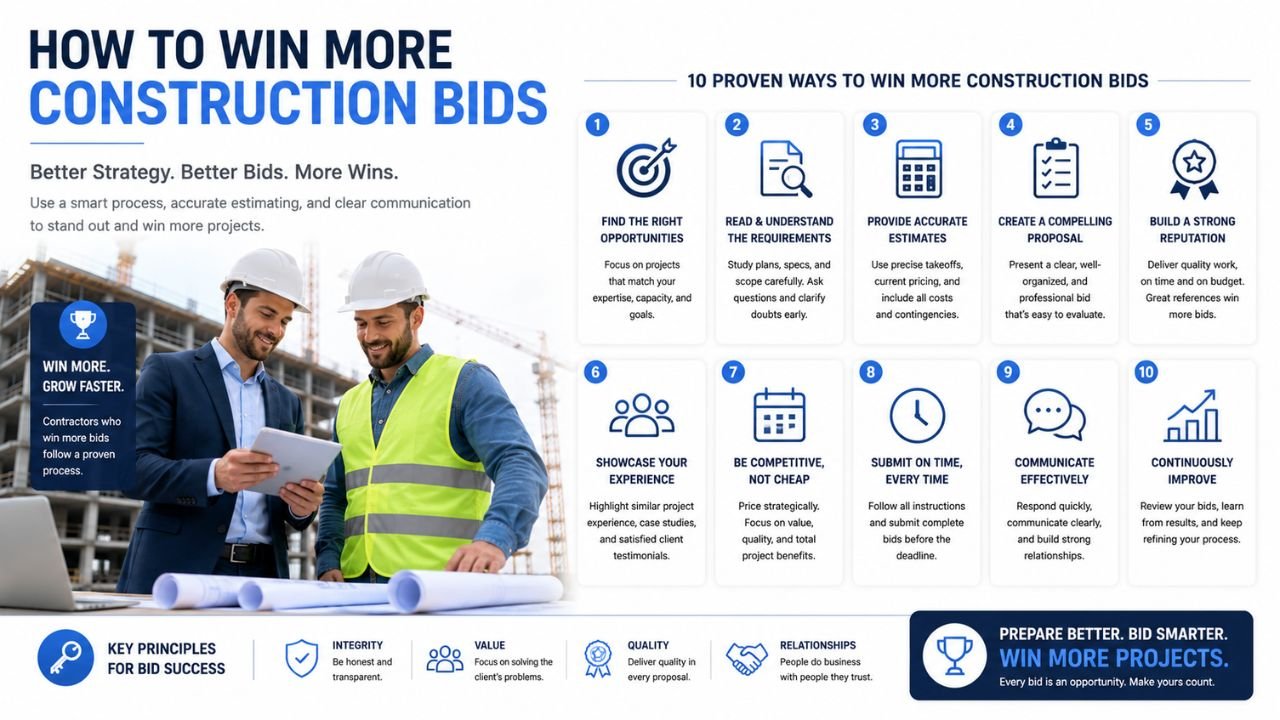
Why Contractors Lose Bids in Florida
Before you can improve your win rate, you must understand why you are losing out on projects. Many estimators assume they lost a job simply because their price was too high. While price is undeniably a factor, losing bids is often a reflection of a flawed process rather than just a high number.
Here are the most common reasons contractors lose bids in the Florida market:
-
Poor Project Fit: Bidding on projects that do not align with your company’s core strengths, crew capabilities, or geographic service area.
-
Inaccurate Estimates: Making math errors, missing scope items, or failing to account for current Florida material and labor rates, leading to uncompetitive pricing.
-
Weak Proposals: Submitting unorganized, unprofessional quote sheets that fail to explain what is included in the price, creating doubt for the client.
-
Slow Follow-Up: Taking too long to submit the initial bid or failing to respond promptly to requests for clarification. In construction sales, speed builds trust.
-
Unclear Scope: Failing to define inclusions and exclusions clearly. When a project owner cannot figure out what your bid covers, they will throw it out to avoid change order risks.
-
Poor Reputation or Low Trust: Lacking the references, licensing, or local track record to make the client feel secure in awarding you the contract.
By identifying and correcting these process failures, you instantly elevate your position against competitors who are still making these basic mistakes.
Bid on the Right Florida Projects
One of the greatest secrets to learning how to win more construction bids in Florida is actually bidding on fewer projects. Bidding selectively improves your win rate because it allows your estimating team to focus their time and energy on projects you are highly qualified to win.
Every construction company should have a strict bid/no-bid selection process. Before downloading the blueprints and performing a takeoff, evaluate the opportunity based on the following criteria:
-
Project Size: Does the project fit within your bonding capacity and cash flow capabilities?
-
Scope Fit: Do you have a proven track record of executing this exact type of work, whether it is residential remodels, commercial tenant improvements, or heavy civil work?
-
Risk Level: Are the contract terms fair? Are the site conditions well-documented?
-
Client Type: Is this a developer known for paying on time, or a notoriously difficult GC who shops your numbers to other subs?
-
Competition: Do you know who you are bidding against? If the client invited twenty contractors to bid, your chances of winning are statistically terrible.
-
Schedule: Do you have the crew availability to meet the project’s timeline?
-
Location and Permit Complexity in Florida: Bidding a project in Miami-Dade County involves drastically different permit timelines, HVHZ (High-Velocity Hurricane Zone) codes, and logistical challenges compared to building in rural Central Florida. Ensure the location aligns with your operational radius.
Improve Estimating Accuracy
Your estimating process is the financial heartbeat of your bidding strategy. If your numbers are wrong, your proposal is either uncompetitive or dangerously unprofitable. Better estimates improve bid competitiveness and protect your profit margins.
To elevate your estimating accuracy, you must master the following components:
-
Quantity Takeoff: Do not rely on “guesstimates” or rough square-foot historical pricing. Use digital takeoff software to measure precise lengths, areas, and item counts directly from the plans.
-
Labor Pricing: Calculate your true labor burden. This includes not just hourly wages, but workers’ compensation, payroll taxes, health benefits, and realistic daily production rates for the Florida heat.
-
Material Pricing: Supply chains fluctuate. Always get updated quotes from your suppliers for heavy commodities like concrete, steel, lumber, and drywall.
-
Subcontractor Quotes: Vet your specialty trades carefully. Level their bids to ensure they have not excluded a critical part of the scope.
-
Overhead and Profit (O&P): Never guess your markup. You must know your exact company overhead percentage and add a standardized profit margin to keep the business healthy.
-
Contingency: Always include a contingency line item for unforeseen conditions, design errors, or weather delays.
Accurate pricing builds supreme confidence. When you know your numbers are flawless, you will not be tempted to slash your price when a client asks for a discount. If your team lacks the time or expertise to achieve this level of detail, utilizing professional estimating service can help you produce highly accurate, competitive numbers.
Write Better Proposals
Once your estimate is complete, the way you present your numbers makes a massive difference. A strong proposal strategy helps Florida clients compare bids more easily and positions your company as a professional, organized partner.
A persuasive, winning proposal should always include:
-
Clear Scope of Work: Summarize exactly what tasks you will perform, using clear, plain English.
-
Exclusions: This is critical. Explicitly list what you are not doing (e.g., “Bid excludes hazardous material abatement, permit fees, and dewatering”). This protects you from disputes later.
-
Assumptions: Note the conditions your price is based on (e.g., “Pricing assumes standard Monday-Friday working hours and unrestricted site access”).
-
Value-Added Options: Provide the client with choices. Offer alternative materials or phasing schedules that could save them time or money.
-
Professionalism: Eliminate typos, use your company letterhead, and ensure the document is cleanly formatted.
-
Formatting and Readability: Break complex pricing down into logical phases or CSI divisions so the client can digest the information easily.
Using a standardized [bid proposal template] ensures that every quote leaving your office looks sharp, comprehensive, and legally protective.
Build Stronger Florida Relationships
Construction is a relationship business. The most successful contractors in Florida do not win work solely through cold bidding; they win because they are known, liked, and trusted. Trusted contractors often get invited to bid on exclusive, negotiated projects where competition is minimal.
Building relationships with owners, general contractors, developers, architects, and suppliers is a vital component of contractor marketing.
-
Stay Visible: Join local Florida chapters of industry organizations like the Associated Builders and Contractors (ABC) or the Associated General Contractors (AGC). Attend networking events and golf tournaments.
-
Collaborate with Architects: Architects often recommend contractors to their clients. If you provide them with helpful budgeting advice during their design phase, they will advocate for you when the project goes out to bid.
-
Treat Suppliers Well: Your material vendors talk to everyone in town. If you pay your bills on time and treat them fairly, they will often pass along leads about upcoming projects before they are publicly announced.
Follow Up the Right Way
It is staggering how many Florida contractors spend twenty hours putting together a bid, email it to the client, and then never speak to them again. Many bids are lost simply because there is zero bid follow-up.
Following up shows that you are hungry, professional, and organized. Here is how to follow up the right way:
-
Timing: Call or email within 24 to 48 hours of submitting the bid simply to confirm receipt and ask if they have any immediate questions.
-
Professionalism: Do not harass the client. Ask politely when they expect to make a decision and request to schedule a brief call to walk through your proposal.
-
Asking for Feedback: If you lose a bid, always ask for a debrief. Ask where your pricing ranked and if your scope coverage was accurate. This feedback is pure gold for future bids.
-
Staying Top of Mind: Even if you lose, periodically check in with that client. If the winning contractor fails to perform, you want to be the first person they call to take over the project.
Consistent, professional follow-up can improve your close rates significantly and nurture future opportunities.
Use Value Engineering
When a Florida developer or GC receives bids that are over their budget, their project is at risk of being canceled. You can step in as a hero by utilizing value engineering.
Suggesting cost-saving alternatives can help you win work by proving that you are a consultative partner, not just a price tag. Value engineering should always preserve the quality and performance of the building while reducing costs.
Florida clients deeply appreciate practical cost solutions, especially when strict building codes and weather factors inflate budgets. For example, you might suggest switching from a cast-in-place concrete wall to a reinforced CMU (concrete masonry unit) wall, or proposing a different brand of impact-resistant windows that offer the same Miami-Dade Notice of Acceptance (NOA) rating but carry a shorter lead time and lower price point.
Track Your Bid-Hit Ratio
If you want to win more Florida construction bids, you have to track your performance. Your bid-hit ratio is the rate at which you successfully win the projects you bid on. For example, if you bid on 10 projects and win 2, your bid-hit ratio is 20% (or 5-to-1).
Tracking your win/loss data helps improve future bidding decisions. By analyzing this data, you can uncover critical trends:
-
Are you winning 40% of your commercial office build-outs but only 5% of your retail restaurant bids?
-
Are you losing consistently to one specific competitor?
-
Does your win rate drop when you bid on projects outside of your home county?
This data reveals exactly which project types are worth pursuing in Florida and which ones are wasting your estimating department’s time.
Win More Bids Without Lowering Price
There is a massive misconception in the construction industry that the lowest number always wins. Price is only one factor in winning work. Project owners and general contractors are highly motivated by risk reduction. A cheap contractor who delays the schedule or delivers poor quality ultimately costs the owner far more money.
You can win more bids without lowering your price by demonstrating that you are the lowest-risk option. Trust, responsiveness, professionalism, and clarity make a massive difference.
If your proposal is incredibly detailed, your communication is lightning-fast, and your references are impeccable, clients will often pay a premium to hire you. The goal is to be the best value, not the cheapest bidder. Focus on selling your safety record, your ability to hit schedule deadlines, and your financial stability.
Florida-Specific Bidding Considerations
The Florida construction market is entirely unique. If you estimate a building in Tampa the exact same way you estimate a building in Ohio, you will lose money. Florida bids are heavily influenced by environmental and regulatory factors, and your bid strategy must reflect these realities.
| Florida Condition | Impact on Estimating & Bidding | Strategic Adjustment |
| Hurricane Requirements (HVHZ) | Requires heavier structural steel, continuous load paths, and impact-rated fenestration. | Ensure your material quotes specifically account for Florida Product Approval numbers and NOA ratings. |
| Coastal Conditions & Moisture | Salt spray causes rapid corrosion; high humidity requires specialized vapor barriers and HVAC systems. | Specify stainless steel hardware, specialized masonry sealants, and moisture-resistant drywall in coastal bids. |
| High Water Tables | Digging foundations often hits water immediately, requiring constant dewatering. | Always include a clear allowance or line item for dewatering pumps and imported structural fill dirt. |
| Permitting Delays | Florida municipalities are notoriously backlogged, especially during peak building seasons. | Clearly state in your proposal that the project timeline begins after the permit is officially issued, not upon contract signing. |
| Seasonal Demand (Snowbirds) | Many high-end residential clients demand work be completed during summer months before they return in winter. | Adjust your labor pricing for summer overtime and potential weather delays due to daily afternoon thunderstorms. |
Understanding and openly discussing these Florida-specific challenges in your bid proposal shows local clients that you are an experienced, specialized contractor who knows exactly how to build in this environment.
Final Thoughts
Mastering how to win more construction bids in Florida requires a shift in mindset. It is not a numbers game where you throw as many bids at the wall as possible to see what sticks. Better results come from intentional project selection, flawless estimating accuracy, professional proposal presentation, and relentless relationship-building.
By tracking your bid-hit ratio, utilizing value engineering, and tailoring your approach to the unique demands of the Florida market, you will naturally position your company as the premier choice for owners and general contractors alike.