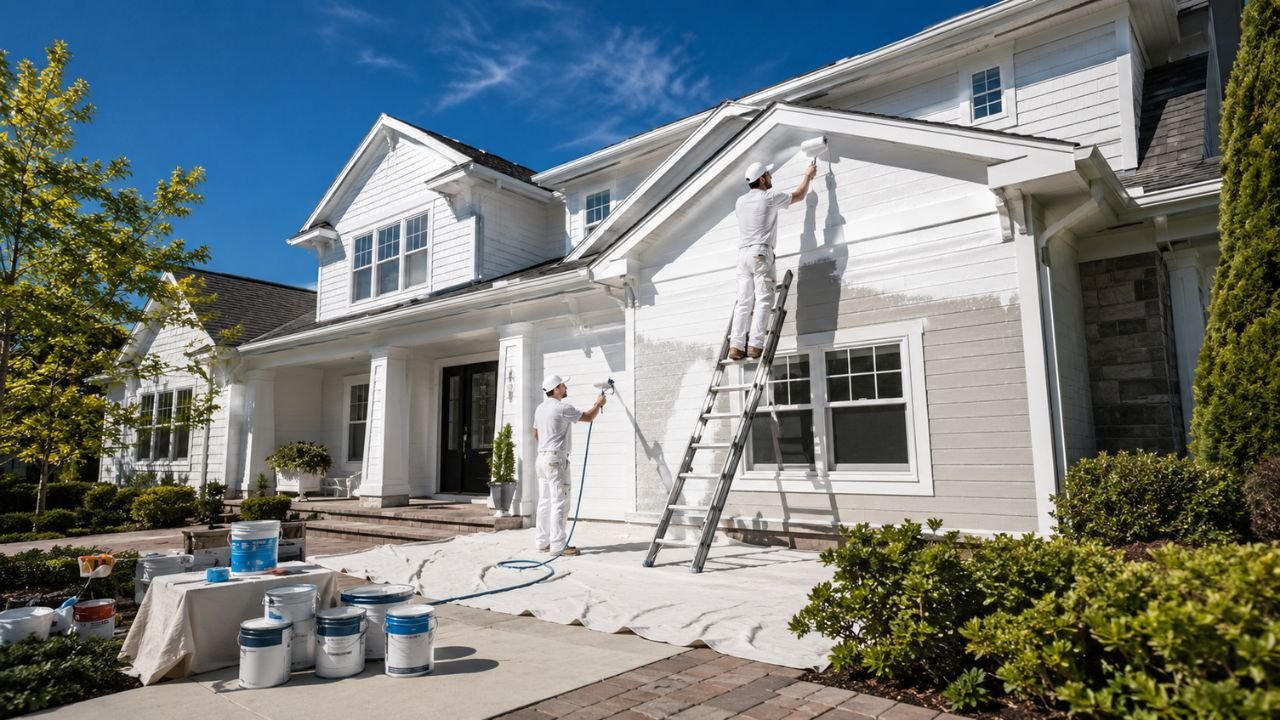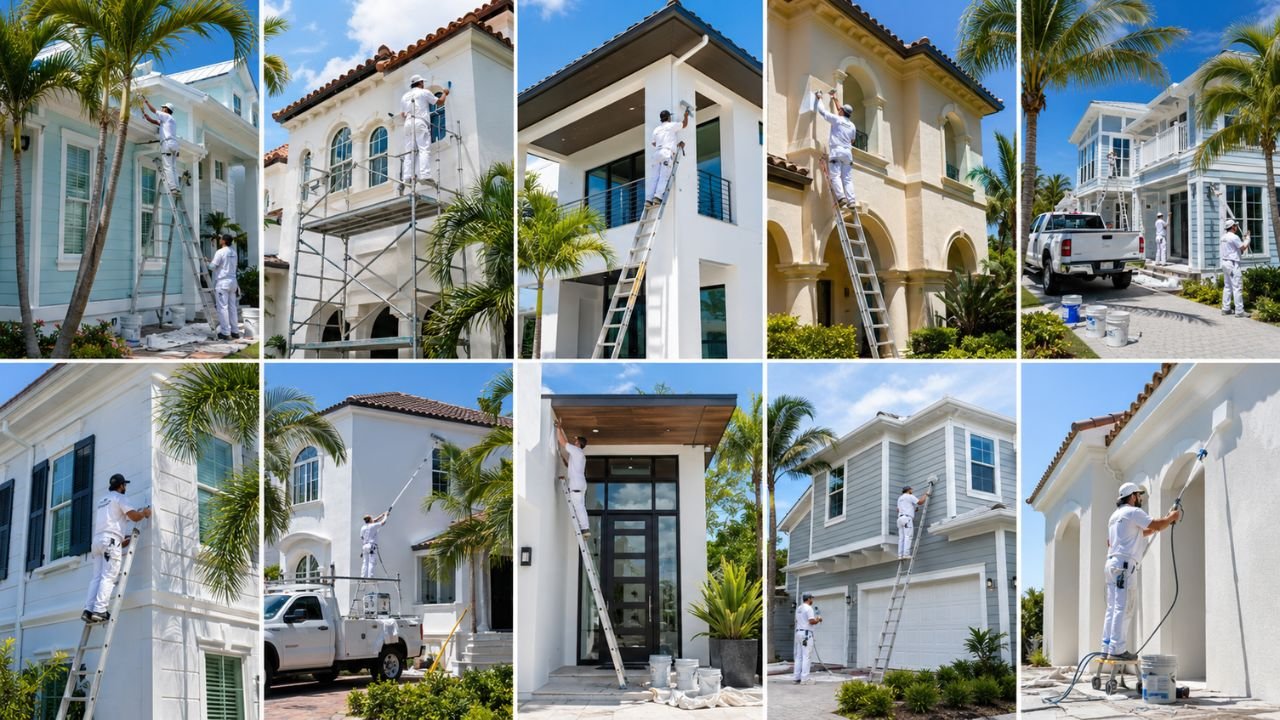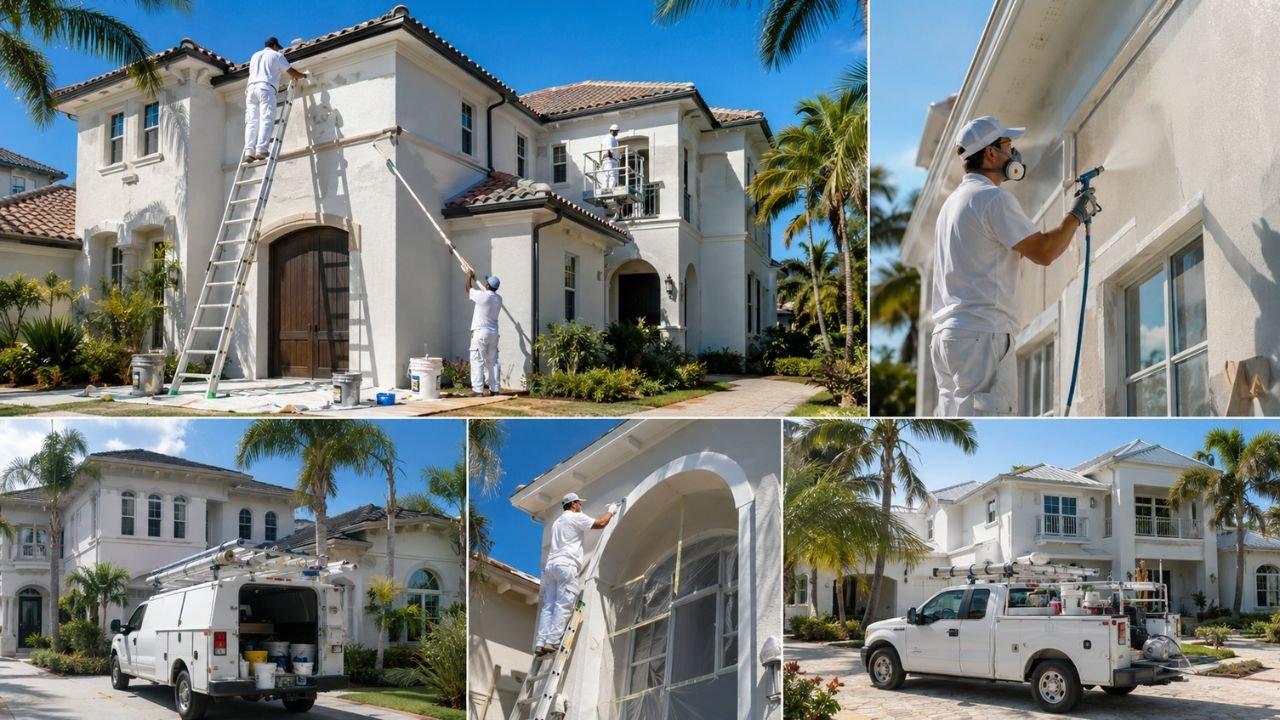
For most Florida regions, the best time to paint your house is during the cooler, drier months from late October through April. During this “dry season,” lower humidity and more predictable weather patterns provide the ideal windows for paint to dry and cure properly. Specifically, the “Goldilocks” months of March, April, and November often offer the most reliable conditions—moderate temperatures, low rainfall, and manageable humidity—across the state. While exterior painting is possible year-round, timing your project around actual weather windows rather than just the calendar is critical for long-term adhesion and finish quality.
When Should You Paint Your House in Florida?
The direct answer depends on the balance of three main factors: surface moisture, air temperature, and relative humidity. In Florida, moisture is the most significant hurdle. For an exterior coating to bond effectively, the substrate (whether stucco, wood, or brick) must be completely dry.
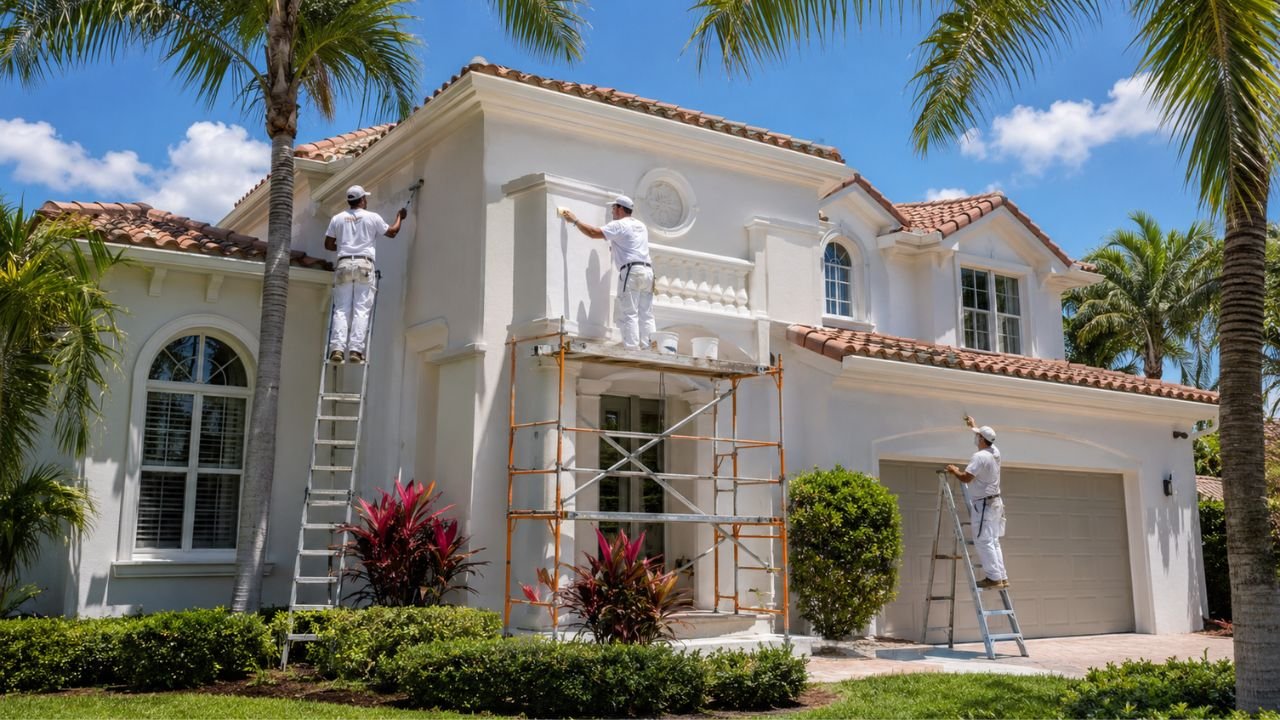
Ideally, you want to schedule painting when:
- Rain is not forecast for at least 24 to 48 hours before and after application (depending on the specific product’s technical data sheet).
- Humidity levels are consistently below 85%, though many manufacturers recommend staying below 70% for optimal results.
- Temperatures remain within the manufacturer’s specified range, typically between 50°F and 90°F for standard acrylic paints.
Regional differences play a major role. While South Florida remains humid year-round, North Florida faces the additional challenge of winter freezes, which can halt painting projects if the overnight temperature drops below the coating’s minimum curing threshold.
What Is the Best Time of Year to Paint a House in Florida?
Late Fall (November)
Many professionals consider November the premier month for exterior painting in Florida. The hurricane season is winding down, the oppressive summer humidity has broken, and temperatures are generally stable and mild. This provides a wider daily “weather window” where the surface is dry from morning dew but not yet overheated by the midday sun.
Winter (December – February)
Winter offers some of the lowest rainfall of the year. In Central and South Florida, this is a prime painting season. However, in North Florida cities like Jacksonville or Tallahassee, contractors must monitor “cold fronts”. If the temperature drops too low, the paint film may not coalesce properly, leading to premature failure.
Early Spring (March – April)
Early spring is a favorite for many homeowners looking to refresh their curb appeal before the summer heat. These months typically offer low humidity and warm, but not hot, days. The risk of sudden afternoon thunderstorms is also lower than in the summer months.
Late Spring & Summer (May – September)
While possible, painting during the Florida summer is the most challenging. The “rainy season” typically begins in June, bringing high humidity and daily afternoon thunderstorms. These storms can wash away fresh paint or trap moisture beneath the surface if the wall hasn’t had adequate time to dry after a morning shower.
Early Fall (October)
October is a transition month. While it can still be hot and carries the risk of late-season tropical activity, the humidity starts to decrease toward the end of the month, opening up more viable painting days.
Best Months to Paint a House in Florida
Month-by-Month Painting Suitability Table
| Month | Typical Conditions | Exterior Painting Suitability | Main Considerations |
|---|---|---|---|
| January | Cool, very dry | High | Monitor for overnight freezes in North FL. |
| February | Cool, dry | High | Excellent for South and Central FL. |
| March | Mild, low humidity | Optimal | One of the best months statewide. |
| April | Warm, dry | Optimal | Predictable weather and dry surfaces. |
| May | Hot, humidity rising | Moderate | Plan for earlier starts to avoid heat. |
| June | Very hot, rainy | Low | High risk of afternoon storms. |
| July | Hot, humid, rainy | Low | Extreme heat and daily rain interruptions. |
| August | Peak heat and rain | Low | Difficult for drying and crew productivity. |
| September | Humid, storm risk | Moderate | Peak hurricane/tropical storm activity. |
| October | Humidity dropping | Moderate | Improving conditions toward month-end. |
| November | Mild, dry | Optimal | Highly stable and reliable weather. |
| December | Cool, dry | High | Short days but excellent drying conditions. |
Why Florida Weather Matters When Painting a House
Florida’s climate is uniquely aggressive toward exterior coatings. The state’s high UV index, salt air (especially in coastal zones), and extreme humidity mean that the application process must be handled with precision.
- Paint Drying vs. Curing: Drying happens when the solvents evaporate, while curing is the chemical process of the paint reaching its full hardness and protection. High humidity can slow drying, while extreme heat can cause the paint to “skin over” too quickly, trapping moisture underneath and leading to later bubbling.
- Adhesion: Paint requires a clean, dry, and structurally sound surface to bond. Florida’s frequent rain and dew cycles can create a “micro-film” of moisture on surfaces that isn’t always visible but can ruin adhesion.
- Finish Quality: Wind can blow dust and debris into wet paint, while rain shortly after application can cause “surfactant leaching,” resulting in unsightly streaks or a blotchy finish.
How Florida Humidity Affects House Painting
Humidity is often the “silent killer” of a Florida paint job. When relative humidity is high (above 85%), the air cannot effectively absorb the moisture evaporating from the wet paint. This leads to:
- Extended Recoat Times: If you apply a second coat before the first has sufficiently dried due to high humidity, you risk the entire system peeling or sagging.
- Surface Condensation: In the early morning, high humidity often leads to dew. Painting over even a slightly damp surface is a leading cause of paint failure on Florida stucco.
Always consult the technical data sheet (TDS) for your chosen paint product. Some specialty coatings are designed for higher humidity, while others are extremely sensitive to moisture.
How Rain Affects the Best Time to Paint a House
In regions like Orlando or Tampa, summer afternoon storms are so regular you can almost set your watch by them.
- Before Rain: A wall needs to be dry for hours before painting. If it rained overnight, the substrate (especially porous stucco) may still hold moisture even if it “looks” dry.
- After Painting: Most standard acrylic paints need at least 2–4 hours of dry time before they can withstand a light rain, and often much longer for a heavy Florida downpour.
How Temperature Affects House Painting in Florida
While we often worry about the cold, Florida’s high temperatures are just as problematic.
- Air vs. Surface Temperature: On a 90°F day in Miami, the surface of a dark-colored wall in direct sunlight can easily exceed 120°F. This causes the paint to dry almost instantly on contact, preventing it from “wetting” into the surface properly.
- The “Shade Rule”: Professionals often “follow the sun” around a building, painting the east side in the morning once the dew has dried and the west side in the afternoon when it has moved into the shade.
Can You Paint Your House in Florida During Summer?
Yes, you can paint in the summer, but it requires a much higher level of painting quantity takeoff and project scheduling. Summer painting often requires:
- Earlier Starts: Beginning at 7:00 AM to beat the midday heat and the 2:00 PM storms.
- Increased Masking: High winds from storms can cause overspray to travel further.
- Crew Management: Heat exhaustion is a real factor, and labor productivity often drops by 15-25% in peak Florida heat.
How Often Should You Paint a House in Florida?
Because of the intense UV exposure and humidity, Florida homes typically need repainting every 5 to 8 years. However, this varies based on:
- Paint Quality: Premium elastomeric coatings can last 10+ years on stucco, while cheap contractor-grade paint may fail in 3 or 4.
- Exposure: South-facing walls and homes near the coast (within 5 miles) usually require more frequent maintenance due to sun and salt.
Signs It Is Time to Paint Your Florida House
Don’t wait for the paint to literally fall off before considering a refresh. Look for these early warning signs:
- Chalking: Run your hand across the wall. If a white, chalky powder comes off, the paint’s binders are breaking down.
- Hairline Cracks in Stucco: These allow water to penetrate behind the paint film, leading to massive failure and potential structural issues.
- Fading: Uneven color suggests the UV protection is gone.
- Failed Caulking: If the seals around windows and doors are cracking or pulling away, the building envelope is compromised.
Signs You Need to Paint Table
| Sign | What It May Indicate | Recommended Action |
|---|---|---|
| Chalking | UV breakdown of binders | Pressure wash, prime, and repaint. |
| Peeling | Moisture trapped behind film | Scrape, identify moisture source, repaint. |
| Cracked Caulking | Aging/Thermal expansion | Remove and replace with high-quality sealant. |
| Bubbling | Poor adhesion or damp surface | Scrape to substrate, sand, and prime. |
| Fading | High sun exposure | Use premium UV-resistant coatings. |
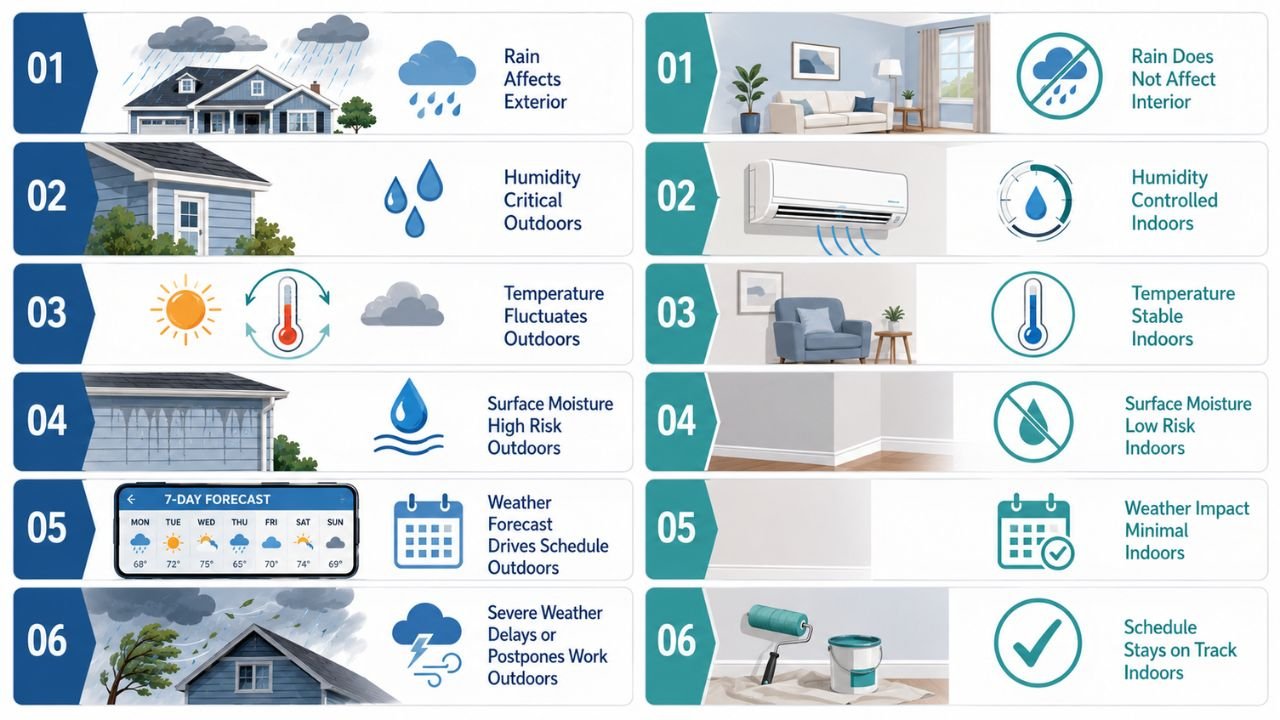
Best Time to Paint Exterior vs. Interior
Interior painting is generally a year-round activity in Florida because of the ability to control the environment with HVAC systems. However, external factors still play a role.
Exterior vs. Interior Painting Factors
| Factor | Exterior Painting | Interior Painting |
|---|---|---|
| Rain | Major consideration; halts work. | Generally no direct impact. |
| Humidity | Critical for curing and adhesion. | Managed by air conditioning. |
| Temperature | Subject to daily fluctuations. | Kept stable for application. |
| Surface Moisture | High risk from dew and rain. | Low risk unless leaks are present. |
| Forecast | Dictates the entire schedule. | Less critical to planning. |
Florida Regional Differences in House Painting Timing
South Florida (Miami, Fort Lauderdale, Naples)
South Florida has a true “wet/dry” season. Painting is very difficult from June to October due to high moisture. The winter months are almost perfect here, with average highs in the 70s.
Central Florida (Orlando, Tampa, Sarasota)
Central Florida experiences intense lightning and afternoon storms. Spring (March-May) is often the busiest season for contractors here before the heat becomes oppressive.
North Florida (Jacksonville, Tallahassee, Pensacola)
North Florida experiences more seasonal variation. Winters can be too cold for many paint products, making April and October the “sweet spots” for exterior work.
Does Painting Season Affect the Cost?
While the price of the paint itself remains relatively stable, the timing of your project can influence the construction estimating results in several ways:
- Labor Availability: Demand spikes in the spring and fall. You may find more competitive labor rates in the “off-season” if you can find a reliable weather window.
- Weather Delays: A summer project estimated for 5 days might take 10 due to rain, increasing labor costs if the contractor hasn’t accounted for “dead time”.
- Equipment Costs: If a project drags on, the daily rental for scaffolding or a lift can quickly erode the budget.
What Is a Painting Quantity Takeoff?
A painting quantity takeoff is a professional process used to determine the exact measurable units for a project. Instead of “guessing” how many gallons you need, an estimator uses blueprints or digital tools like PlanSwift to calculate the precise surface area of walls, trim, and ceilings.
At Estimate Florida , our material takeoff services help you understand:
- Exact Square Footage: Minus openings like windows and doors.
- Linear Footage: For trim, soffits, and fascia.
- Substrate Porosity: Factoring in how much more paint “thirsty” stucco needs compared to smooth siding.
How Estimate Florida Helps With Painting Estimates
Planning a painting project in the complex Florida climate requires more than a bucket and a brush. It requires data. Estimate Florida provides professional construction estimating and quantity takeoff services for residential and commercial projects throughout the state.
Whether you are a homeowner trying to budget for a renovation or a contractor preparing a bid for a multi-family complex in Orlando, we provide the clarity you need. Our reports include:
- Detailed material and labor takeoffs.
- Trade-specific cost modeling.
- Analysis of surface preparation requirements.
- Support for budgeting and bid organization.
Note: Estimate Florida provides estimating support; we are not a painting contractor and do not perform actual painting services..
Practical Florida House Painting Checklist
| Check | Why It Matters |
|---|---|
| Rain Forecast | Need 24-48 hours of dry weather for most products. |
| Humidity | Needs to be ideally below 70% (max 85%) for curing. |
| Surface Moisture | Stucco must be bone-dry to prevent future peeling. |
| Temp Range | Usually 50°F to 90°F (check specific product label). |
| Wind Speed | High winds cause overspray and debris in wet paint. |
| Surface Prep | Includes pressure washing, scraping, and caulking. |
| Manufacturer TDS | The final authority on application and drying times. |
| Quantity Takeoff | Ensures you order the correct amount of material. |
Frequently Asked Questions
When should you paint your house in Florida?
The best general window is between late October and April when humidity and rainfall are at their lowest.
What is the best month to paint a house in Florida?
March, April, and November are widely considered the “optimal” months for the best balance of temperature and dry conditions.
Can you paint a house in Florida during summer?
Yes, but it is risky. You must work around daily afternoon storms and high surface temperatures, often starting very early in the morning.
Is winter a good time to paint a house in Florida?
It is excellent for South and Central Florida. In North Florida, you must avoid painting during cold snaps when temperatures drop below 50°F.
How often should you paint a house in Florida?
Most Florida homes require repainting every 5 to 8 years due to intense UV and moisture exposure.
How does humidity affect exterior paint in Florida?
High humidity (above 85%) slows drying and curing, which can lead to surfactant leaching, sagging, or poor adhesion.
Can you paint a house after it rains in Florida?
No. The surface must be completely dry. Porous surfaces like stucco may need 24 hours or more to dry out after a heavy rain.
How long should exterior paint dry before rain?
Most acrylic paints are “rain safe” in 2 to 4 hours, but check your specific product label as some require longer.
Is morning or afternoon better for painting in Florida?
Late morning is often best, once the dew has evaporated but before the wall becomes too hot in the afternoon sun.
Does Florida’s heat affect exterior paint?
Yes. Extreme heat (surface temps above 100°F) can cause the paint to dry too fast, preventing it from bonding properly to the wall.
How much does it cost to paint a house in Florida?
While costs vary, professional painting estimates often fall between $2.50 and $5.50 per square foot for the exterior.
Conclusion
Determining when should you paint your house in Florida is a strategic decision that impacts the longevity and beauty of your property. While the calendar points toward the dry season (November – April) as the ideal time, the actual weather window on the day of application is what truly matters. By avoiding peak humidity, extreme midday heat, and the unpredictable daily rains of summer, you ensure that your investment in high-quality paint delivers the protection your home deserves.
Success in any Florida renovation begins with accurate planning. Understanding your project’s scope through a professional painting quantity takeoff allows you to manage costs and materials effectively, regardless of the season.
Planning a Project?
If you are planning a residential or commercial painting project in Florida and need accurate quantities, material takeoffs, or a detailed construction estimate, Estimate Florida provides professional estimating support based on your plans and specifications.
Contact Estimate Florida Today for a free quote on your next project’s estimating needs.