Building a home in the Sunshine State is a dream for many, but the reality of making that dream come true heavily depends on the team you hire. Knowing exactly how to choose a contractor to build a house in Florida is arguably the most important decision you will make throughout the entire process. The right contractor acts as your advocate, protecting your budget, managing your timeline, and ensuring the final quality of your home meets the highest standards.
However, building here isn’t the same as building anywhere else. Florida projects face unique challenges, from strict hurricane codes and unpredictable weather patterns to complex permitting hurdles and delicate environmental considerations. Whether you are planning a fully custom waterfront estate, a semi-custom suburban retreat, or a production-style build, hiring a knowledgeable, vetted professional is the key to a successful project. This guide will walk you through exactly how to evaluate Florida home builders, what questions to ask, and how to protect yourself before you sign a contract.
Why the Right Contractor Matters in Florida
Florida’s climate is beautiful but unforgiving. The environment puts constant stress on buildings, meaning your construction choices must be engineered to withstand severe weather. A contractor who lacks local expertise may build a house that looks great on day one but fails when the first major storm hits.
Florida conditions demand specific construction methods. High heat and humidity require advanced moisture control and high-efficiency HVAC systems to prevent mold. Low-lying land and frequent afternoon downpours require meticulous lot grading, drainage planning, and an understanding of flood zones. Furthermore, coastal areas demand corrosion-resistant hardware and impact-rated windows.
When you consider all these regional factors, you start to see why pricing varies so much across the state. Understanding how much does it cost to build a house in Florida relies heavily on the contractor’s ability to anticipate these Florida-specific site conditions and price them accurately upfront, rather than surprising you with costly change orders later.
Start With License and Insurance
Before you even look at a contractor’s portfolio, you must verify their credentials. Florida takes unlicensed contracting very seriously, and you should too. Unlicensed work is illegal, risky, and can leave you financially ruined if someone is injured on your property or if the municipality forces you to tear down unpermitted work.
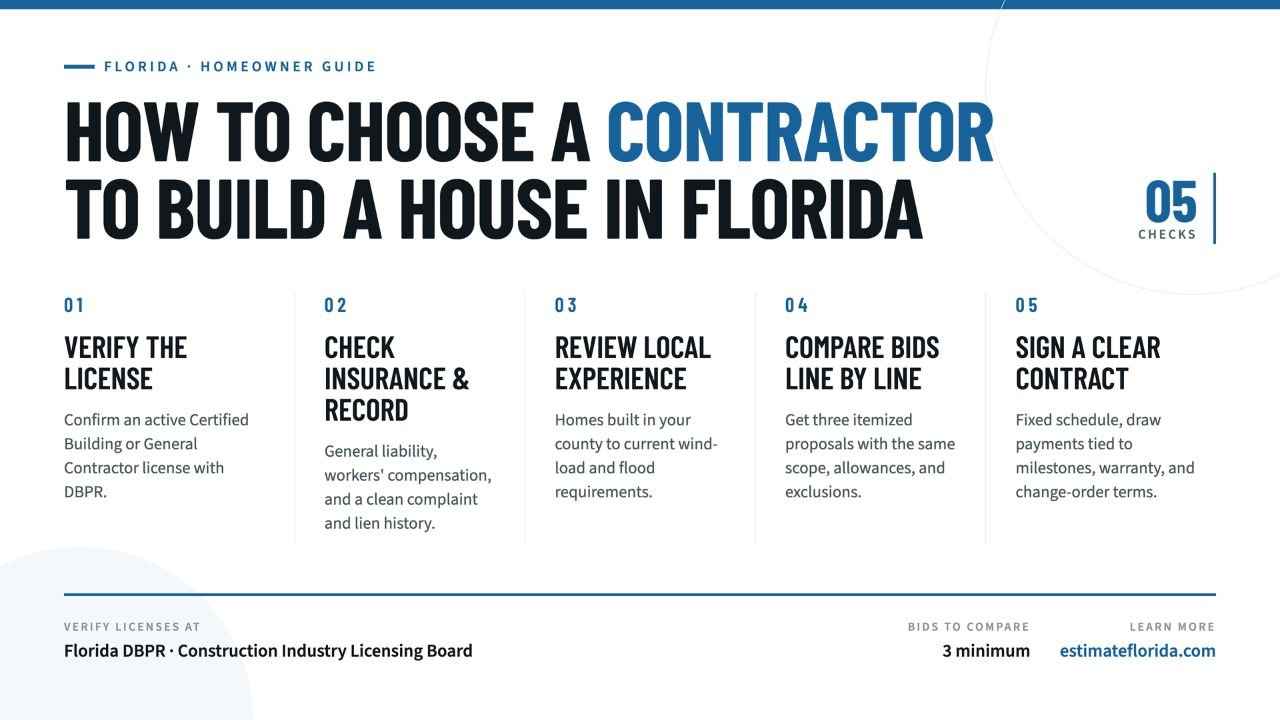
Always start by checking the contractor’s status with the Florida Department of Business and Professional Regulation (DBPR). You are looking for a Certified General Contractor (CGC), Certified Building Contractor (CBC), or Certified Residential Contractor (CRC) license. Make sure the license is “Active” and matches the name of the company or individual you are dealing with.
Beyond the license, insist on seeing proof of insurance. A reputable builder will gladly provide a certificate of insurance showing:
-
General Liability Insurance: Protects your property from damage caused by the contractor or their crew.
-
Workers’ Compensation: Protects you from being sued if a worker is injured on your job site.
Do not accept excuses. If a contractor cannot quickly provide an active DBPR license number and current insurance certificates, walk away.
Look for Florida-Specific Experience
A builder who constructs homes in the Midwest may struggle in Florida. The soil conditions, structural requirements, and building materials are entirely different. You want a contractor who understands local codes, sandy soils, high water tables, and severe weather.
For example, a contractor building in a High-Velocity Hurricane Zone (HVHZ), like Miami-Dade or Broward County, must be an expert in concrete block construction, steel tie-downs, and impact-resistant glazing. If your lot is on the coast, they need to understand FEMA regulations regarding breakaway walls and elevated foundations.
It is also helpful to understand the different tiers of builders. A general builder may handle a wide range of projects, while someone focused solely on residential homes might have more refined vendor relationships for interior finishes. If you want to know what it takes for these professionals to reach their level, exploring how to become a builder in Florida, how to become a contractor in Florida, or how to become a general contractor in Florida can give you insight into the rigorous testing and financial vetting they must pass. This knowledge helps you appreciate the value a true professional brings to your project.
Review Past Work and References
Do not rely solely on a polished website or a curated Instagram feed to evaluate a contractor’s quality. You need to dig deeper. Ask the contractor to show you portfolios of recently completed homes, but more importantly, ask to drive by current, active job sites. An active site tells you a lot about how a contractor operates. Is it clean? Are the materials protected from the weather? Do the workers seem organized?
You should also request references from past clients, particularly those who built homes in a similar price range and style to yours. When you call these references, ask specific questions:
-
Did the contractor communicate well throughout the build?
-
Were there unexpected costs, and how were they handled?
-
Did they finish the job on time?
-
How did the contractor handle warranty issues or punch-list items after move-in?
Speaking directly to past clients is one of the most reliable ways to gauge how your own experience will go.
Ask the Right Questions
When interviewing potential builders, treat it like a job interview. You are hiring them to manage one of the largest financial investments of your life. Use this practical checklist of questions to uncover their operational style:
-
How many Florida homes have you built? (Look for long-term local experience).
-
Who handles permits and inspections? (The contractor should always handle this—never pull a permit as an “owner-builder” to save them money).
-
What is included in your bid? (Make sure site prep, utility connections, and impact fees are accounted for).
-
What allowances are you using? (Ensure their budget for items like cabinets and flooring is realistic, not artificially low).
-
How do you manage change orders? (You want a formal, written process for any changes that cost money).
-
What is your typical timeline? (Ask when they can realistically start and how many months the build will take).
-
What warranties do you provide? (Look for at least a 1-year general warranty and a 10-year structural warranty).
Compare Bids the Smart Way
One of the biggest mistakes buyers make when figuring out how to choose a contractor to build a house in Florida is automatically selecting the lowest bid. In construction, the cheapest bid is rarely the best. Often, a low bid means the contractor has excluded essential items, used cheap materials, or provided unrealistically low “allowances” for your finishes.
Proper residential construction estimating requires a detailed breakdown of costs. Ask each contractor for an itemized bid so you can compare them apples-to-apples. If one contractor provides a one-page estimate and another provides a 15-page breakdown using a detailed sample BOQ for house construction excel complete format with example, trust the one who did the math.
Bid Comparison Table
| Feature | Low Bid (Red Flags) | Balanced Bid (Ideal) | Premium Bid (High-End) |
| Cost Breakdown | Vague, lump-sum pricing | Detailed, itemized by trade | Highly detailed, premium markup |
| Allowances | Unrealistically low ($5k for kitchen) | Realistic for your market | Luxury level standard |
| Site Prep/Permits | Excluded or left up to owner | Included in the total price | Handled entirely by a concierge team |
| Contingency | None (guarantees overruns) | 5% – 10% built-in for surprises | Fully padded for all scenarios |
| Schedule | Overly optimistic | Realistic, accounts for weather | Accelerated or highly controlled |
Compare the inclusions and exclusions carefully. The balanced bid is usually the safest route—it offers a fair price for quality work without cutting corners.
Understand Florida Permits and Code Compliance
Florida has some of the strictest building codes in the world, and navigating the local bureaucracy requires patience and expertise. Your contractor must be intimately familiar with the Florida Building Code, which dictates everything from foundation depth to roof fastening patterns.
Additionally, before breaking ground, your contractor will need to navigate local zoning laws and environmental regulations. If your lot is near wetlands, they may need approvals from the Florida Department of Environmental Protection. If you are building near the coast or a river, they must cross-reference the site with FEMA Flood Maps to ensure the finished floor elevation meets or exceeds base flood requirements.
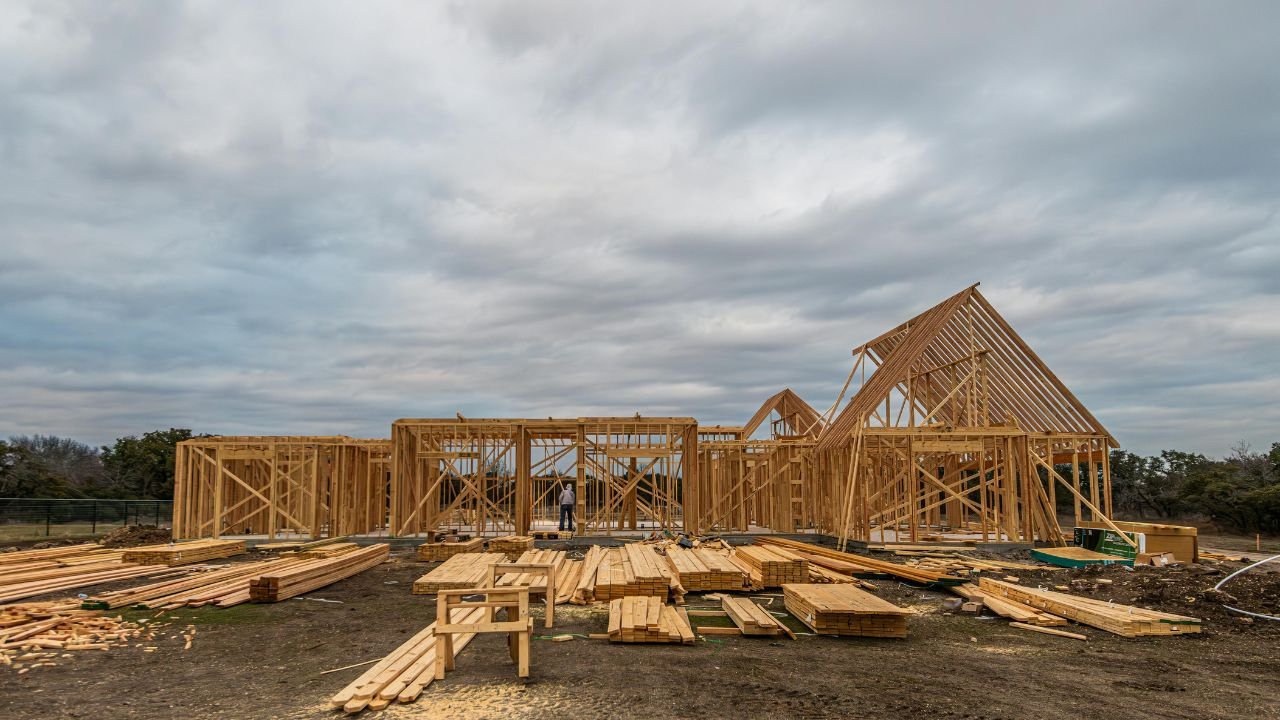
A contractor with deep local permit experience knows the building department officials, understands the expected inspection timelines, and anticipates code requirements before they become expensive problems. This administrative expertise is vital as you move through what are the 7 stages of construction, ensuring that framing, electrical, plumbing, and final inspections are passed without costly delays.
Watch for Red Flags
Even if a contractor seems pleasant and knowledgeable, you must remain vigilant for warning signs. If you encounter any of the following red flags during the vetting process, it is best to walk away:
-
No license verification: They cannot or will not provide an active DBPR license number.
-
Vague contract: The proposal lacks specific details on materials, brands, or scope of work.
-
Large upfront payment demand: Asking for 30% to 50% upfront before any permits are pulled or materials are delivered is unacceptable.
-
No references: They cannot provide contact information for past clients.
-
No written schedule: They refuse to commit to a structured timeline in writing.
-
Pressure to sign quickly: They offer a “today only” discount or pressure you to bypass standard contract reviews.
-
No insurance proof: They cannot provide a certificate of insurance sent directly from their broker.
Understand the Contract Before Signing
The construction contract is the ultimate rulebook for your project. Do not sign anything until you understand every single line. A standard Florida new home construction contract should clearly outline the following:
-
Scope of Work: Exactly what is being built, including architectural plans and engineering specifications.
-
Materials: Specific brands, models, and grades of materials to be used (e.g., “Owens Corning Architectural Shingles,” not just “roofing”).
-
Payment Schedule (Draw Schedule): Payments should be tied to completed milestones (e.g., 10% at permit issuance, 20% after foundation poured, etc.), not calendar dates.
-
Timeline: Start date, estimated completion date, and how weather delays are handled.
-
Warranties: What is covered, for how long, and the process for filing a claim.
-
Change Order Process: How changes to the scope are requested, priced, and approved in writing.
-
Cleanup and Closeout: The contractor’s responsibility for removing debris and obtaining the final Certificate of Occupancy.
If the contract seems heavily skewed in the builder’s favor or lacks these basic protections, have a real estate or construction attorney review it before signing.
Final Checklist Before You Hire
Choosing the right contractor is about balancing technical expertise, financial stability, and personal compatibility. Use this final checklist before you make your decision:
-
Verify the License: Check the DBPR website for an active status and clean disciplinary record.
-
Confirm Insurance: Get proof of general liability and workers’ compensation directly from their agent.
-
Check References: Speak to at least three past clients.
-
Review the Bids: Ensure you are comparing itemized, detailed estimates, not just the bottom-line number.
-
Assess Communication: Choose a contractor who answers your calls, explains things clearly, and treats you with respect.
-
Read the Contract: Ensure the draw schedule, materials, and change order processes are clearly defined.
Learning how to choose a contractor to build a house in Florida doesn’t have to be overwhelming. By doing your homework, asking the right questions, and refusing to cut corners on verification, you can confidently hire a builder who will turn your Florida home vision into a beautiful, lasting reality. Take your time, trust your instincts, and make a calm, verified, and informed decision.