
In the highly competitive world of commercial and residential building, the accuracy and speed of your bids can make or break your business. For decades, estimators relied on physical blueprints, scale rulers, highlighters, and complex spreadsheets to calculate project costs. Today, the industry has largely shifted to digital solutions. But exactly what is construction estimating software, and why has it become an absolute necessity for modern builders?
👉Buy Construction Estimate & BOQ Template at $97 Only
At its core, construction estimating software is a specialized digital tool used to calculate project costs, measure material quantities, and determine accurate bid prices. By automating complex math and organizing project data in one centralized platform, it helps contractors, project managers, and estimators work significantly faster and more accurately than manual methods allow.
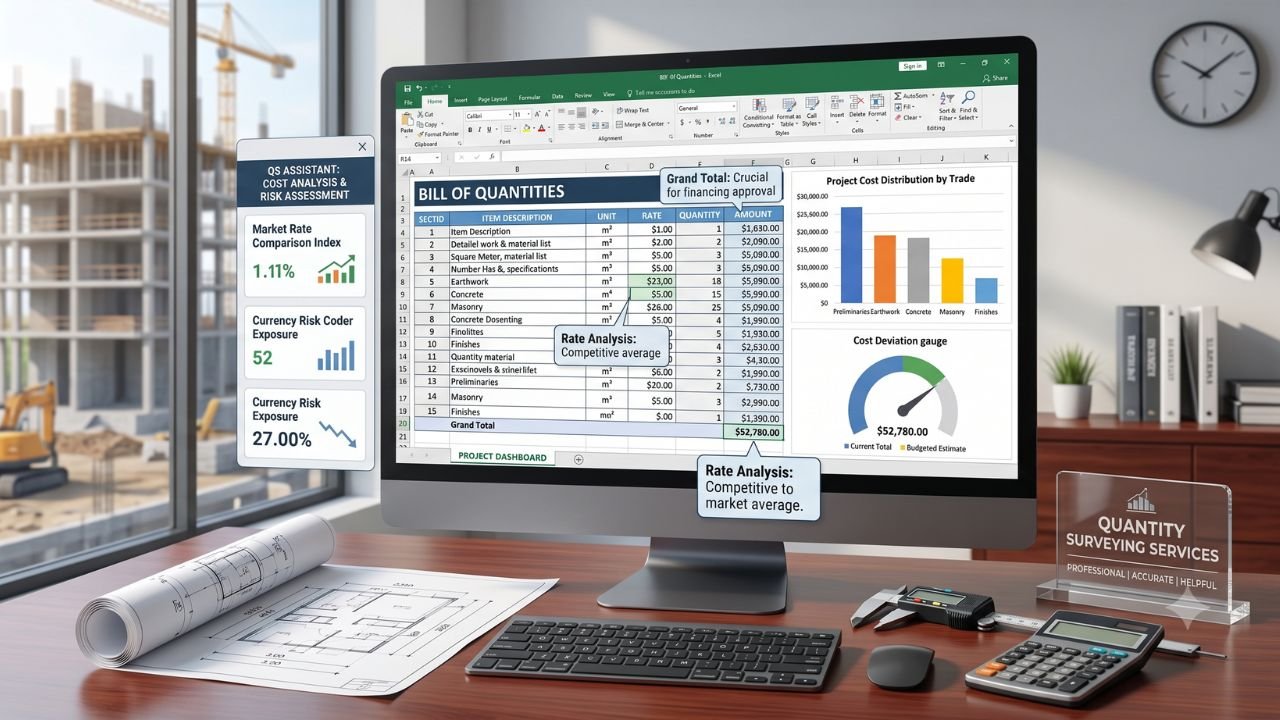
Whether you are a seasoned general contractor looking to scale your operations or a student learning the ropes of project management, understanding this technology is essential. In this comprehensive guide, we will explain what construction estimating software is, how it works, the core features it includes, and why it matters so much to a contractor’s bottom line.
What Is Construction Estimating Software?
To define it in simple, practical language: construction estimating software is a computer program or cloud-based application designed to help building professionals predict the total cost of a construction project. It provides a centralized digital workspace where users can organize architectural drawings, perform digital takeoffs, and build comprehensive cost estimates.
Instead of keeping quantities on a notepad and pricing in a separate spreadsheet, estimating software for contractors combines quantity measurement, labor and material pricing, and estimate organization into one seamless environment. When you measure a wall on your digital blueprint, the software instantly calculates the amount of drywall, studs, insulation, and paint required, while simultaneously attaching the current market cost and labor hours needed to install it.
Ultimately, this contractor software eliminates the guesswork from the bidding process, ensuring that construction professionals can submit competitive, profitable proposals with confidence.
👉Buy Construction Estimate & BOQ Template at $97 Only
What Does Construction Estimating Software Do?
A robust construction estimating platform is designed to handle every financial phase of the pre-construction process. While different platforms cater to different trades, most high-quality construction estimating tools perform the following core functions:
-
Quantity Takeoff: Digitally measures lengths, areas, volumes, and item counts directly from uploaded blueprints.
-
Cost Calculation: Automatically multiplies your takeoff quantities by your material and labor rates to calculate direct costs.
-
Labor Pricing: Calculates required man-hours based on historical productivity rates, applying prevailing wages or custom crew rates to the project.
-
Material Pricing: Organizes a database of materials, allowing users to update unit costs to reflect current market conditions and supply chain pricing.
-
Subcontractor Tracking: Allows general contractors to input, compare, and select bids from specialty subcontractors to include in the master estimate.
-
Proposal Preparation: Transforms raw cost data into a polished, professional document that can be presented to a client or property owner.
-
Estimate Storage and Comparison: Archives past estimates, allowing teams to compare historical project costs against new bids to ensure pricing consistency.
Who Uses Construction Estimating Software?
Because construction estimating is a universal requirement for any building project, a wide variety of professionals rely on these digital platforms.
-
General Contractors: Use the software to combine their self-performed work with subcontractor bids, generating a master estimate for the entire project.
-
Subcontractors (Specialty Trades): Plumbers, electricians, roofers, and concrete contractors use trade-specific software to calculate the exact materials and labor needed for their specific portion of the build.
-
Estimators: As the primary power users, dedicated estimators spend their days inside these platforms, measuring plans and building the cost database.
-
Project Managers: Use the completed estimate to create project budgets, order materials, and track cost overruns once construction begins.
-
Owners and Developers: Utilize estimating tools during the conceptual phase to determine if a proposed project is financially feasible before securing loans.
Different users rely on the software for different parts of the estimating process, but all share the same goal: predicting costs with maximum accuracy.
Key Features of Estimating Software
When exploring what construction estimating software is capable of, it helps to look at the specific features that drive its power. The best platforms on the market typically include:
-
Digital Takeoff Tools: Built-in measurement tools that allow users to click and drag across a digital blueprint to measure linear footage, square footage, and item counts.
-
Cost Databases: The “brain” of the software, containing thousands of pre-built items with standard material costs, labor hours, and equipment needs.
-
Templates: Pre-built estimate structures for common projects (e.g., a standard bathroom remodel or a warehouse shell) so you don’t have to start from scratch.
-
Assemblies and Unit Pricing: A feature that groups related items together. Instead of estimating studs, drywall, tape, and screws separately, an “interior wall assembly” calculates all of them at once based on the wall’s square footage.
-
Bid Summaries: Dashboards that summarize total direct costs, indirect costs, overhead, taxes, and profit margins in one clear view.
-
Labor Tracking: Tools that break down exactly how many days or hours a specific crew will take to complete a task.
-
Proposal Output: Built-in document generators that format the estimate into a client-friendly bid proposal template.
-
Reporting and Comparison Tools: Features that generate bill of materials (BOM) reports, labor requirement reports, and budget variance charts.
👉Buy Construction Estimate & BOQ Template at $97 Only
How Construction Estimating Software Works
Understanding how these platforms function is easiest when you look at the standard workflow of an estimator. Here is a simple example of an estimating workflow using modern software:
-
Upload Plans or Drawings: The estimator uploads PDF blueprints into the software and sets the digital scale (e.g., 1/4 inch = 1 foot).
-
Measure Quantities (Takeoff): The estimator uses digital highlighters to trace the perimeter of a room to calculate the square footage for new flooring.
-
Assign Pricing: The software links that square footage measurement to a flooring “assembly” from the cost database.
-
Add Labor and Equipment: The system automatically calculates that 500 square feet of flooring will require two workers for one 8-hour day, plus the rental cost of a floor scraper.
-
Calculate Totals: The software instantly computes the subtotal for the materials, labor, and equipment.
-
Apply Overhead and Profit: The estimator applies a 15% markup for company overhead and a 10% profit margin to the entire project subtotal.
-
Generate the Final Estimate or Bid: With a single click, the software exports a professional, branded proposal ready to be emailed to the client.
Manual Estimating vs Software Estimating
For decades, the industry standard was manual estimating—using paper plans, scale rulers, and Microsoft Excel. While manual methods work for very small projects, they cannot compete with modern software on larger builds.
Here is a breakdown of how the two methods compare:
| Feature | Manual Estimating (Paper/Excel) | Construction Estimating Software |
| Speed | Slow; requires manual scaling, counting, and typing data into spreadsheets. | Very Fast; measures and calculates costs simultaneously with a few clicks. |
| Accuracy | High risk of broken spreadsheet formulas, missed items, or scale errors. | High accuracy; math is automated and built-in error checking prevents missed items. |
| Organization | Prone to lost paperwork, unlinked spreadsheets, and messy desk spaces. | Highly organized; plans, quantities, and pricing live in one centralized digital file. |
| Collaboration | Difficult; usually requires emailing static spreadsheets back and forth. | Easy; cloud-based platforms allow multiple team members to work on the same estimate live. |
| Error Reduction | Relies entirely on the estimator double-checking their own math. | Visual takeoff tools color-code plans so you can instantly see if a wall was missed. |
| Ease of Updates | If a blueprint changes, the entire spreadsheet must be recalculated manually. | Digital revisions automatically update quantities and adjust the final budget instantly. |
Estimating Software vs Takeoff Software
A common point of confusion for beginners is the difference between construction takeoff software and estimating software. While they are closely related, they serve different functions.
Takeoff software is strictly used for measurement. It allows you to upload a blueprint and measure the lengths, areas, and volumes of the materials needed. However, it does not apply pricing to those measurements. You still have to export those quantities into a spreadsheet to calculate the financial cost.
Estimating software, on the other hand, is the financial engine. Some estimating platforms require you to type quantities in manually, while others feature built-in digital takeoff tools. A modern, all-in-one platform combines both: you perform the takeoff, and the software immediately runs the estimating math. If your team struggles with measurements, utilizing professional takeoff services alongside your estimating platform can bridge the gap.
Benefits of Construction Estimating Software
Adopting dedicated construction estimating tools provides a massive competitive advantage. The primary benefits include:
-
Saves Time: By automating complex math and utilizing pre-built assemblies, estimators can bid on twice as many projects in half the time.
-
Reduces Math Errors: Removing manual data entry eliminates the risk of a broken Excel formula wiping out your profit margin.
-
Improves Bid Consistency: Because the software uses a standardized cost database, your company will produce consistent, predictable bids regardless of which estimator builds the proposal.
-
Helps Teams Collaborate: Cloud-based software allows project managers in the field to view the exact same estimate that the team is working on in the office.
-
Supports Better Cost Control: A detailed estimate easily transitions into a project budget, helping you track expected costs against actual spending.
-
Keeps Estimates Organized: No more digging through filing cabinets. Every past bid, blueprint, and material list is safely stored and searchable.
-
Improves Proposal Quality: Polished, itemized, and professional proposals build trust with clients and increase your win rate.
Limitations of Construction Estimating Software
While incredibly powerful, it is important to remember that estimating software is a tool, not a magic wand. There are limitations to what technology can do:
-
Depends on User Input: The software is only as smart as the data you feed it. If you input the wrong blueprint scale, every calculation will be wrong (often called “garbage in, garbage out”).
-
Still Needs Human Review: Software cannot read project notes, understand difficult job site access, or anticipate weather delays. An experienced estimator must still review the final numbers.
-
Pricing Must Be Updated: Cost databases are useless if they are outdated. You must manually update your software with current supplier pricing to reflect market inflation.
-
Not All Software Fits Every Trade: A generic software program might work for a homebuilder, but a commercial mechanical contractor requires highly specialized piping and HVAC databases.
-
Quality Varies by Platform: Some platforms are incredibly advanced, while others are essentially glorified spreadsheets. Choosing the right one takes careful research.
How to Choose the Right Software
With hundreds of options on the market, selecting the right platform for your construction business can be overwhelming. If you are comparing your options, look for the following criteria:
-
Ease of Use: The interface should be intuitive. If it requires a master’s degree in computer science to use, your team will likely abandon it.
-
Accuracy & Cost Database: Ensure the software allows you to customize your cost database, assemblies, and labor rates to match your specific trade.
-
Integrated Takeoff Features: Choose a platform that combines 2D takeoff tools seamlessly with the estimating worksheet to prevent duplicate data entry.
-
Cloud Access: Cloud-based software ensures your team can access estimates from any device, whether in the office or on the job site.
-
Integration with Other Tools: The best software integrates seamlessly with your accounting software, CRM, or broader construction software guide recommendations.
-
Reporting: Look for tools that allow you to quickly export material lists for your suppliers and labor reports for your project managers.
-
Support and Training: Construction software has a learning curve. Choose a provider that offers excellent customer service, onboarding, and ongoing training.
👉Buy Construction Estimate & BOQ Template at $97 Only
Final Thoughts
So, what is construction estimating software? It is the financial heartbeat of a modern construction company. By merging blueprint measurement, live material pricing, labor tracking, and bid management into a single digital ecosystem, estimating software empowers contractors to build faster, more organized, and highly accurate estimates.
However, it is crucial to reinforce that these platforms are just tools. They do not replace the critical thinking, field experience, and strategic judgment of a seasoned estimator. Software handles the tedious math so that human estimators can focus on strategy, value engineering, and winning profitable work.
If you are looking to upgrade your bidding process, take the time to evaluate your company’s specific needs, explore different software demos, and consider leaning on professional estimating services to help you build and refine your custom cost databases. The right technology, paired with the right expertise, will transform the way your construction business operates.