Accurate construction cost estimates are the foundation of smart bids, realistic budgets, and controlled projects across the Sunshine State. In an industry where profit margins are constantly challenged by supply chain volatility and shifting labor markets, partnering with an experienced Construction Cost Estimator Florida builders trust can mean the difference between a profitable venture and an expensive mistake. Whether you are preparing a competitive hard bid or establishing a preliminary budget for a new development, exact cost numbers keep your financials firmly on track.
Florida’s construction landscape presents a unique set of technical demands. From high-velocity hurricane zone (HVHZ) building codes and complex flood zone elevations to regional labor variances and fluctuating impact fees, estimating in Florida requires deep local knowledge. Generic cost-per-square-foot averages or national estimates simply cannot capture the nuances needed to build profitably here.
At Estimate Florida, we deliver comprehensive cost estimating services tailored specifically to Florida general contractors, builders, trade subcontractors, developers, and project owners. By combining digital takeoff capabilities, real-time regional cost databases, and practical industry experience, we provide bid-ready numbers that protect your bottom line from pre-construction through project closeout.
What Does a Construction Cost Estimator Do?
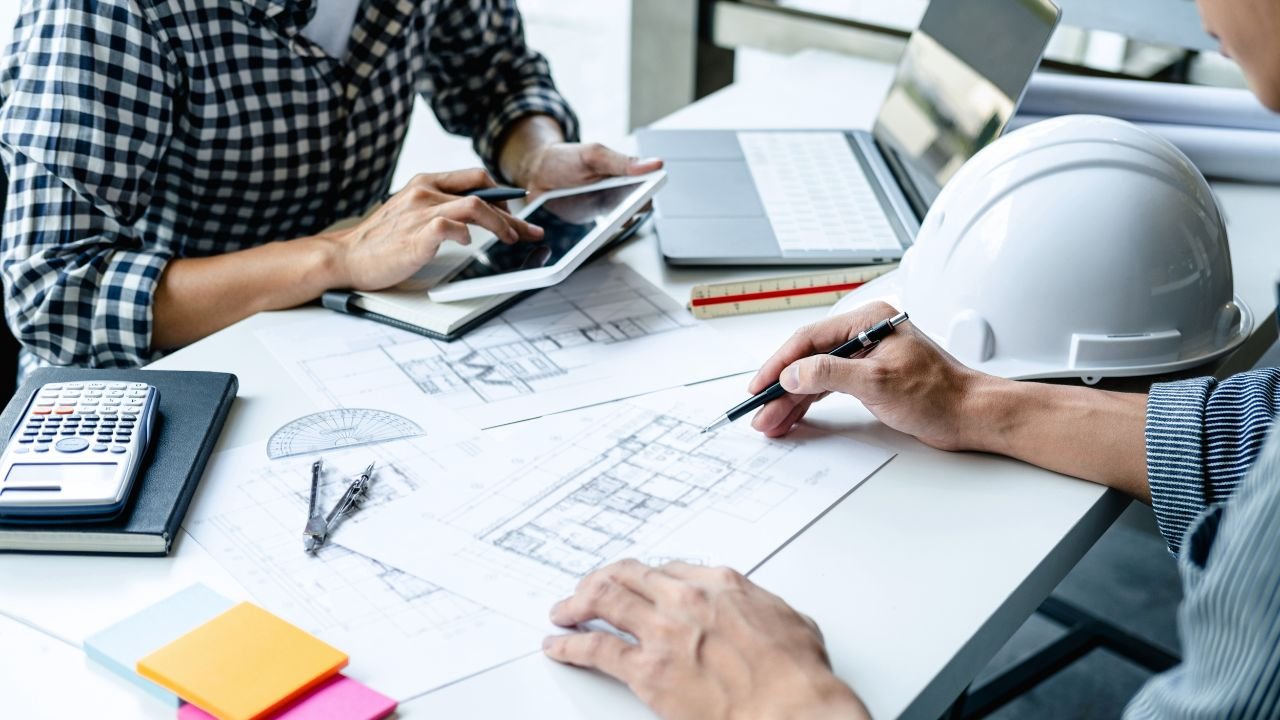
A construction cost estimator analyzes architectural drawings, engineering plans, project specifications, and site conditions to forecast the total financial investment required to complete a construction project. Rather than making broad assumptions, a professional estimator breaks down every component of a building into measurable line items to calculate direct, indirect, and operational expenses.
A comprehensive estimate brings together multiple cost layers:
-
Material Quantities & Direct Purchasing Costs: Determining exact material counts—from concrete yardage and rebar tonnage to drywall sheets and roofing square footage—and pricing them using local market vendor rates.
-
Labor Hours & Production Rates: Calculating the required trade labor hours based on task complexity, local wage scales, crew productivity, and site accessibility.
-
Equipment Rentals & Operational Costs: Accounting for heavy machinery, cranes, scaffolding, generators, and specialized tools needed during field execution.
-
General Conditions & Site Overhead: Estimating project management costs, temporary utilities, jobsite trailers, trash haul-off, safety compliance, and site security.
-
Subcontractor Scope Alignment: Reviewing trade proposals to verify complete scope coverage and eliminate overlapping or missing responsibilities.
The resulting deliverable feeds directly into competitive bid proposals, project financing applications, cash-flow projections, and procurement planning schedules.
Why Florida Projects Need Specialized Cost Estimating
Estimating construction projects in Florida requires a specialized approach tailored to the state’s distinct environment. Applying generic national cost metrics to a Florida project almost guarantees budget overruns because local structural and environmental regulations heavily drive material choices and installation methods.
Professional Florida construction cost estimator services account for several critical regional factors:
-
Hurricane and Wind-Load Requirements: Coastal and high-wind regions demand continuous load-path tie-downs, reinforced masonry block, impact-resistant doors and windows, and engineered roof-truss anchor systems that increase structural material counts.
-
Flood Zone Construction & Foundation Elevation: Projects in designated FEMA flood hazard zones must incorporate elevated stem walls, pilings, flood vents, and waterproof membranes below the base flood elevation (BFE).
-
Moisture, Humidity, and Salt-Air Corrosion: High humidity and coastal salt spray require stainless steel or hot-dipped galvanized fasteners, specialized exterior stucco assemblies, high-performance vapor barriers, and mold-resistant interior drywall.
-
Regional Labor and Material Pricing: Construction costs vary significantly between regions such as the South Florida urban core, Central Florida’s booming residential markets, and the Florida Panhandle.
-
Local Permit and Municipal Impact Fees: Municipal permitting costs, water/sewer tap fees, and county impact fees differ dramatically across jurisdictions and can add substantial soft costs to a project.
Because these factors impact a project from site acquisition through final inspection, understanding what are the 7 stages of construction helps teams integrate exact cost metrics into every planning phase. Furthermore, home builders and developers relying on accurate material and labor figures can align their early budgets with proven residential construction estimating methodologies to stay competitive.
What Is Included in a Professional Cost Estimate?
A thorough estimate from Estimate Florida provides a line-item breakdown structured according to Division 1 through Division 33 of the CSI MasterFormat standards. Every expense is categorized clearly so project stakeholders can analyze costs by trade, phase, or material type.
Key Components of a Professional Florida Estimate
-
Hard Costs (Direct Construction): Site preparation, earthwork, concrete foundations, CMU blockwork, framing lumber, roofing, doors/windows, MEP systems, and interior finishes.
-
Soft Costs (Indirect Expenses): Architectural and engineering design fees, land surveys, soil testing, legal fees, municipal permit costs, and local utility impact fees.
-
General Conditions & Site Management: Project superintendent salaries, temporary power/water hookups, dumpsters, jobsite fencing, and safety gear.
-
Overhead and Profit (O&P): Balanced markups tailored to project risk, market conditions, and general contractor business operational costs.
-
Contingency Allowances: Allocated funds for unforeseen site conditions, design revisions, or material price escalation.
Regional Cost Variances Across Florida Commercial & Residential Building Types
| Construction Category / Type | Typical Cost Range (Per Sq. Ft.) | Key Regional Cost Drivers |
| Single-Family Custom Homes | $180 – $350+ | Impact fenestration, custom tile roofing, hurricane strapping, luxury finishes |
| Multi-Family Apartments / Condos | $145 – $260 | Podium concrete decks, elevator shafts, fire-rated assemblies, MEP risers |
| Commercial Retail & Office Shells | $120 – $220 | Structural steel, storefront glass, tilt-wall concrete, extensive parking paving |
| Industrial Warehouses & Logistics | $85 – $160 | Heavy concrete slab volume, high-bay lighting, fire suppression, site retention |
| Renovations & Interior Fit-Outs | $60 – $150+ | Selective demolition, core drilling, MEP tie-ins, working hour constraints |
Whether you require a line-item bill of quantities (BOQ) or a comprehensive bid summary, our deliverables are designed for seamless integration. Many clients use our sample BOQ for house construction excel complete format with example as a reference for structuring clean, audit-ready bid templates.
How Estimate Florida Performs Cost Estimating
Our estimating workflow combines advanced digital quantification software with human quality control from experienced estimators.
-
Plan Submission and Scope Alignment: You submit PDF drawing sets, specification books, structural notes, and any addenda. We review the scope to confirm scale accuracy and project deliverables.
-
Digital Quantity Takeoff: Using specialized takeoff software, our team quantifies all physical materials, tracing wall lengths, measuring slab areas, counting fixtures, and calculating concrete volumes directly from digital blueprints.
-
Applying Local Florida Pricing: We apply current material rates from regional suppliers and establish labor costs using localized labor production rates across Florida markets.
-
Senior Estimator Peer Review: A senior estimator cross-checks the draft estimate against regional codes, structural callouts, and local permit/impact fee assumptions to ensure complete scope coverage.
-
Final Delivery & Ongoing Support: We deliver the finished cost estimate in formatted Excel sheets and PDF formats. If design revisions or plan addenda arrive prior to bid day, we quickly update your line items to keep your numbers current.
This structured process delivers speed and reliability, saving contractors time and allowing them to focus on field operations and business growth.
Benefits of Professional Construction Cost Estimating
Outsourcing your cost estimating needs to a dedicated team transforms how your business approaches bidding, budgeting, and financial risk management.
Eliminate Bid-Day Errors and Omissions
Rushing through plan reviews often leads to missed structural callouts, under-counted materials, or forgotten permit fees. A detailed, line-item estimate captures every drawing note, preventing costly surprises after contract signing.
Protect Profit Margins with Accurate Bidding
Bidding too high causes you to lose good projects; bidding too low erodes your profit margins. Precise Florida cost estimating ensures your bids remain competitive while fully protecting your profit margins.
Benchmark Feasibility and Cash Flow
Before committing capital or securing construction loans, developers and custom home builders need trustworthy budget numbers. Combining reliable material lists with market data answers critical pre-development questions like how much does it cost to build a house in Florida for custom or spec home projects.
Similarly, commercial developers analyzing industrial expansion rely on accurate material and site work counts to determine how much does it cost to build a warehouse in Florida, ensuring slab concrete, structural steel, and utility connection costs are fully accounted for upfront.
Streamline Value Engineering and Change Orders
When initial project budgets exceed target figures, a line-item cost estimate highlights major cost drivers. This allows project teams to perform target value engineering—such as evaluating alternative cladding or structural framing—without sacrificing quality. Furthermore, having a clear baseline estimate makes negotiating client change orders transparent and straightforward.
Cost Estimating for Different Project Types
Different construction sectors demand distinct estimating methodologies. Estimate Florida provides specialized cost estimating across all major building sectors:
Single-Family Homes & Custom Estates
From production homes in Central Florida to luxury waterfront custom estates in South Florida, residential estimates demand attention to finish detail. We quantify framing lumber, roof trusses, tile or metal roofing, impact windows, custom cabinetry, and high-end exterior finishes.
Multi-Family Developments & Condominiums
Multi-family projects feature repeating unit floor plans combined with complex shared infrastructure. We quantify repetitive unit finishes alongside common areas, podium decks, elevator shafts, fire-suppression systems, and site parking facilities.
Commercial Office & Retail Build-Outs
Commercial estimates cover both base-building shell construction and interior tenant improvements (TI). We evaluate structural steel framing, curtain wall systems, acoustic tile ceilings, commercial flooring, and trade-specific MEP systems.
Warehouses & Industrial Facilities
Industrial facilities require precise volumetric calculations for concrete slab-on-grade pours, heavy structural steel frameworks, high-bay lighting, specialized floor sealants, and large-footprint site drainage systems.
Renovations, Additions & Historical Restorations
Remodeling work requires distinguishing between existing-to-remain structures, selective demolition, and new additions. We isolate alteration quantities so contractors can price scope changes without confusion.
How Estimates Improve Bidding and Budgeting
A precise cost estimate provides the flexibility needed to negotiate and bid across any contractual framework:
-
Lump-Sum Hard Bids: In competitive hard-bid environments, exact cost data allows you to eliminate unnecessary contingency padding, delivering a sharp bid that wins work while protecting profit margins.
-
Cost-Plus & GMP Contracts: Guaranteed Maximum Price (GMP) and open-book contracts require clear, auditable documentation. Detailed line-item estimates provide full transparency for project owners, lenders, and construction managers.
-
Unit-Price Contracts: Civil and infrastructure projects rely heavily on unit-price bidding. Precise material and earthwork volume calculations ensure unit pricing covers all overhead and labor costs.
-
Pro Forma & Feasibility Analysis: Developers rely on early conceptual estimates to validate pro forma assumptions, secure investor funding, and obtain bank financing before spending heavily on full working drawings.
Integrating structured residential construction estimating workflows with a reliable sample BOQ for house construction excel complete format with example gives contractors a clear format for managing project pricing from start to finish.
Common Mistakes in DIY Cost Estimates
Performing cost estimates without dedicated software or local market data frequently leads to budget variances and missed line items:
-
Relying on National Cost Averages: Using national cost databases without adjusting for Florida’s regional labor rates, freight costs, and material pricing causes significant estimating inaccuracies.
-
Ignoring Code-Mandated Structural Items: Omitting extra hurricane straps, continuous tie-down rods, impact-resistant openings, or flood vents distorts true material requirements.
-
Underestimating Soft Costs and Impact Fees: Focus solely on hard materials often results in forgetting municipal plan check fees, water/sewer tap fees, and county impact fees that can add tens of thousands to a budget.
-
Overlooking Site Preparation Complexities: Failing to account for high groundwater tables, muck removal, compaction requirements, or dewatering leads to severe cost overruns during site work.
-
Using Unadjusted Square-Footage Rules of Thumb: Applying flat square-foot costs across projects with different structural specifications, finish levels, or mechanical requirements results in inaccurate bid pricing.
Outsourcing your estimating needs to a professional construction estimator Florida team eliminates these risks from your pre-construction workflow.
Florida Code, Flood, and Regional Cost Considerations
Florida’s regulatory environment directly impacts project costs. Cost estimates must incorporate these mandatory structural and regional factors to reflect true construction expenses.
High-Wind and Hurricane Building Regulations
The Florida Building Code sets stringent structural standards to resist high winds. Estimates must reflect:
-
Heavy-gauge hurricane straps, truss anchors, and continuous tie-down rod systems.
-
Impact-rated window and door assemblies, or engineered shutter systems.
-
High-wind roof underlayment, ring-shank fastings, and reinforced tile/metal roofing attachment systems.
Floodplain Elevation and Coastal Construction
Projects in coastal or low-lying regions must reference official FEMA Flood Maps to establish required flood elevations. Estimates must account for stem wall foundation height, flood vents, breakaway framing, and marine-grade, corrosion-resistant fasteners.
Licensing and Regulatory Standards
Contractors operating across Florida must maintain compliance with guidelines established by the Florida Department of Business and Professional Regulation. Utilizing precise, professionally prepared estimates helps licensed builders present clear, auditable cost proposals to clients, banks, and building departments.
Industry cost references, such as RSMeans construction cost data, provide useful baseline benchmarks, but pairing these references with localized market pricing ensures total accuracy on bid day.
How to Get Started with Estimate Florida
Getting a professional, line-item cost estimate for your next project is fast and straightforward:
-
Submit Your Drawings: Upload your PDF plans, specification sheets, and scope details through our secure client portal.
-
Receive a Transparent Quote: We evaluate your project scope and provide a clear, flat-fee proposal and delivery schedule (typically 2 to 4 business days).
-
Estimate Execution: Our team quantifies every line item, applies current local material and labor pricing, and conducts a thorough peer review.
-
Receive Finished Deliverables: You receive formatted Excel cost sheets and marked-up PDF takeoff drawings ready for your bid submission or budget review.
Helpful Resources for Growing Florida Builders
If you are expanding your contracting operations, launching a new trade business, or refining your bidding process, explore our helpful industry guides:
-
Learn the professional path to general contracting via how to become a contractor in Florida and how to become a general contractor in Florida.
-
Understand residential trade licensing requirements with our guide on how to become a builder in Florida.
-
Navigate municipal plan reviews smoothly using our guide on how to get a building permit in Florida.
-
If you are an owner or developer assembling a custom home team, read our practical tips on how to choose a contractor to build a house in Florida.
Final Thoughts
In Florida’s dynamic construction market, accurate estimating is the key to winning profitable work and avoiding unexpected financial surprises. Partnering with a dedicated Construction Cost Estimator Florida builders trust provides the clarity needed to submit sharp bids, negotiate with confidence, and keep projects on budget.
By relying on Estimate Florida for your quantity takeoffs and cost estimating, your team can spend less time struggling with complex spreadsheets and more time building projects, serving clients, and growing your business. Submit your plans today to receive a precise, reliable cost estimate tailored to your next Florida project.